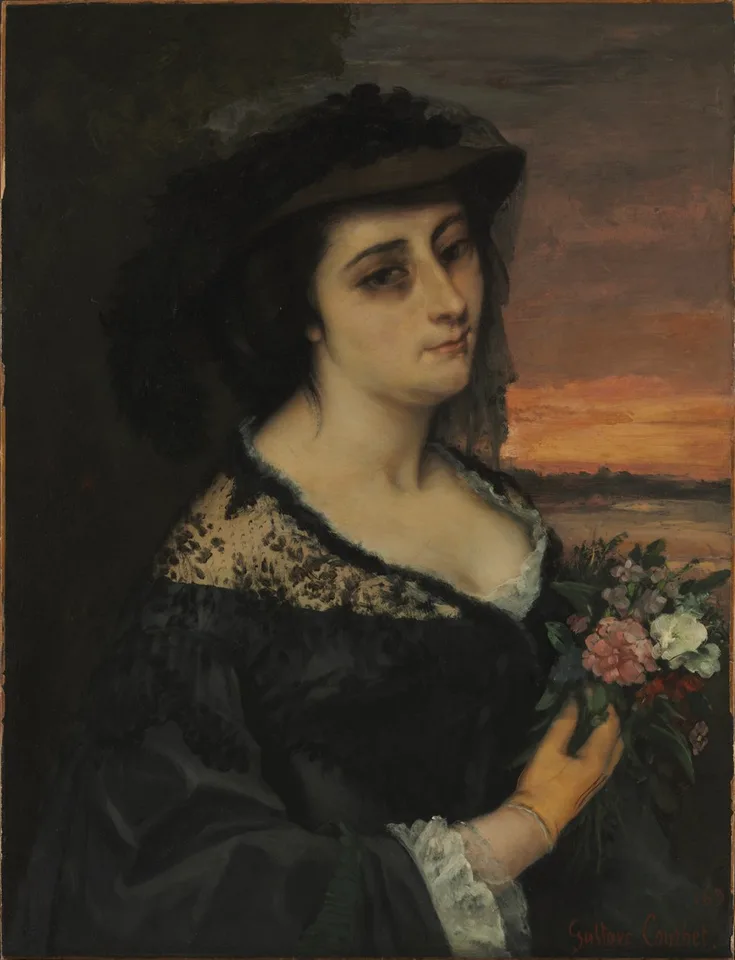
Lace and flowers offer elegance, while the shadowed eyes insist that a portrait’s beauty need not mean idealization.
Laure Borreau’s face emerges from the dark hat and veil without losing its shadows. The pale neck and upper chest make a broad shape above the black dress, and the bouquet supplies a smaller, more colorful focus beside it. At the right edge, a warm sunset opens a narrow landscape beyond the sitter. The portrait balances tangible clothing with a carefully staged atmosphere.
The museum identifies this as the last and most developed of four portraits Courbet painted of Borreau. It also records hostile criticism aimed at features that refused the period’s expectations of flattering feminine beauty. That response tells us about a viewer’s values, not an objective defect in the sitter. Courbet’s realist ambitions encourage attention to what the portrait includes: substantial flesh, dark eyes, and specific fabrics. The lace and flowers do not cancel those features; they coexist with them in the same formal presentation.
The historical criticism reflects the critic’s expectations, not a neutral description of Borreau. Neither her expression nor the sunset proves a particular mood or personal history.