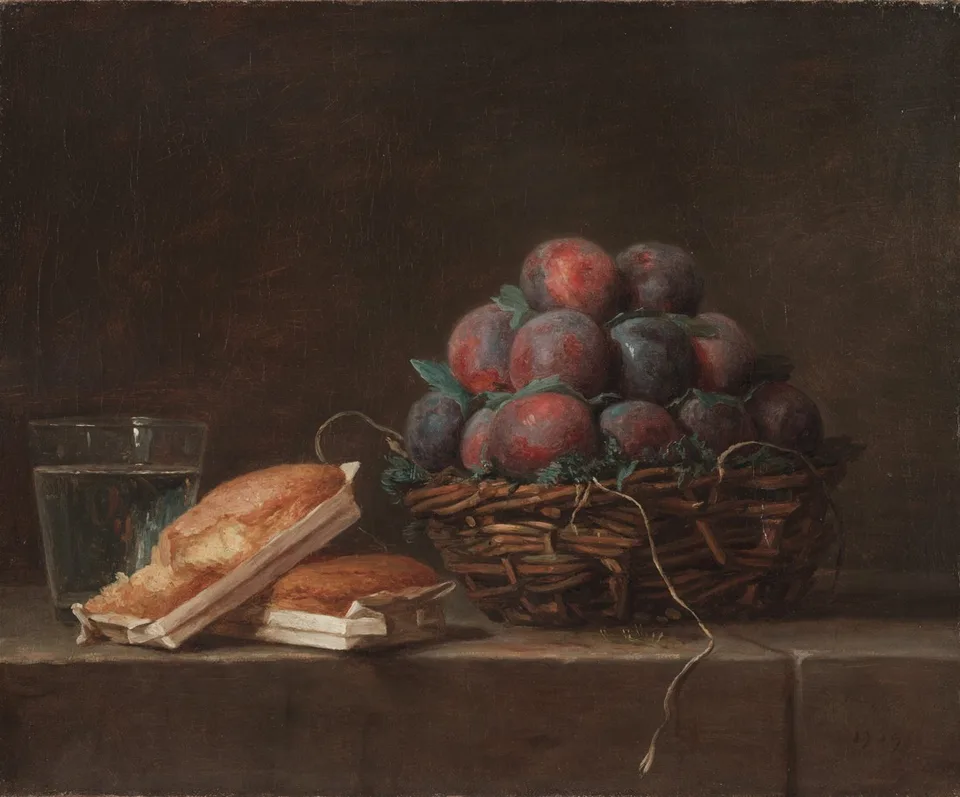
Plums emerge from shadow beside crisp pastry papers, making softness, roughness, and transparency share a single tabletop.
The fruit forms a low mound above the basket, its red and violet skins emerging gradually from darkness. The basket itself is more linear: bent strips weave around one another, and a loose strand hangs over the table edge. At the left, the cake papers fold into pale, angular layers, while the glass receives only a few bright marks. Each object offers a different way for light to become visible.
Anne Vallayer-Coster painted this still life in 1769, within a period when fruit arrangements and baskets of plums were fashionable. Familiar subject matter did not remove the opportunity for distinction. The museum stresses the vivid fruit, growing moss, crisp papers, and sparkling water as sources of immediacy. Looking across those surfaces reveals the painting’s particular intelligence: roundness is set against weaving, absorbent pastry against reflective glass. The dark setting keeps these comparisons close together and makes the small highlights carry considerable weight.
The arrangement appears fresh but is a constructed still life, not evidence of a particular serving occasion. The museum does not assign each food a separate symbolic message.