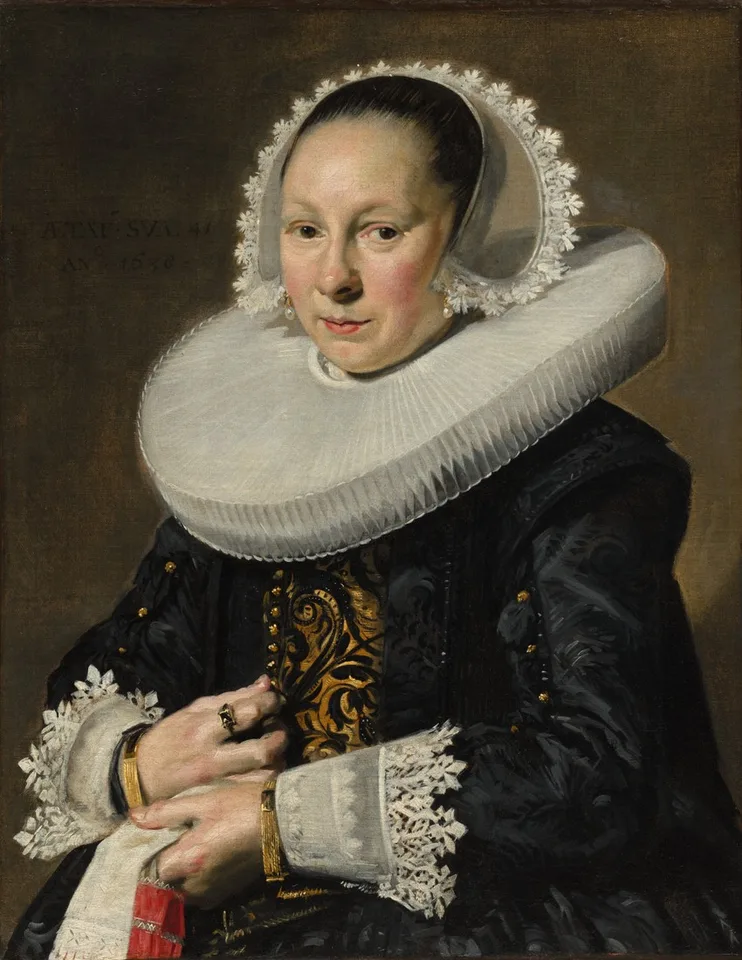
 Netherlands · 1638
Portrait of a Woman, probably Aeltje Dircksdr. Pater
Frans Hals (Dutch, c. 1581–1666)
oil on canvas
Elaborate clothing can make a sitter seem socially specific while leaving her name uncertain. Compare how a ruff, satin, lace, and restrained surroundings direct attention without converting visual richness into documentary identification.
Netherlands · 1638Frans Hals (Dutch, c. 1581–1666)
oil on canvas
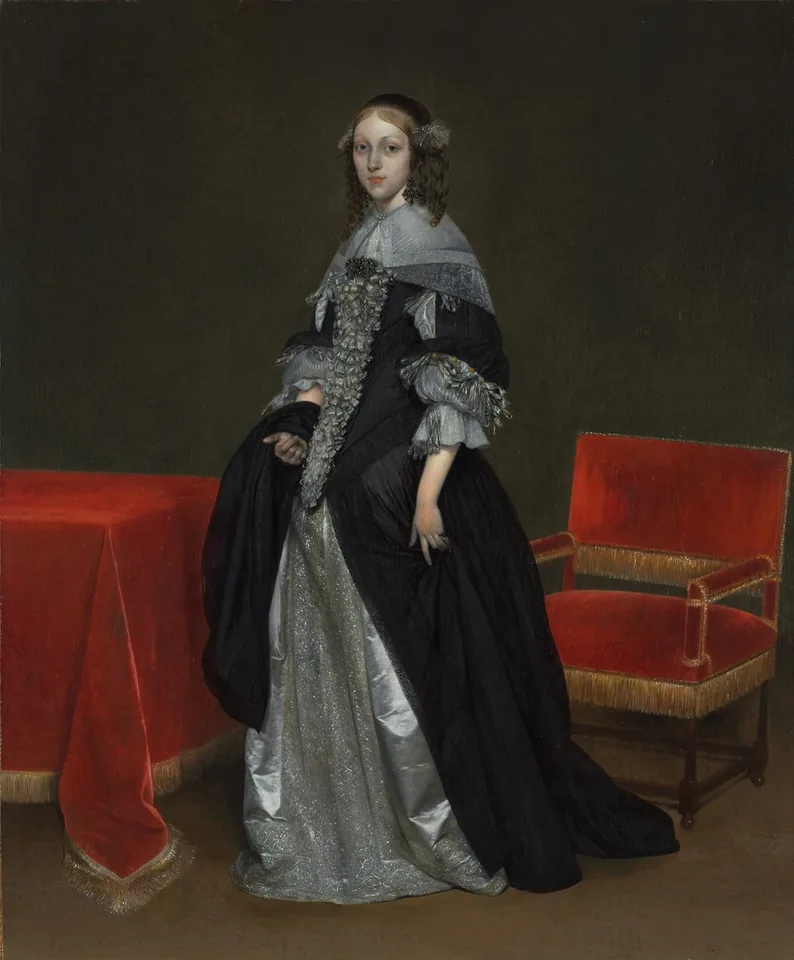 Netherlands · c. 1665
Gerard ter Borch (Dutch, 1617–1681)
oil on canvas
Hals’s broad white ruff frames the face at close range. Ter Borch’s satin extends through much of a standing figure’s lower body. Both pale fabrics dominate against dark clothing, but they distribute attention at different scales and heights.
Hals gathers lace around overlapping hands; Ter Borch accumulates ribbons and lace around the bodice and sleeves. These small details make wealth legible through material variety, even when the surrounding room provides little social information.
Hals blends paint around the hairline to suggest living particularity. Ter Borch’s red chair provides a controlled setting beside the standing figure. These different means of persuasion make the portraits vivid, but neither resolves the limits of the current identifications.
One sitter is tentatively named, while the other remains unidentified. Costume indicates elite presentation without establishing personality, actual household furnishings, or secure family identity.
The comparison of visible choices is our own reading. Follow either artwork page for its full context, uncertainty note and image-rights record.
From a ruff and satin skirt to a loosely drawn shoulder.