Dress as a portrait language
Clothing can tell a portrait’s story through material, scale, and painterly handling, even when the sitter’s name is uncertain. These seven images range from formal display to a preparatory drawing and summer leisure. Follow the boundaries between skin and fabric, asking when detail presents status, when it directs attention, and when it leaves the artist’s working process visible.
Begin the journey ↓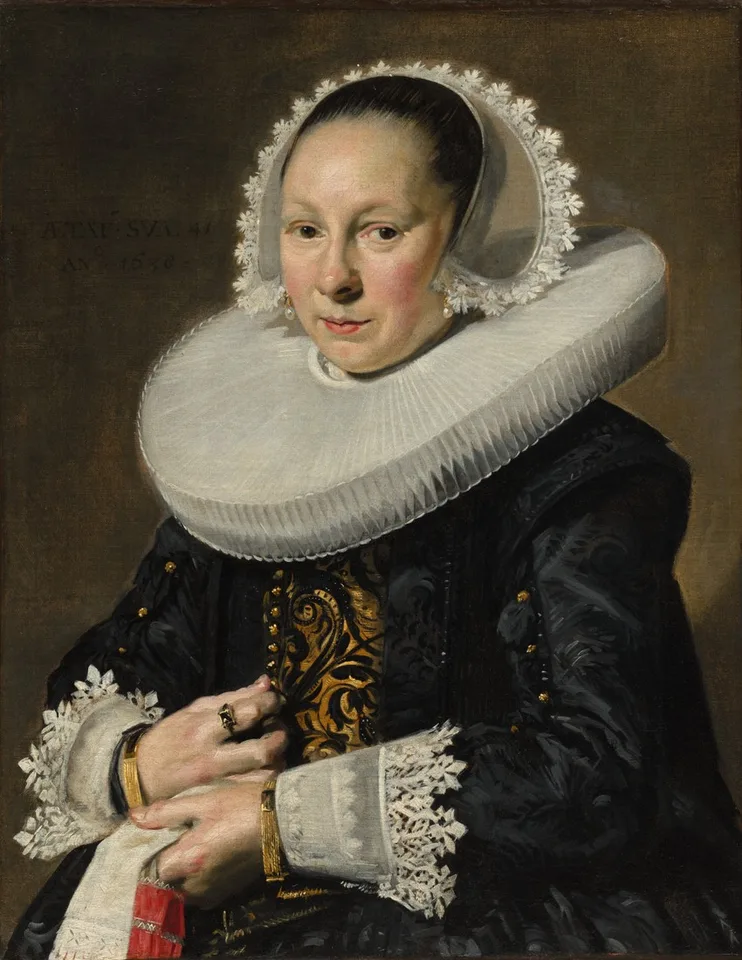
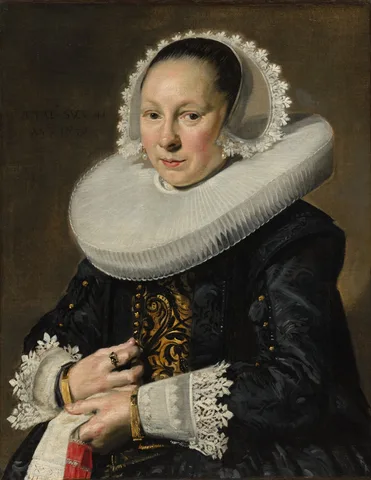
The pleated ruff
Begin with the wide ruff, whose repeated pleats frame a more fluidly painted face. Formal dress makes status visible, while the sitter’s proposed name remains tentative.
Carry this question: How does the collar alter the face’s apparent size?
Open the artwork ↗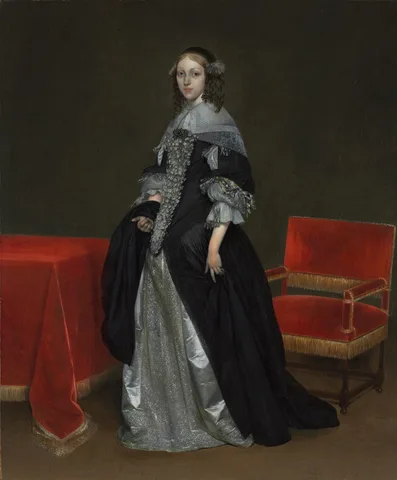
A luminous satin opening
Move from the white collar to a whole expanse of luminous satin. The sparse room lets material differences carry much of this unidentified sitter’s social presentation.
Carry this question: Where do highlights make the satin turn toward you?
Open the artwork ↗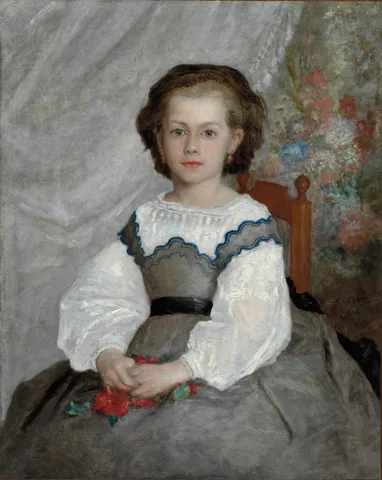
Layered white sleeves
White returns as a child’s translucent sleeve. Here small changes of color create volume and softness, linking formal clothing with Renoir’s early sensitivity to delicate reflected light.
Carry this question: How many colors can you find in the white sleeve?
Open the artwork ↗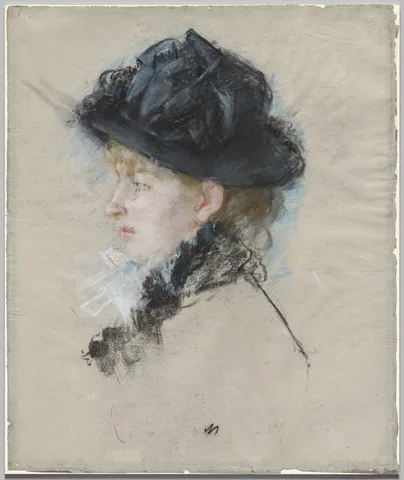
A shoulder left open
Morisot leaves the shoulder barely described while concentrating effort in Louise’s hat and profile. A portrait can distribute attention unevenly without telling us whether the artist considered it unfinished.
Carry this question: Where does descriptive detail begin to fall away?
Open the artwork ↗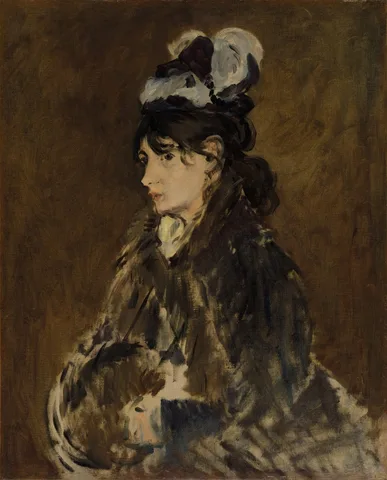
Broad marks on the muff
Morisot now becomes the sitter. The museum suggests that Manet’s broad marks acknowledge her own painting, so winter clothing may carry a professional allusion through its handling.
Carry this question: What distinguishes the muff’s marks from the face’s description?
Open the artwork ↗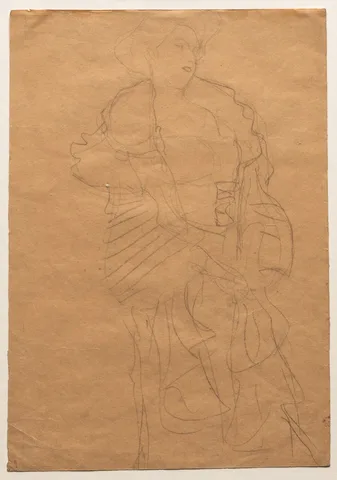
The expanding dress
Klimt’s preparatory sheet uses black chalk and graphite on light brown paper. Repeated contours investigate a large dress, letting us follow decisions before the commissioned portrait reaches its finished painted surface.
Carry this question: Which contours seem to offer more than one possible edge?
Open the artwork ↗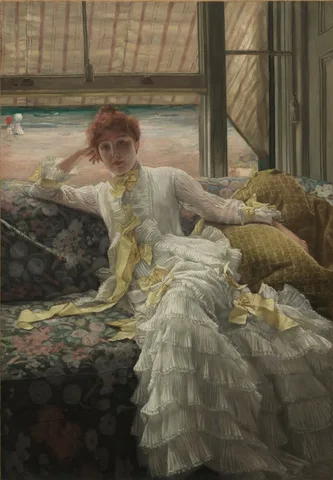
Layered dress ruffles
Finish with ruffles spreading across a reclining figure. Clothing and upholstery dominate the beach glimpse, making summer leisure visible as an abundance of supported, decorated surfaces.
Carry this question: How much space does the dress receive compared with the beach?
Open the artwork ↗Look at a pair more closely
- Dress and the uncertain sitter
Hals’s probable Aeltje Pater and Ter Borch’s unidentified woman
- Morisot as maker and model
Louise Riesener’s hat and Berthe Morisot’s muff
Read with the sources
Historical context follows the individual museum records linked on each artwork page. These routes make original comparisons of visible form; resemblance alone is not evidence of shared meaning or direct influence.
- Portrait of a Woman, probably Aeltje Dircksdr. Pater — museum collection record
- Portrait of a Woman — museum collection record
- Romaine Lacaux — museum collection record
- Mademoiselle Louise Riesener in a Hat — museum collection record
- Berthe Morisot with a Muff — museum collection record
- Hermine Gallia — museum collection record
- Seaside (July: Specimen of a Portrait) — museum collection record