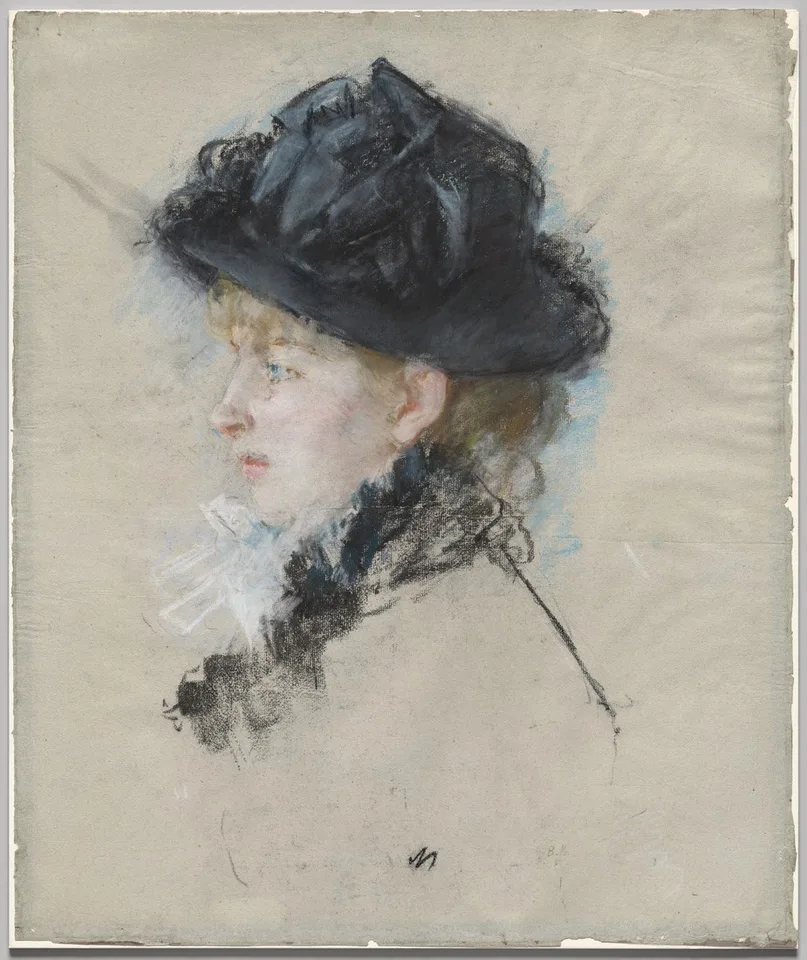
 France · c. 1877–80
Mademoiselle Louise Riesener in a Hat
Berthe Morisot (French, 1841–1895)
pastel on pale blue laid paper
A woman artist portrays a friend, then becomes the subject of another artist’s painting. Both images use fashionable dress and uneven handling to concentrate attention, while their media and proposed professional meanings remain distinct.
France · c. 1877–80Berthe Morisot (French, 1841–1895)
pastel on pale blue laid paper
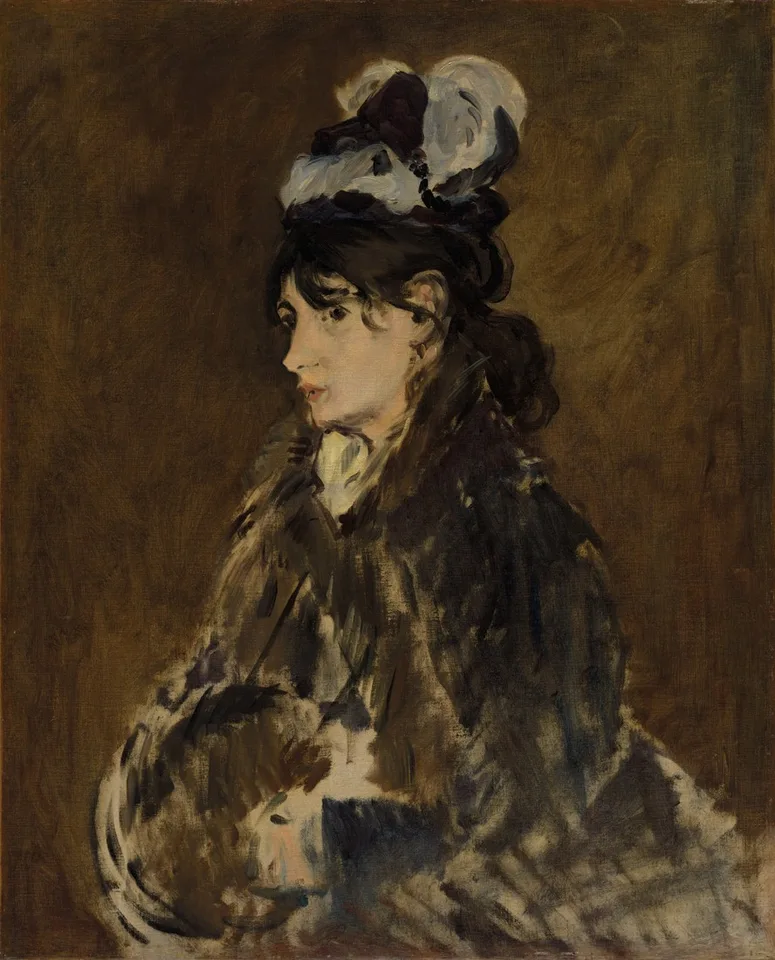 France · c. 1871–72
Édouard Manet (French, 1832–1883)
oil on canvas
Louise’s densely worked dark hat rises above a delicate pastel face. Morisot’s pale feather creates an upper accent against Manet’s dark winter clothing. Headwear presents public fashion while also becoming a major compositional shape.
Morisot gives Louise’s white blouse ties sharp pale strokes beneath the chin. Manet encloses Morisot’s pale profile within hat and coat. Both isolate small light areas in dark dress, guiding attention without requiring an elaborate room.
Louise’s shoulder dissolves into a few lines and exposed paper. Manet’s muff remains broadly brushed and uneven. Selective description is visible in both; only the Manet record specifically proposes a stylistic acknowledgment of the sitter’s own painting.
Pastel on paper and oil on canvas behave differently. The suggestion that Manet’s handling alludes to Morisot’s art is an interpretation, not a documented statement of intention.
The comparison of visible choices is our own reading. Follow either artwork page for its full context, uncertainty note and image-rights record.
From a ruff and satin skirt to a loosely drawn shoulder.