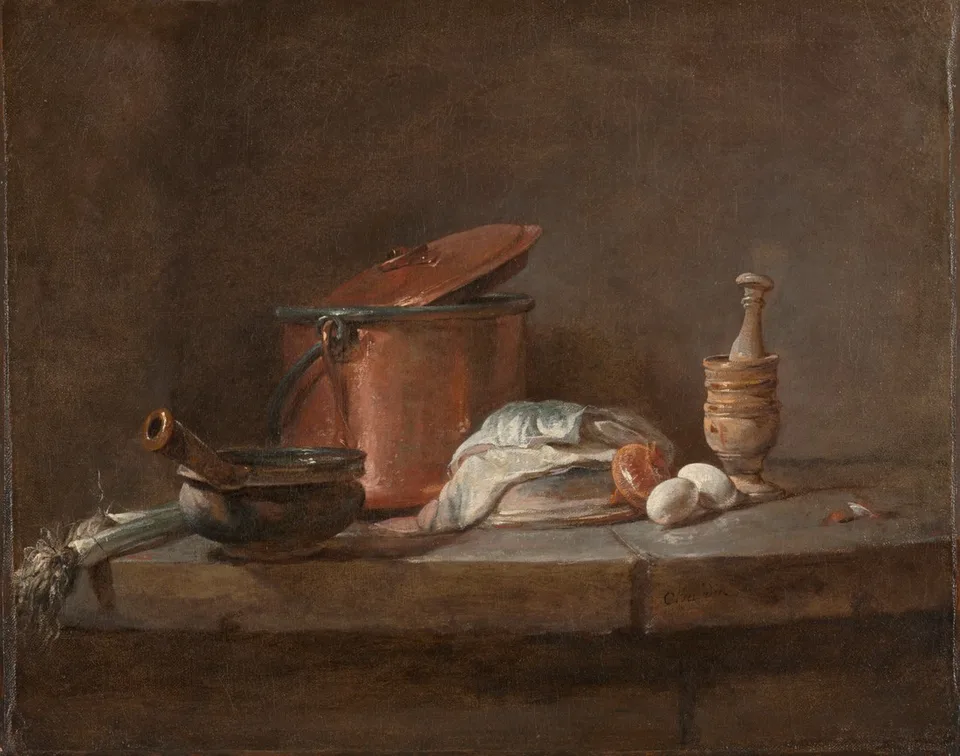
A tipped lid, pale fish, and wooden pestle make a small kitchen arrangement feel carefully balanced rather than casually abandoned.
The pot is the largest object, but its open lid tilts away from a stable vertical. In front, the smaller dark pan turns its handle left, and the leeks continue that direction toward the edge. On the right, the mortar and pestle answer the pot’s height in a narrower form. Between them, the fish and eggs introduce low, pale shapes.
Chardin repeatedly arranged modest kitchen equipment in small still lifes, changing the positions of familiar objects to find a balanced design. The museum places this naturalistic interest beside the lighter, more elaborate Rococo manner of some contemporaries. Nothing here requires a grand historical subject: worn metal, soft food, and a stone edge can sustain close attention. Compare how the painter gives each surface its own kind of light. The arrangement may suggest a household task, but the painting’s careful spacing is the more directly available evidence.
The objects suggest food preparation, but the picture does not document a particular meal or household. Repeated studio props can create an appearance of everyday immediacy.
Which pair creates the strongest tall-object balance?
Practise looking at Kitchen Utensils with Leeks, Fish, and Eggs →