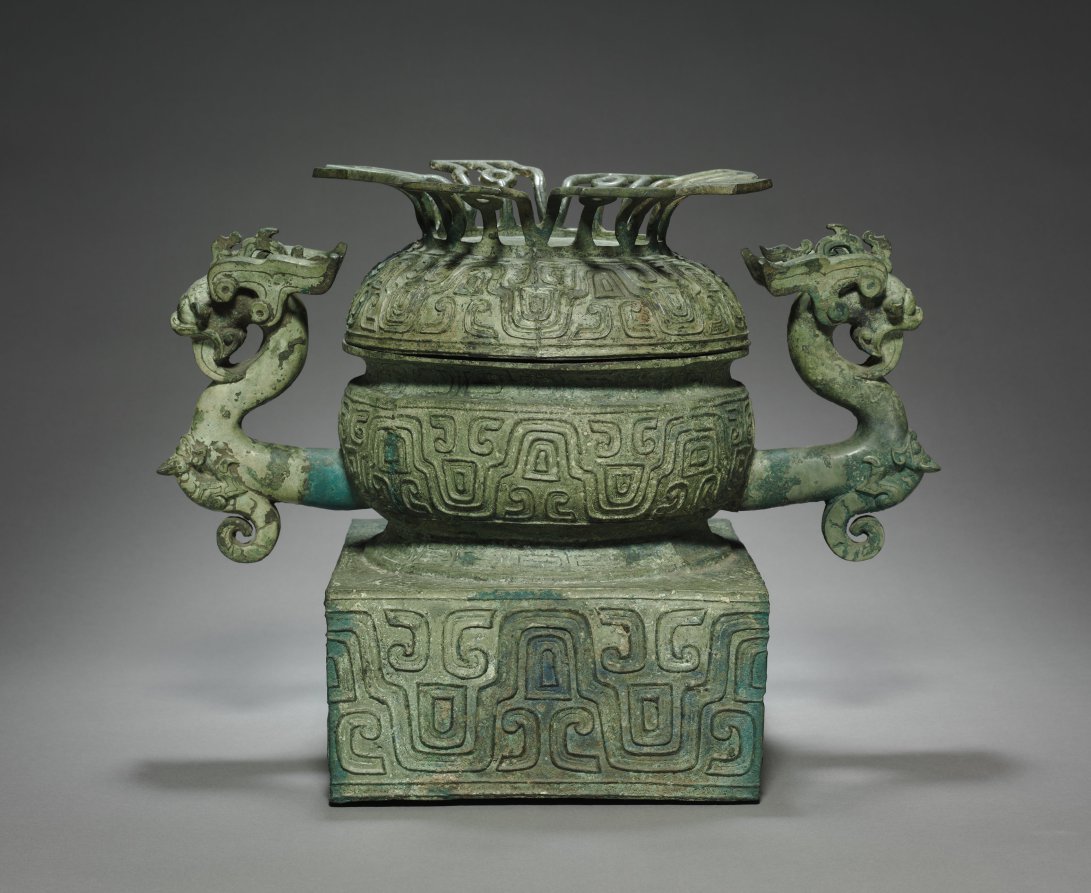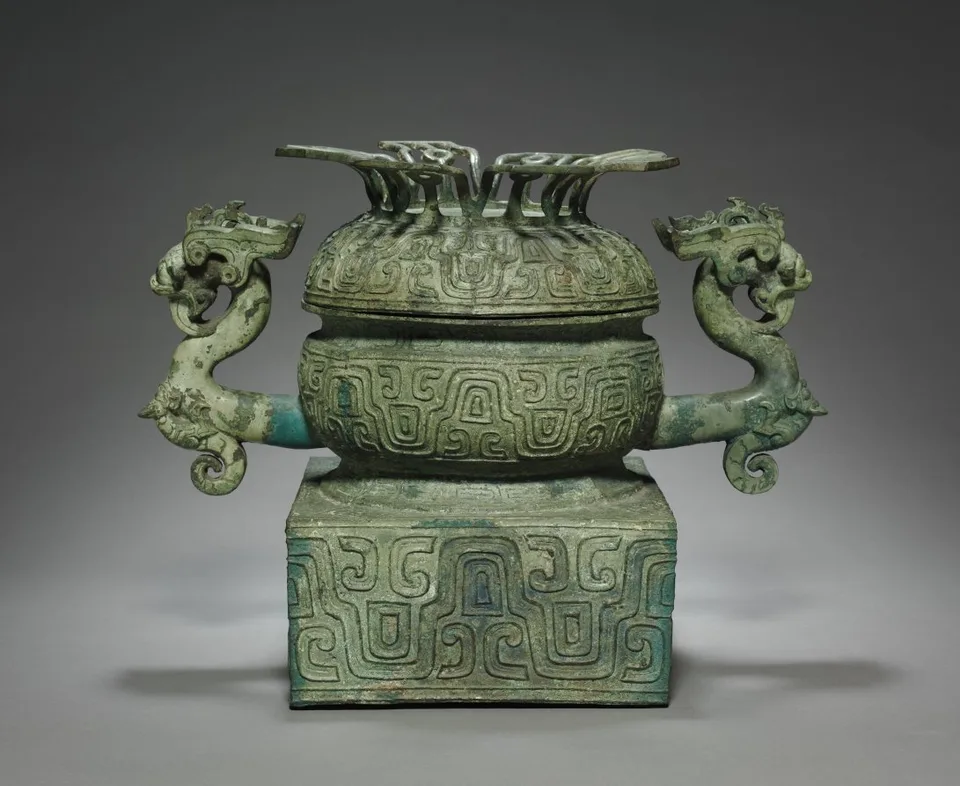
A ritual vessel refuses to keep a simple outline: animals become handles and pierced petals lift above its lid.
Begin at the outline rather than the centre. The handles curl outward into open-mouthed creatures, while an openwork crest rises from the lid. These projecting forms make the vessel’s silhouette seem animated even before the eye enters its patterned surface. A square pedestal gives the busy upper body a more stable foundation.
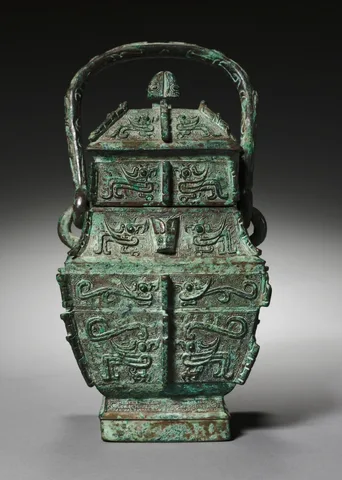
The museum identifies the object as a gui, a ritual food container from the Eastern Zhou period. It describes dragons and felines combined in the handles and lotus-petal openwork above the cover. Its probable use in ancestral rites gives the vessel a setting beyond ordinary storage, although the photograph cannot establish what it held on a particular occasion. Compare it with the Square Wine Container: both are bronzes associated with ritual, but this later work pushes decoration into three-dimensional space. The relationship between use and ornament becomes particularly interesting where a practical handle is also a forcefully sculpted creature.
The probable food-offering function does not identify the contents of this particular vessel. Animal forms follow the museum’s descriptions; their combination should not be converted into an unsupported story about a specific ritual.