Ritual form and sound
Ritual objects can be visually elaborate without becoming interchangeable. Compare a wine container, a bell, a food vessel, and a probable drum stand. Their shapes offer evidence about handling and sound, while museum records supply inscriptions and proposed functions that a photograph alone cannot recover.
Begin the journey ↓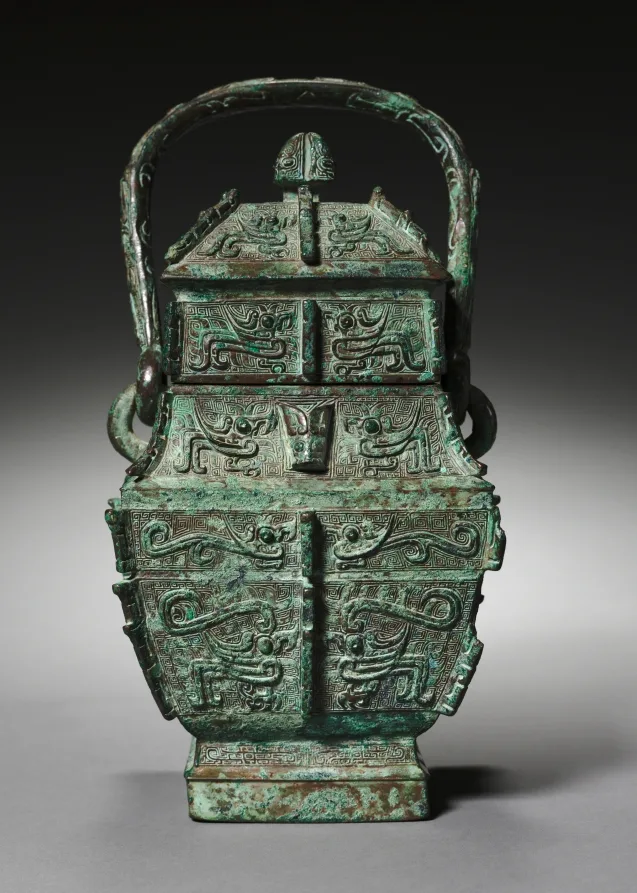
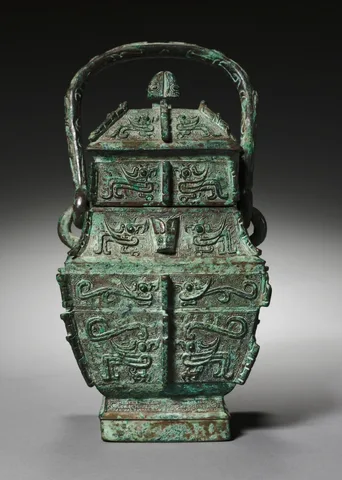
A square body under an arch
The handle opens a large space above a densely patterned body. Birds and tiny spirals organise the surface, while the square form distinguishes the container within a broader bronze tradition.
Carry this question: How does the empty space above change the dense body below?
Open the artwork ↗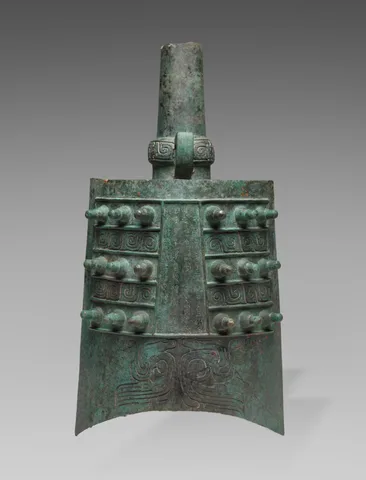
A sound linked to family history
Start with the central panel between the patterned areas and projecting bosses. The museum’s study of the inscription supplies the specific account of Lai’s office and dedication. Sound, ancestor remembrance and political authority belong together in that reading; the full text cannot be read from this photograph.
Carry this question: Which claims require the inscription rather than the visible bosses?
Open the artwork ↗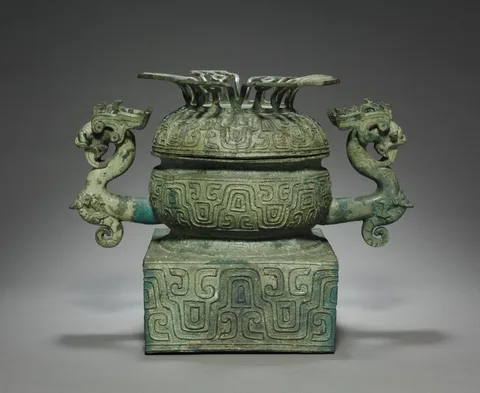
A handle becomes an animal
The projecting creature is also part of a useful handle. Openwork above the lid pushes decoration beyond the surface, creating an animated outline around a vessel probably used for ritual food offerings.
Carry this question: Where does practical structure become sculptural imagery?
Open the artwork ↗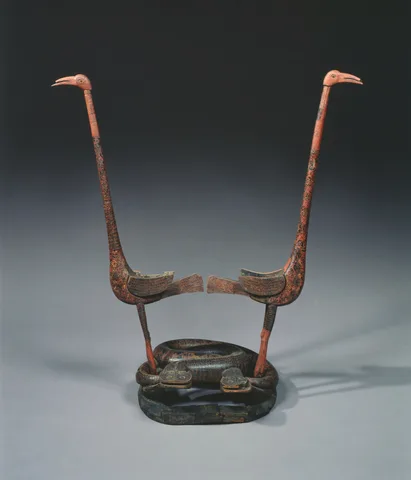
A support with an uncertain performance
The tall necks and coiled base suggest a suspended drum, yet the museum questions how practical the delicate structure was. Its probable function should remain a proposal rather than a completed reconstruction.
Carry this question: What would you need to know before reconstructing a performance?
Open the artwork ↗Look at a pair more closely
- Sound and its support
A bronze bell and a probable wooden drum stand
Read with the sources
Historical context follows the individual museum records linked on each artwork page. These routes make original comparisons of visible form; resemblance alone is not evidence of shared meaning or direct influence.