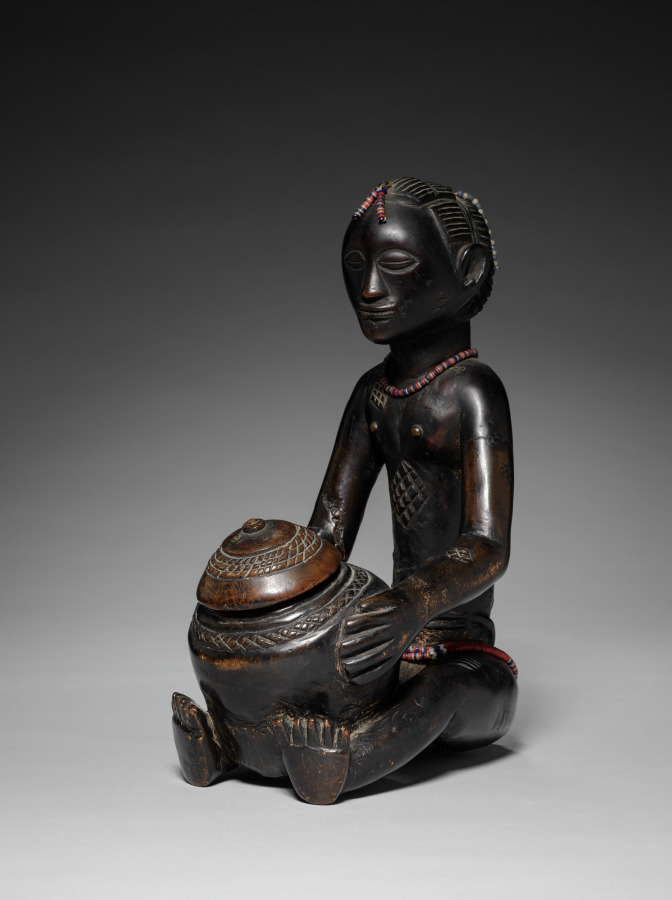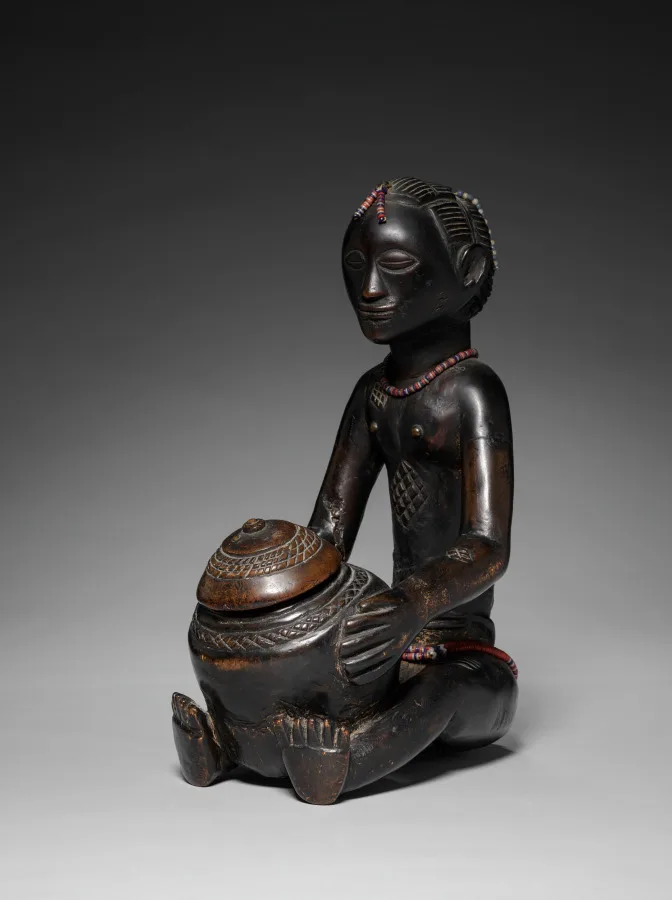
A seated woman steadies a covered bowl, combining an image of beauty with a container that once held sacred chalk.
The bowl occupies much of the figure's lap, and her hands make its weight and importance clear. Long fingers follow the curved sides rather than hovering separately. Above it, a carefully patterned torso and elaborate hairstyle direct attention back to the woman. The object combines a represented person with a real containing form.
The museum proposes that a royal diviner used this Luba-style sculpture. Traces of white chalk, mpemba, inside and outside the bowl support a history of handling sacred powder. Its beads, scarification patterns and layered hair participate in an ideal of beauty linked to effective use. Those qualities do not identify a named sitter or prove a single ceremony. Imported glass beads also remind us that an object's local significance can incorporate materials that traveled. The figure should be read through both its specific surfaces and the qualified account of its function.
Use by a royal diviner is likely rather than certain, and bowl-bearing figures had several possible functions. Proposed symbolism of bead colors should remain qualified rather than applied as a universal code.