Care and containment
A nursing body, a covered bowl, a closed pouch and an absent container invite different kinds of attention. They do not belong to one shared ritual system. What connects this route is a method: identify the visible act or structure, consult the object’s particular record, and distinguish documented material evidence from an interpretation of efficacy or belief.
Begin the journey ↓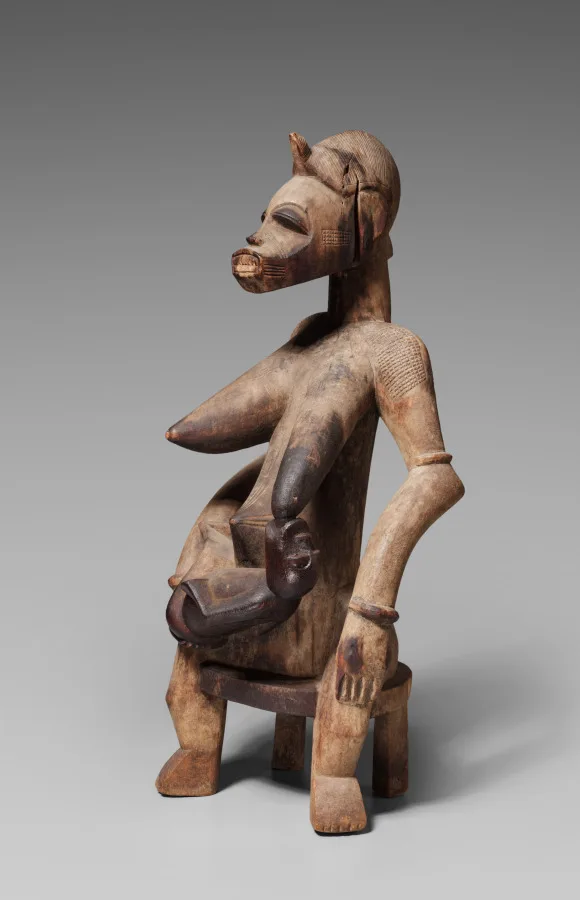
An act carried by two bodies
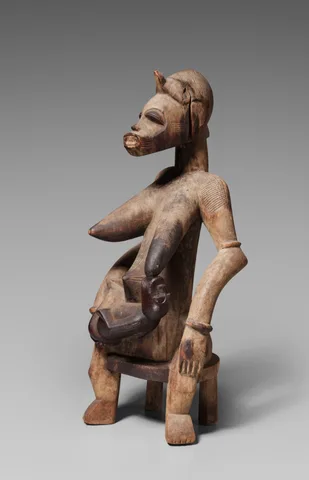
The child rests against the seated woman’s body near her breast. The museum discusses associations of maternity with knowledge and a Great Mother figure in some Senufo communities. The carved relationship is directly visible, while that wider interpretation depends on a particular cultural account.
Carry this question: Which points of contact make the two bodies read as one closely connected group?
Open the artwork ↗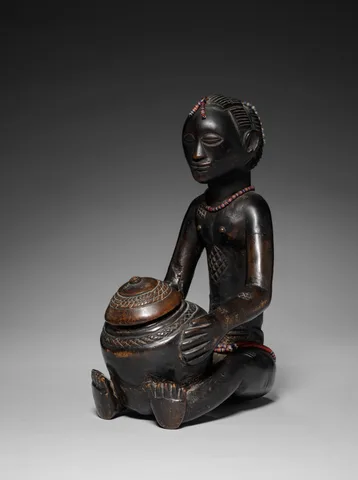
A held bowl with material evidence
Carved fingers curve around a covered bowl in front of the woman’s torso. The museum reports traces of chalk inside and proposes a diviner’s use. Those traces support a containing function; they do not reveal every action once performed with the sculpture.
Carry this question: How do the hands emphasise the bowl instead of simply resting on the knees?
Open the artwork ↗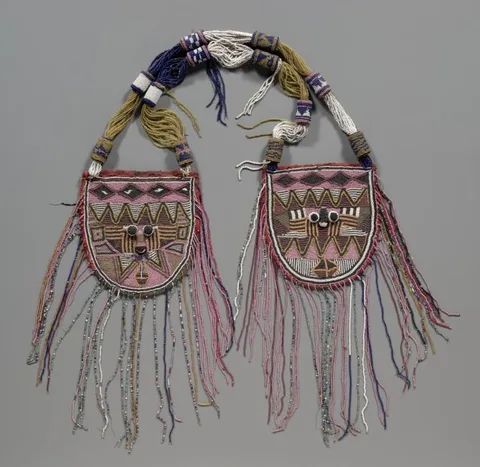
Pattern around a closed interior
Two decorated pouches are joined by beaded strands. The museum connects the necklace with a Yoruba Ifa diviner and protective substances held in the pouches. Their surfaces are available for close looking, but the photograph cannot disclose the particular concealed contents.
Carry this question: Where do the beaded patterns draw attention to the pouch shapes and borders?
Open the artwork ↗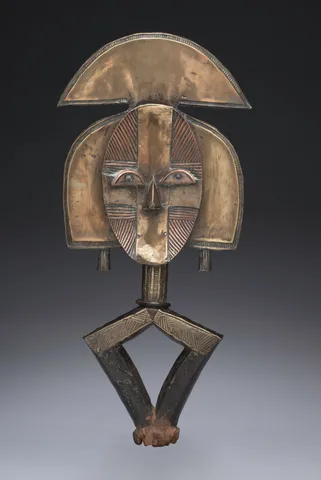
A surviving part of an ensemble
The open diamond below the metal-covered face continues into a short lower stem. The museum identifies this as part of a reliquary ensemble, once associated with a container that is absent here. The isolated figure does not reproduce the full original arrangement.
Carry this question: How does the lower stem help you imagine an attachment without inventing the missing container?
Open the artwork ↗Look at a pair more closely
- Beads frame a wearer
A Kuba official’s hat and a Yoruba diviner’s necklace organize flexible materials.
Read with the sources
Historical context follows the individual museum records linked on each artwork page. These routes make original comparisons of visible form; resemblance alone is not evidence of shared meaning or direct influence.