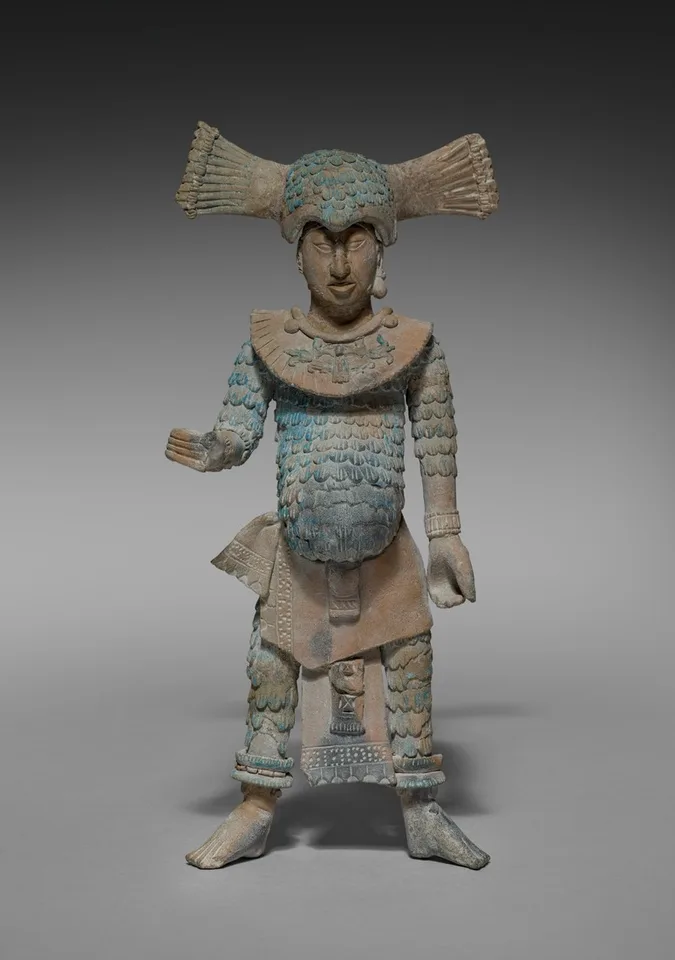
A removable headdress widens a small warrior’s silhouette, while the repeated texture of his clothing leaves two possible explanations open.
Ceramic figures were important offerings in graves of the Jaina Island region. This example represents a warrior, but several aspects of his equipment remain uncertain. The museum explains that his textured clothing could be quilted cotton armour or the feathered uniform of a military order. His headdress is removable, and he probably once carried weapons. The surviving object thus combines clear signs of a military role with missing and ambiguously represented components.
The wide headdress creates a strong horizontal bar above the small face. Blue colour survives in patches across the headgear and repeated body texture, making the figure’s surface more complex than bare clay would suggest. Below, the projecting abdomen and short garment change the silhouette before the legs separate into a stable stance. The museum explicitly says that the frequent pot-bellied form of such figures is unexplained. It is better to acknowledge that gap than convert body shape into a confident story about character, health or rank.
The clothing may represent quilted armour or feathers, and the figure probably once held weapons. The museum does not explain the projecting belly, so its meaning should remain open.
Which visible feature needs the museum’s two alternative material explanations?
Practise looking at Warrior Figurine with Removable Headdress →