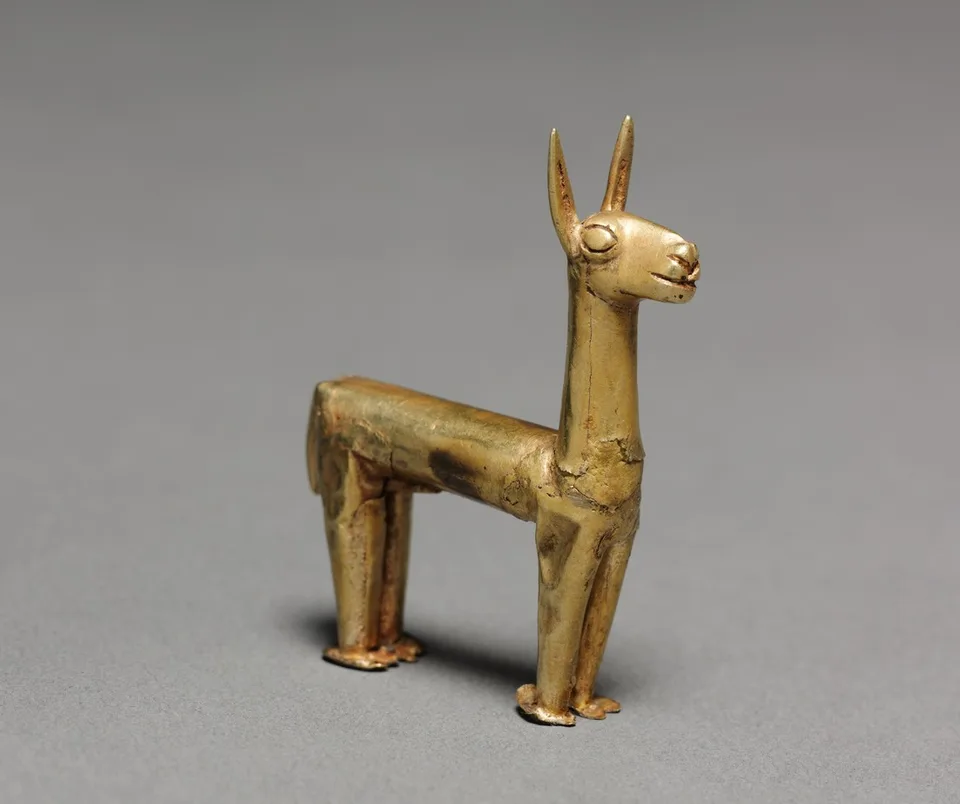
A long upright neck and two pointed ears make a small gold llama immediately legible, while joins reveal the labour of shaping sheet metal.
Gold was a major artistic material in the Inka world, but extensive melting after the Spanish conquest destroyed much large-scale metalwork. Small figures from offerings and tombs are among the surviving forms. The museum identifies this llama as hammered gold and notes that related figures have been found at mountain shrines, including offerings associated with child sacrifice during crises. That comparison does not establish the exact findspot or use of this particular example.
The llama’s identity depends on an economical silhouette: tall ears, a long neck, short body and thin legs. Its gold surface also preserves signs of fabrication. Look for the joins around the chest and neck rather than treating the animal as a solid casting. The slight irregularities make the shaping and assembly of metal visible. The polished gleam belongs beside the object’s difficult broader history of ritual offering and colonial destruction. Neither material splendour nor a familiar animal shape should erase those contexts or fill gaps in the individual provenance.
The record gives no secure findspot for this figure. Evidence from other mountain offerings, including child sacrifice, should not be presented as the proven history of this particular llama.