Small forms, open questions
An object can be visually clear and historically uncertain at the same time. A llama, a warrior, a feline and a supernatural face each provide a strong starting point for looking. This route asks which details support those identifications and where the evidence stops, especially when findspots, missing components or symbolic meanings are not securely known.
Begin the journey ↓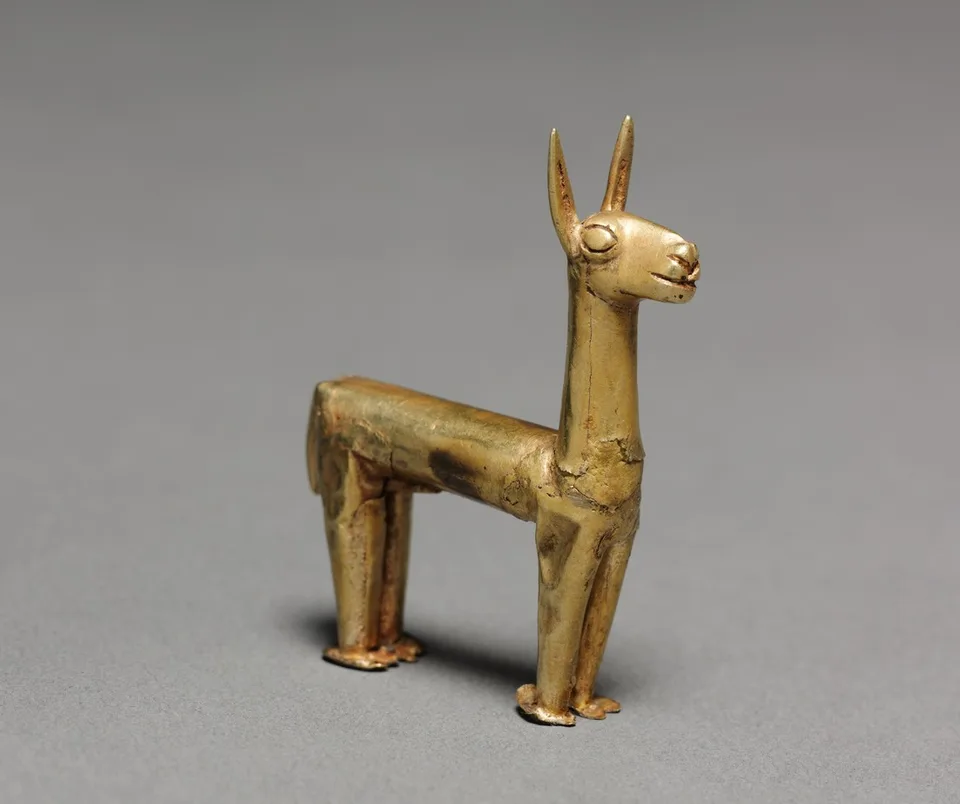
A clear silhouette without a findspot
The tall ears and neck identify the small gold animal economically. Its sheet-metal construction can be examined, but the record supplies no secure findspot that would connect this particular llama with a known offering event.
Carry this question: Which few features make the animal recognizable?
Open the artwork ↗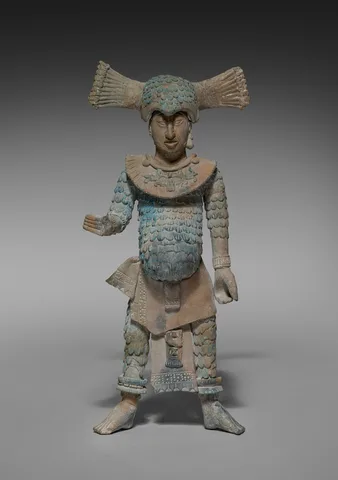
A removable part changes the outline
The broad headdress belongs to the figure but is a separate removable component. The museum proposes that the warrior once held weapons and offers alternative readings of his clothing. These uncertainties leave parts of his original appearance unresolved even though the headdress remains striking.
Carry this question: How much of the silhouette belongs to the removable part?
Open the artwork ↗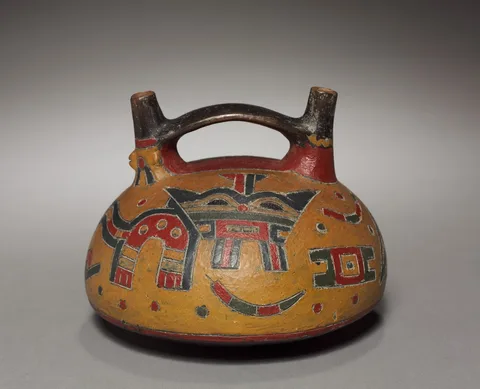
Recognition without a named deity
The central angular face supports the museum’s feline identification. Its specific meaning and the significance of the twin-spout form remain unknown, so recognizing an animal does not justify assigning a deity or ritual.
Carry this question: Which lines make the central form read as a face?
Open the artwork ↗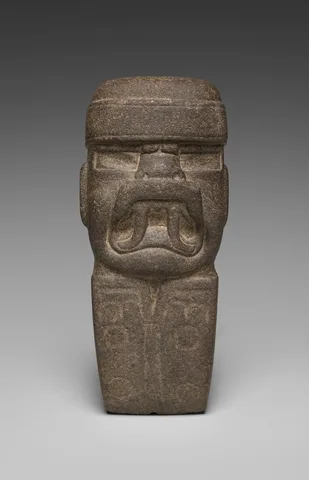
A supernatural face on an axe-like form
The flared mouth and fangs support a supernatural identification. The lower motif and proposed fertility association remain incompletely understood; an axe-like silhouette does not prove that the stone was used to clear land.
Carry this question: How do the mouth and fangs differ from an ordinary human face?
Open the artwork ↗Look at a pair more closely
- Gold, seams and openwork
An Inka llama and a Tairona pendant reveal different demands on precious metal.
Read with the sources
Historical context follows the individual museum records linked on each artwork page. These routes make original comparisons of visible form; resemblance alone is not evidence of shared meaning or direct influence.