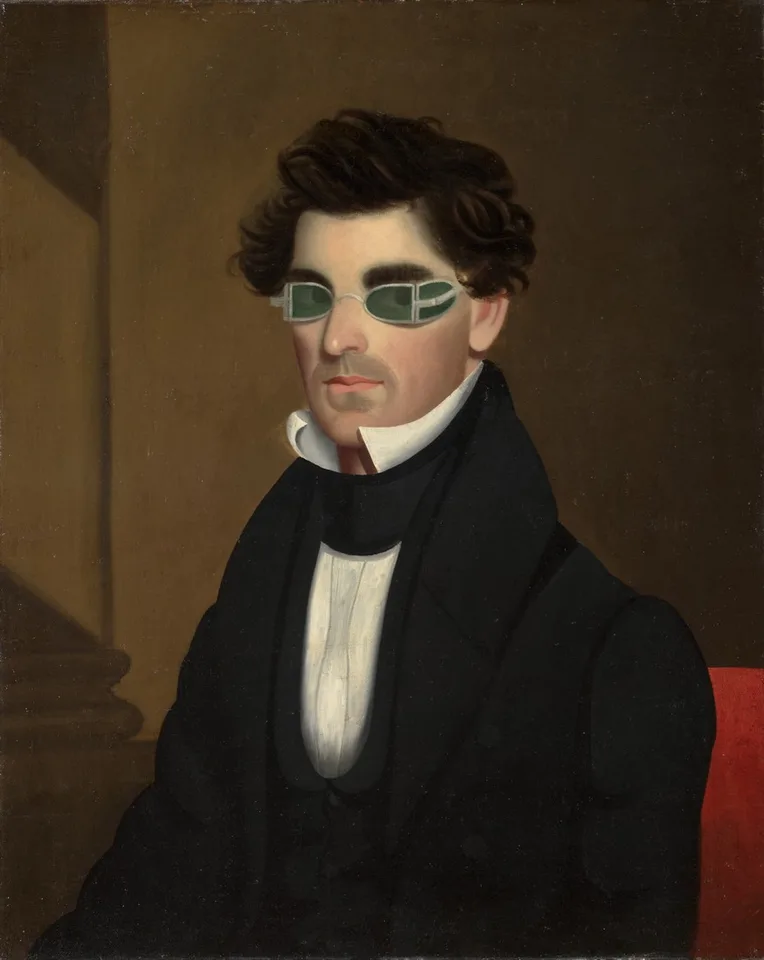
Four green lenses make Nathaniel Olds’s spectacles the portrait’s most arresting detail, turning an aid to sight into a challenge to looking.
Jeptha Homer Wade painted Nathaniel Olds wearing spectacles with four tinted lenses. The extra pair are hinged side shields, a design used to protect sensitive eyes from light, wind or dust. The museum notes that such glasses were sometimes called carriage or railroad spectacles because they could be worn during outdoor travel. Their unusual appearance should not be mistaken for a fanciful invention by the painter.
The green lenses are striking because the rest of the portrait uses restrained blacks, whites and browns. They partly conceal the eyes, the feature viewers often expect to supply a portrait’s most direct connection. Instead, the sharply raised collar, dark hair and calm mouth help organize the face. Wade later became a major industrialist, but that later career should not overwhelm his earlier work as a painter. Here the most productive starting point remains an ordinary technology of bodily protection made visually prominent within a formal likeness.
The glasses’ protective purpose is documented for the type, but the record does not diagnose Olds’s eyesight. Their tinted lenses also limit what can be observed about his gaze.