Faces, frames and viewing distance
The size and setting of an image affect how it asks to be seen. Begin with miniature portraits whose frames remain visible, then consider a face partly hidden by spectacles and a small version of a rooftop sculpture. This route compares viewing conditions without assuming that all five works represent named sitters or share the same purpose.
Begin the journey ↓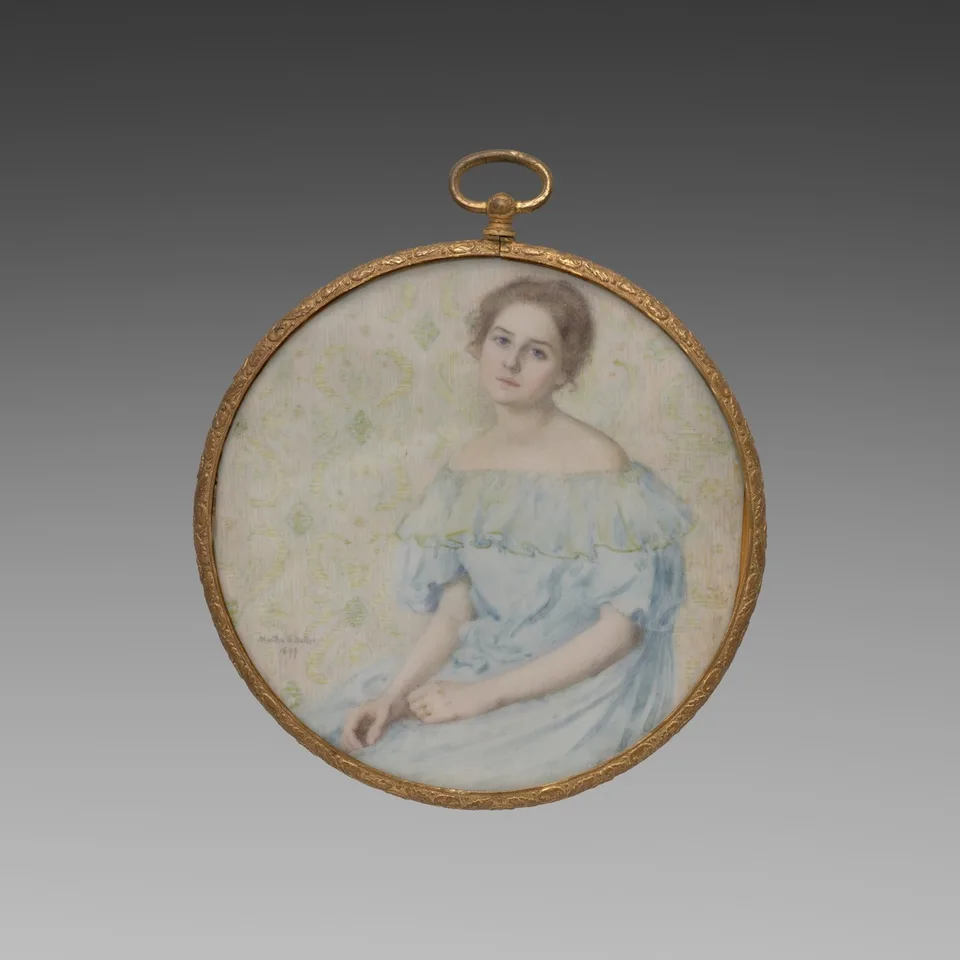
A miniature within its frame
The small suspension ring belongs to the object around the portrait. It reminds us that the enlarged screen image represents a portable miniature, while Baker’s retention of the work complicates an assumed history as a commissioned keepsake.
Carry this question: How does the ring change your sense of the picture’s scale?
Open the artwork ↗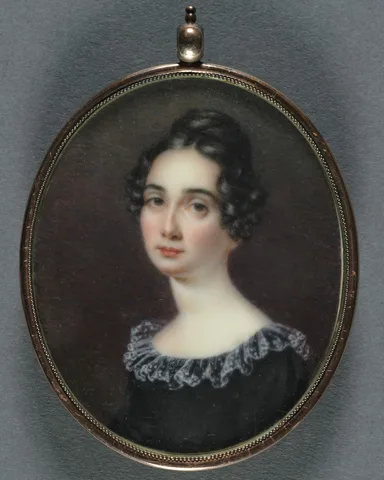
A face without a recovered name
The delicately coloured complexion gives the sitter specificity, but the record does not recover her identity. Precise representation and historical identification are different kinds of knowledge, even in an intimate miniature.
Carry this question: Which small colour changes make the face feel particular?
Open the artwork ↗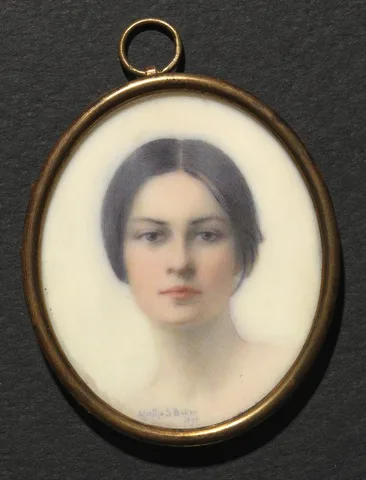
Edges that fade into the support
The shoulder fades into the pale support while the oval frame remains firm. The museum compares the sitter’s skin with the ivorine surface, which is distinct from ivory. The soft edge alone does not establish whether Baker considered the work finished.
Carry this question: Where does the painted body become hardest to separate from its ground?
Open the artwork ↗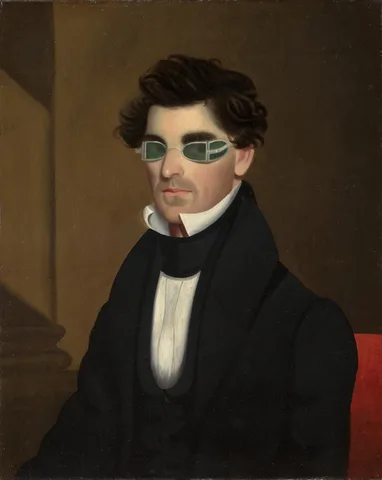
A gaze partly concealed
The additional side lenses give the spectacles their unusual appearance. Their protective purpose helps explain the visible design, but neither the lenses nor the portrait provide a diagnosis of the sitter’s eyesight.
Carry this question: How do the side panels alter the face’s outline?
Open the artwork ↗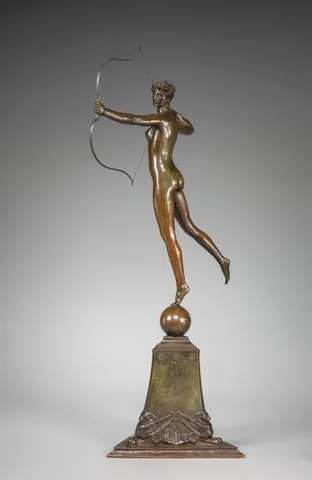
A silhouette brought indoors
The broad curve of the bow belongs to a design intended to read from a distant rooftop. This smaller version changes scale and setting, allowing close inspection of a pose conceived for a very different encounter.
Carry this question: Which features would still be clear from far away?
Open the artwork ↗Look at a pair more closely
- Miniatures and fading edges
Anna Claypoole Peale and Martha Baker make small portraits distinct through boundaries.
Read with the sources
Historical context follows the individual museum records linked on each artwork page. These routes make original comparisons of visible form; resemblance alone is not evidence of shared meaning or direct influence.