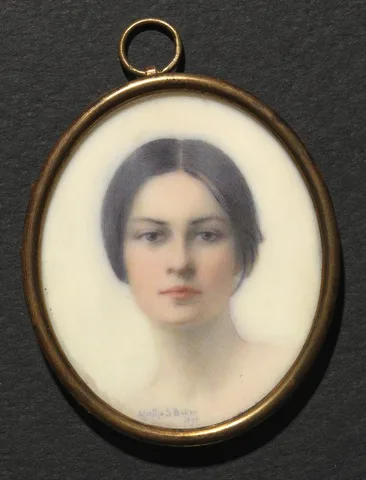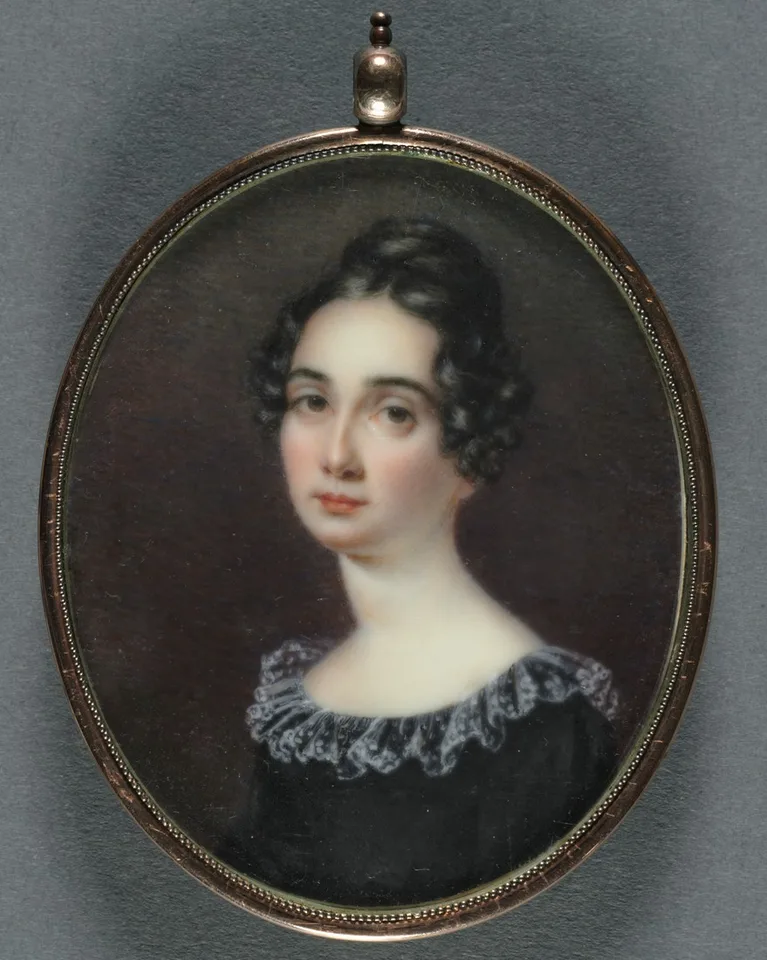
A white lace edge and rosy face emerge from dark clothing, while a locket frame suggests the closeness of a portable likeness.
Anna Claypoole Peale learned miniature painting by observing and working beside her father, James Peale, and developed a successful practice of her own. The woman in this portrait is unidentified. The museum suggests that the locket may have been given as a sentimental keepsake to someone close to her, but that likely use is not a documented exchange between named people. The surviving object preserves a carefully rendered likeness without preserving a complete personal story.
The face emerges from a narrow range of dark surroundings. Black curls, dress and brown background frame pale skin, rosy cheeks and a small red mouth. A lace border repeats that light-dark contrast around the neckline, offering a second delicate area below the face. The oval metal enclosure and upper fitting make the portrait’s portability visible. Looking at the whole object keeps material and possible handling in view, rather than treating the enlarged digital face as though it originally occupied a large canvas.
The sitter is unnamed, and a sentimental gift is a likely function rather than a recorded event. Enlargement on screen also changes the intimate scale of the original miniature.