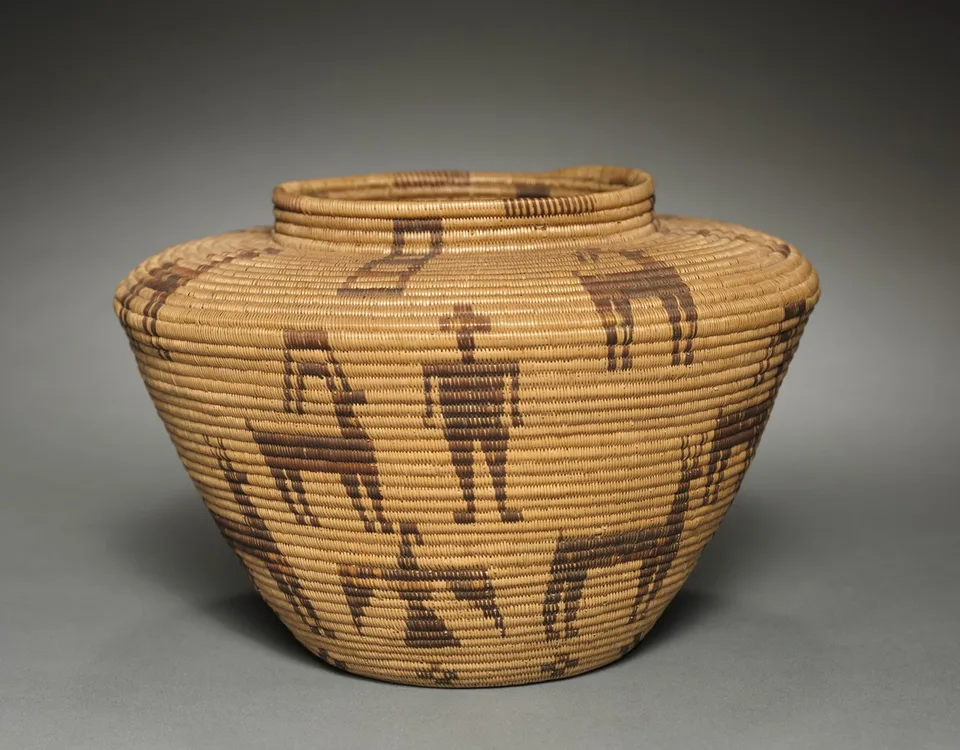
Sarah Hunter turns animals and people into angular woven figures, letting the basket’s continuous coils carry a lively changing procession.
Sarah Hunter, a Timbisha Shoshone basket maker, created this jar-shaped basket in 1910. The museum identifies willow as the pale ground material and bulrush as the darker material used for the figures. It relates her geometric animal motifs to forms found in Death Valley rock imagery. The basket gives a named Indigenous woman’s work a place within a collection where many earlier makers are unrecorded.
The figures bend to the logic of coiling. A human body becomes a stack of short dark bars, while an animal’s legs drop through successive horizontal rows. Different creatures remain recognizable without losing that angular structure. The museum emphasizes the knowledge involved before weaving begins: tending, gathering and preparing plants at the right time affects colour and the strength of stitches. Look from the even coils to the darker figures and back again. Representation depends on the same carefully prepared materials that give the basket its shape and durability.
The museum relates the motifs to regional rock imagery but does not assign a specific story to this basket. Recognizable animals should not be turned into an invented narrative.