Containers with presence
A container need not present itself as a neutral hollow shape. In these works, figures made in basketry, a face-like design, a building or an animal transform the surface and silhouette. Follow the visible construction and decoration, while preserving the distinct traditions and uncertainties recorded for each object. A recognizable form does not automatically reveal a specific story or religious identity.
Begin the journey ↓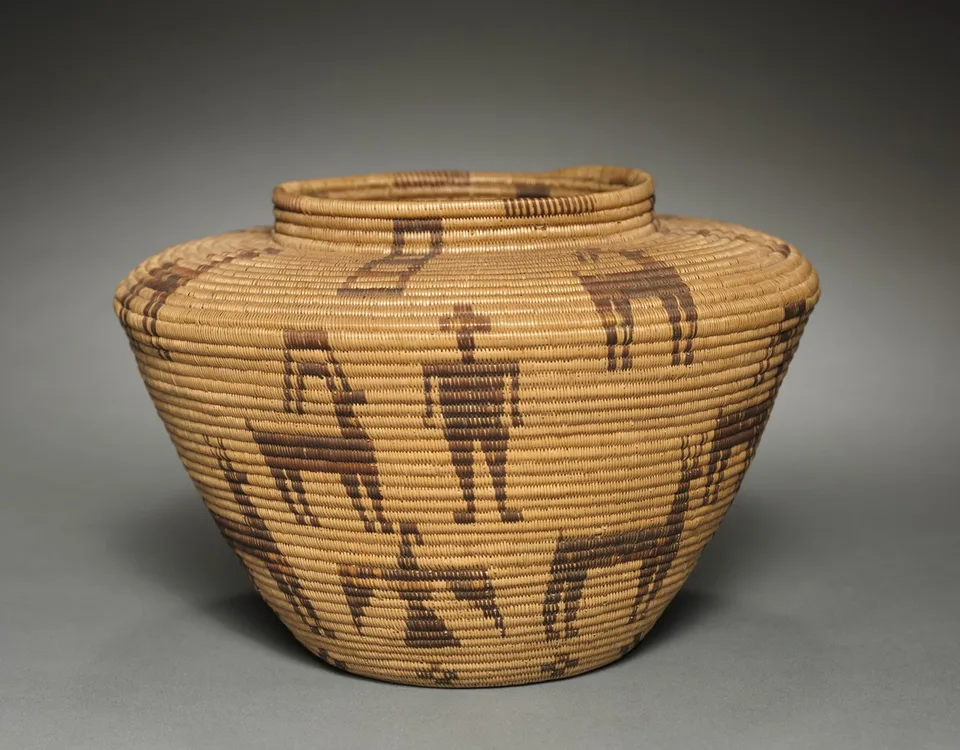
Figures made through coils
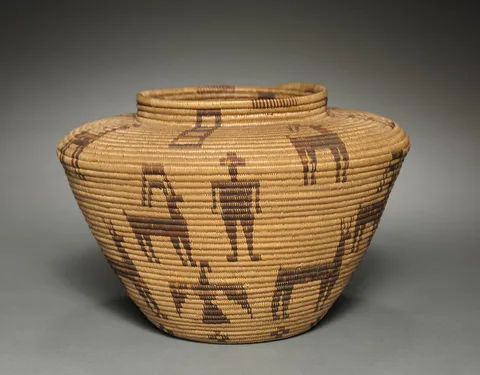
Sarah Hunter’s angular human figure follows the basket’s horizontal structure. The body is translated into stepped stitches, allowing the construction itself to participate in the image without supplying a securely identified narrative.
Carry this question: How do the horizontal rows shape the figure’s limbs?
Open the artwork ↗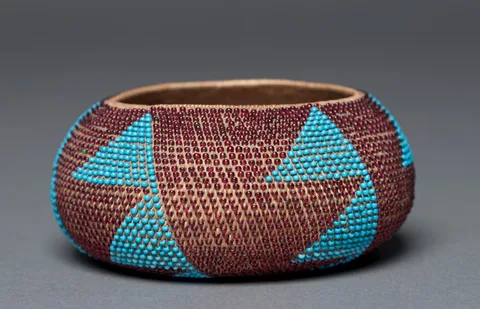
Geometry made from tiny units
A turquoise triangle rises through a dense red field of beads. Its large shape and small repeated units remain visible at different distances; the museum’s possible “spirit door” interpretation concerns a detail not securely located in this overview.
Carry this question: When does the triangle become more prominent than its individual beads?
Open the artwork ↗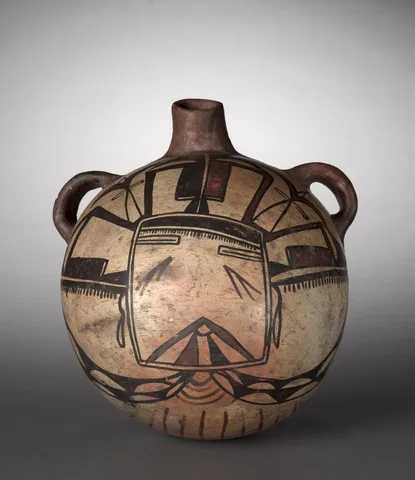
Resemblance with a firm limit
The large face-like design commands the front of the canteen. The museum explicitly distinguishes it from an actual Katsina, showing why a visual resemblance should not be promoted into a religious identification.
Carry this question: Which features make the pattern look face-like?
Open the artwork ↗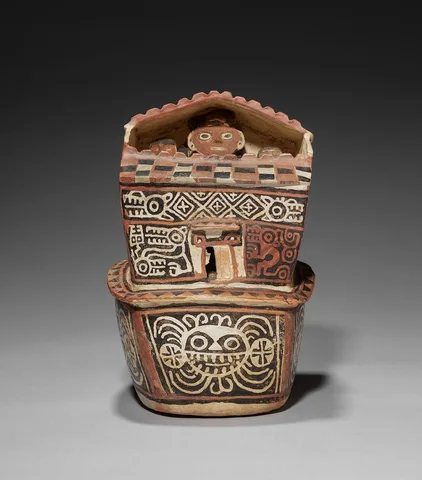
A vessel becomes a building
A face appears in the upper chamber above the vessel’s lower doorway. The museum proposes a ceremonial gathering, but the frontal view conceals parts of the interior and does not reveal every described participant.
Carry this question: How does the upper opening suggest an inhabited structure?
Open the artwork ↗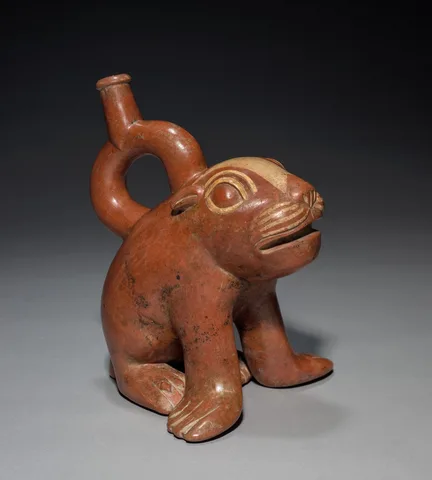
A container takes animal form
The raised face makes the sea lion pup immediately recognizable. Follow it toward the loop and spout to recover the vessel’s function, while keeping later beliefs about sea lions separate from proven meanings for this object.
Carry this question: What changes when you look behind the animal’s head?
Open the artwork ↗Look at a pair more closely
- Woven and beaded rhythms
Sarah Hunter’s basket and a Wappo bowl distinguish structure from surface.
Read with the sources
Historical context follows the individual museum records linked on each artwork page. These routes make original comparisons of visible form; resemblance alone is not evidence of shared meaning or direct influence.