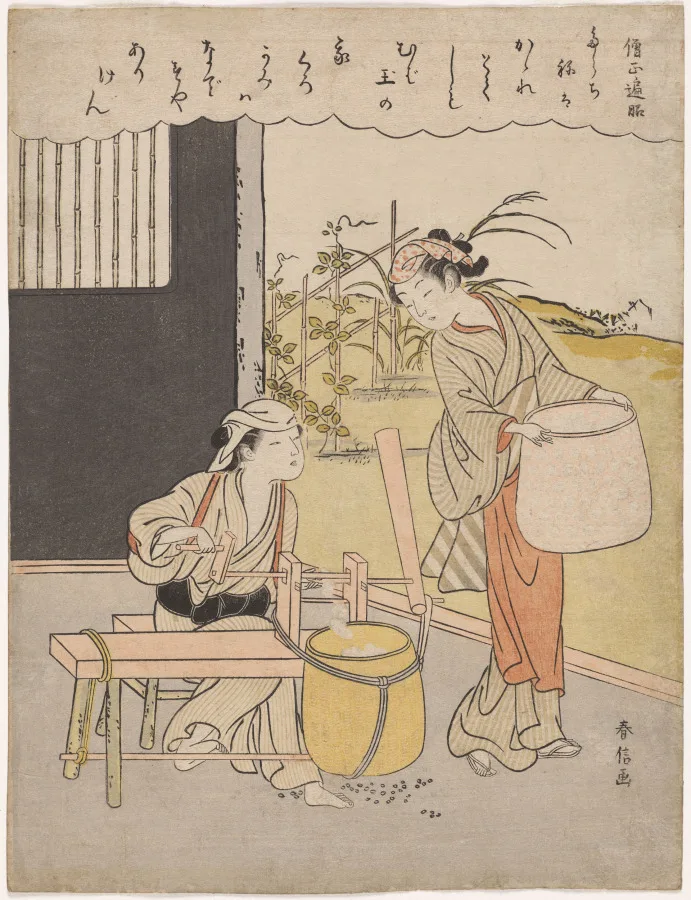
 Japan, Edo period (1615–1868) · c. 1766
Sōjō Henjō
Suzuki Harunobu (Japanese, 1724–1770)
color woodblock print
These prints make women’s work intelligible through coordinated bodies and equipment. Compare a small land-based mechanism with cultivation on water, then ask how literary and place-based contexts change the purpose of each scene.
Japan, Edo period (1615–1868) · c. 1766Suzuki Harunobu (Japanese, 1724–1770)
color woodblock print
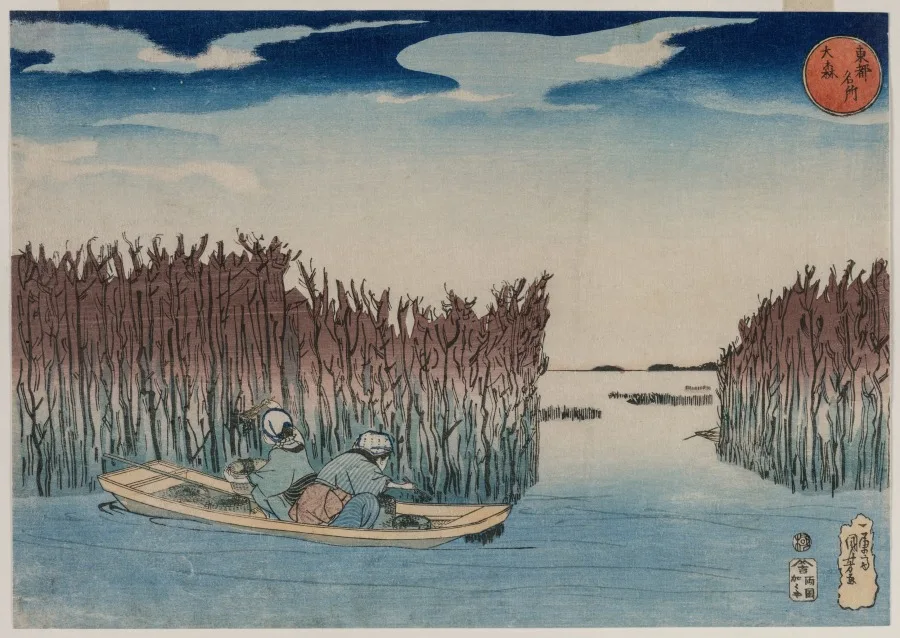 Japan, Edo period (1615–1868) · early 1830s
Utagawa Kuniyoshi (Japanese, 1797–1861)
Color woodblock print
The seated cotton worker operates a separating device, while the seaweed gatherers bend from a low boat toward plants and baskets. The tools explain activity before the accompanying records supply fuller context.
A basket links the standing and seated cotton workers. Repeated seaweed beds extend beyond the boat. Both scenes imply a wider process, though neither is a complete technical manual for production.
Cotton seeds connect the first print with an older poem’s imagery. The second print’s title identifies a famous-place series. Labour can therefore support literary play or a commercial view of a recognisable district.
The images are designed prints rather than comprehensive labour records. They do not establish the workers’ personal identities, wages, or complete working conditions.
The comparison of visible choices is our own reading. Follow either artwork page for its full context, uncertainty note and image-rights record.
Small gestures make atmosphere and activity visible.