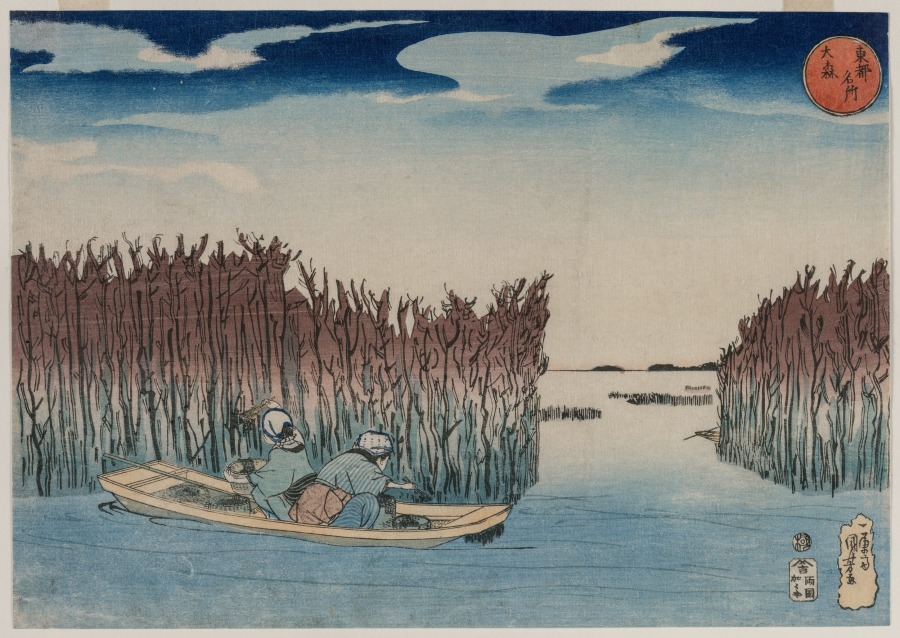
A low boat moves between cultivated seaweed beds, making an Edo landscape a picture of food production as well as place.
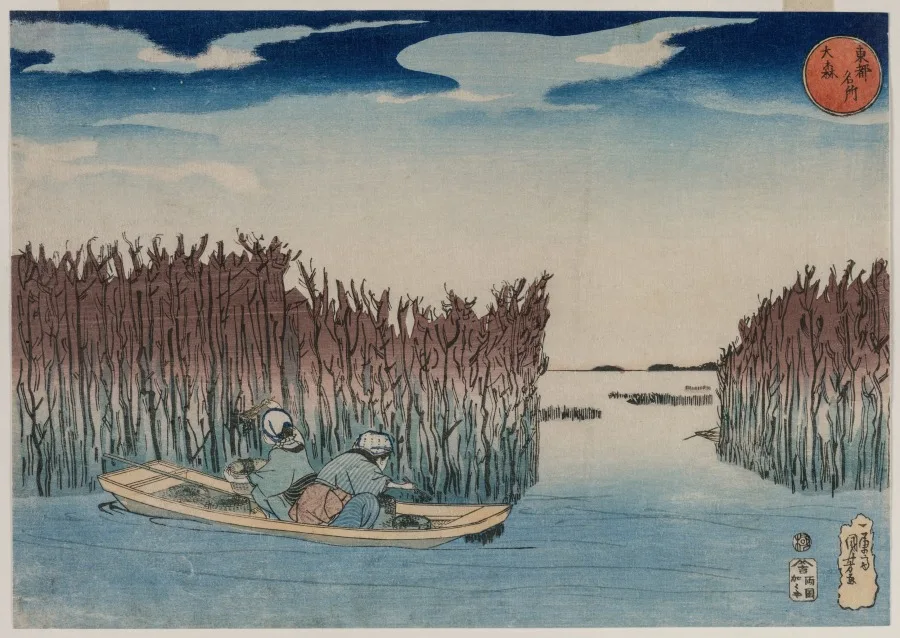
The boat is almost enclosed by upright cultivation beds. Two workers lean toward the plants and their baskets, while the open water between the beds leads the eye toward the distance. The museum identifies the activity as gathering nori in the Ōmori district south of Edo. The landscape is therefore organised by work, not simply by wild vegetation.
Kuniyoshi gives the scene both intimacy and scale. We can follow the two women’s gestures in the foreground, then notice further beds and another boat’s tip beyond them. The museum describes one worker using chopsticks and the other a gentle raking action. These details connect an attractive place print with the labour behind a familiar food. Compare Hokusai’s rice-harvest scene: both images make cultivation visible, but water here serves as the route, working surface, and surrounding space. The red circular cartouche identifies the series of famous places, reminding us that productive landscapes could also become desirable printed views.
The museum identifies the cultivation and tools, but the designed scene is not a complete technical manual for historical nori production. The two workers are not documented individual portraits.
What most clearly distinguishes these plants from an incidental wild shoreline?
Practise looking at Ōmori, from the series Famous Places in the Eastern Capital →