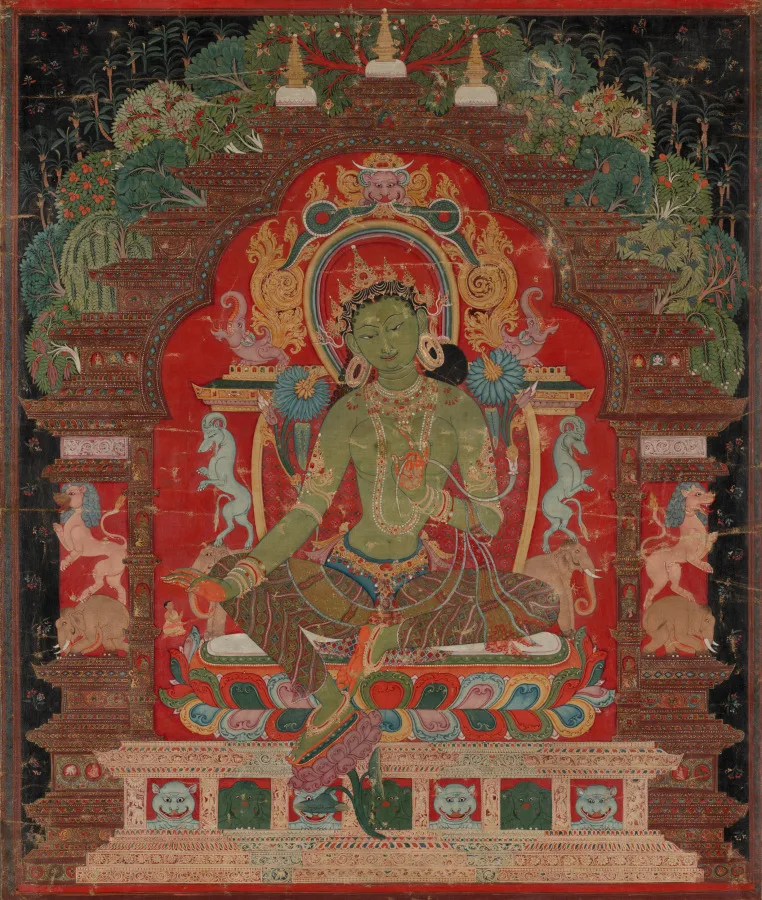
 Central Tibet · c. 1260s, mounted 2020
Green Tara
attributed to Aniko (Nepalese, active in Tibet mid- to late 1200s)
thangka; gum tempera, ink, and gold on sized cotton; mount: silk
Religious giving can appear within a devotional painting or as a separate sculptural figure. Compare the clearly identified tiny commissioner in Green Tara with a bronze woman whose donor role is proposed rather than certain.
Central Tibet · c. 1260s, mounted 2020attributed to Aniko (Nepalese, active in Tibet mid- to late 1200s)
thangka; gum tempera, ink, and gold on sized cotton; mount: silk
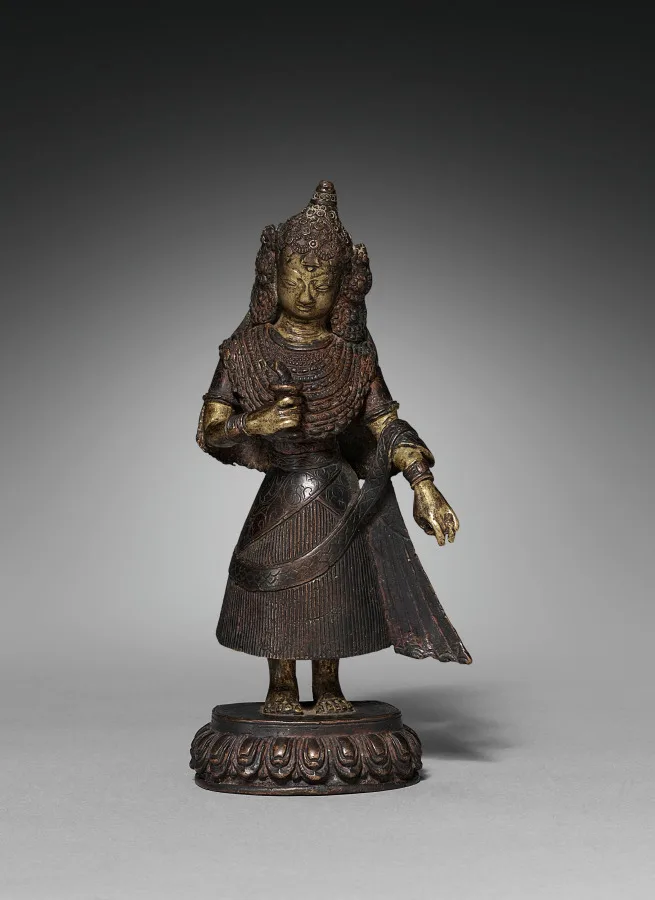 Nepal · c. 1500
Maker unrecorded
bronze
The painted donor is tiny beneath Tara’s hand. The bronze woman holds a lamp in a figure that now stands alone, giving a possible act of donation much greater prominence in the photograph. Display scale must not be mistaken for original spiritual equivalence.
Tara occupies an elaborate throne setting. The bronze woman wears complex finery and a headdress. Rich ornament alone does not settle whether a figure is a deity, donor, or another participant.
The central Tara is identified through the painting’s particular attributes and devotional context. The bronze woman’s lotus base may indicate merit gained through donation. A lotus support alone cannot decide whether a figure is a deity or a donor.
The bronze woman’s original group is absent and her donor identification remains tentative. The works are not evidence of one shared patron or a single reconstructed devotional ensemble.
The comparison of visible choices is our own reading. Follow either artwork page for its full context, uncertainty note and image-rights record.
Identity depends on attributes, context, and what remains.