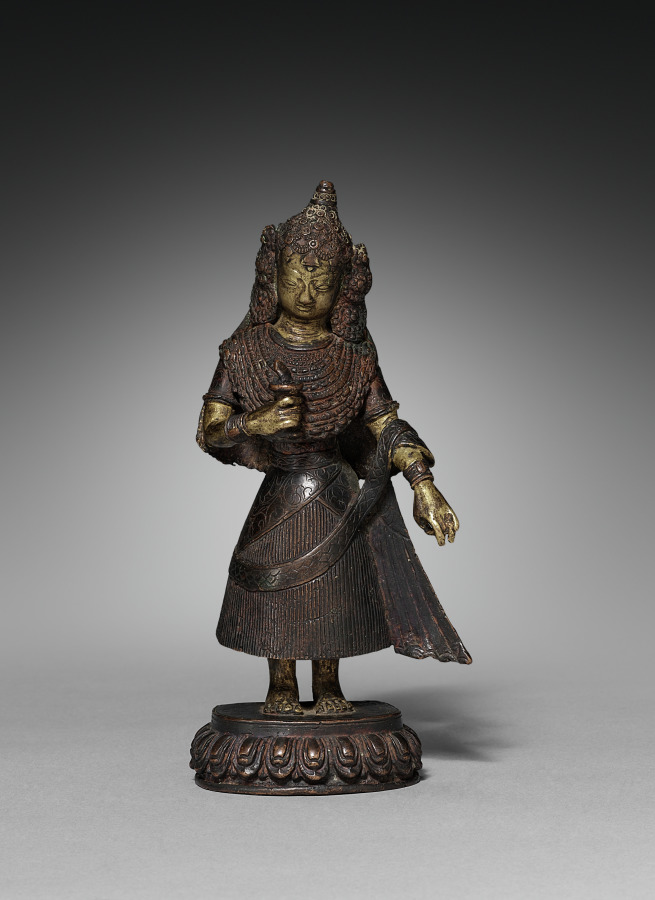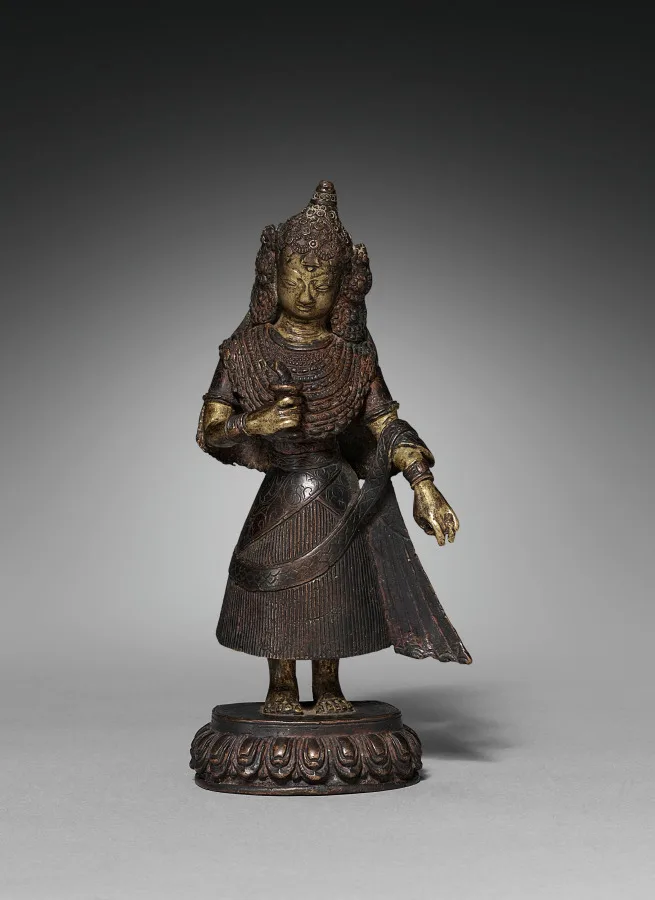
A richly dressed woman carrying a lamp may preserve the presence of a donor once placed within a larger sacred group.
The figure presents herself through both dress and action. A complex headdress rises above the face, while the skirt’s pleats and the long cloth at the back give the lower body a distinct structure. One hand carries a lamp. The museum suggests that this richly adorned woman was a donor included within a larger sculptural group, rather than assuming that every figure on a lotus base must be a deity.
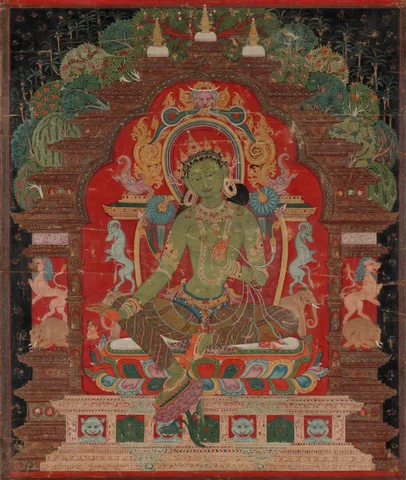
That possibility makes the base especially interesting. The museum proposes that the lotus could refer to a transcendent state gained through the merit of her donation, while keeping the explanation tentative. The original group is not present, so scale and position relative to its other figures cannot be reconstructed here. Compare the tiny donor in Green Tara: the act of commissioning or giving can be represented in different materials and degrees of prominence. Clothing, held objects, and placement all contribute clues, but none should erase the museum’s uncertainty about the figure’s original role.
The donor identification and the lotus base’s connection with earned merit are both proposed rather than certain. The original sculptural group is absent, and the image does not establish the woman’s personal name.