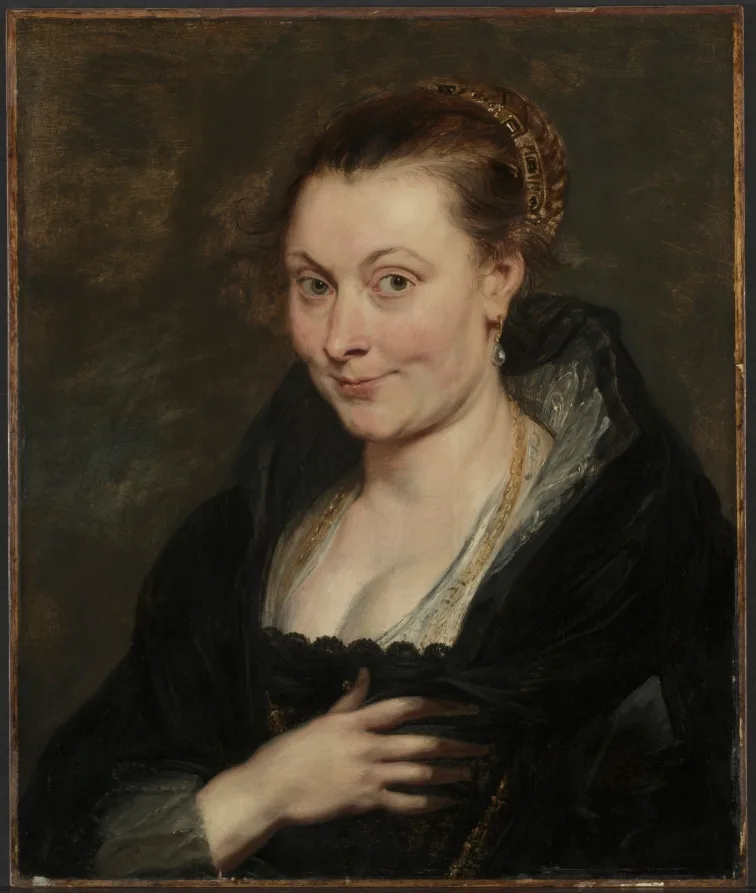
 Flanders · c. 1620–25
Portrait of Isabella Brant
Peter Paul Rubens (Flemish, 1577–1640)
oil on wood
A responsive face or a reaching hand can make an imposing portrait feel personal. Compare how these two paintings combine contact with clothing and scale, while keeping a documented wife distinct from an unidentified sitter.
Flanders · c. 1620–25Peter Paul Rubens (Flemish, 1577–1640)
oil on wood
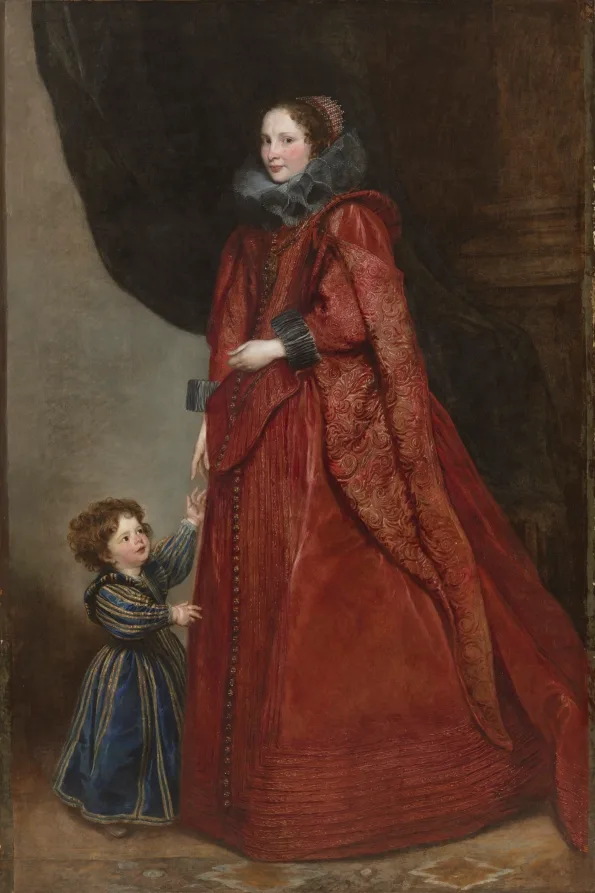 Flanders · c. 1623–25
Anthony van Dyck (Flemish, 1599–1641)
oil on canvas
Isabella’s slight smile and outward eyes create a close encounter within a cropped view. The Genoese woman’s illuminated face occupies a much smaller part of a full-length display. Both faces are responsive, but the surrounding formats distribute the viewer’s attention differently.
Rubens places a pale hand across dark clothing; the museum records that the hands were added after the face. Van Dyck places the child’s upward reach beside the large red skirt. Each gesture animates a portrait through a different kind of contact and a different relationship.
Isabella’s collar and chain create small material contrasts near the face. The Genoese sitter’s enormous patterned gown occupies a commanding area of the canvas. Compare how much space clothing receives before deciding how prominently the painting presents status, intimacy, or adornment.
Isabella is securely identified as Rubens’s wife; the Genoese sitter remains unnamed. Similar warmth cannot supply the missing identity or prove either person’s private emotions.
The comparison of visible choices is our own reading. Follow either artwork page for its full context, uncertainty note and image-rights record.
Faces, costumes and objects tell us different things about identity.