Portrait clues and uncertainty
An outward gaze is compelling, but it cannot by itself provide a sitter’s name. These portraits and figure studies offer several kinds of evidence: documented relationships, anonymous status, professional tools, historical costume and uncertain self-representation. Follow the clues without expecting every work to answer the same question about the person it shows.
Begin the journey ↓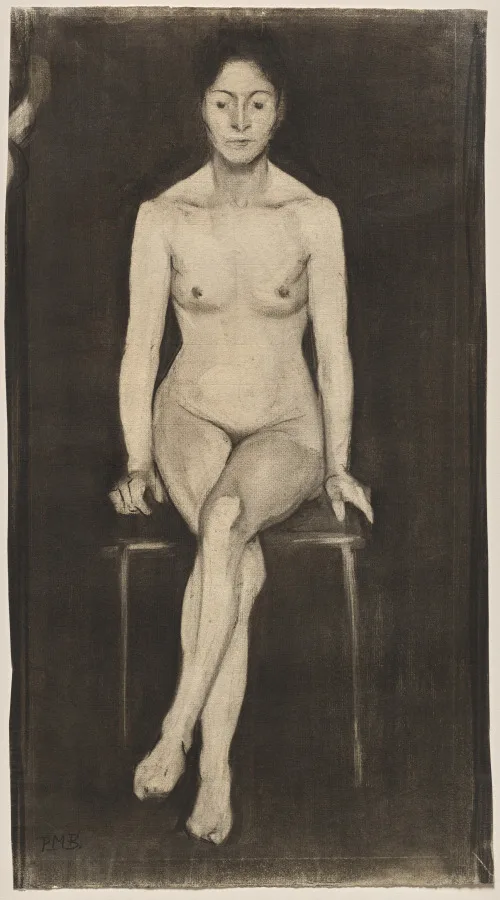
Keep the question mark
The direct face establishes an encounter, while the title preserves uncertainty about self-portraiture. Notice the simplified forms before trying to identify the sitter. Neither the gaze nor the anatomy removes the need for qualified identification and interpretation.
Carry this question: What can you describe without deciding whether this is a self-portrait?
Open the artwork ↗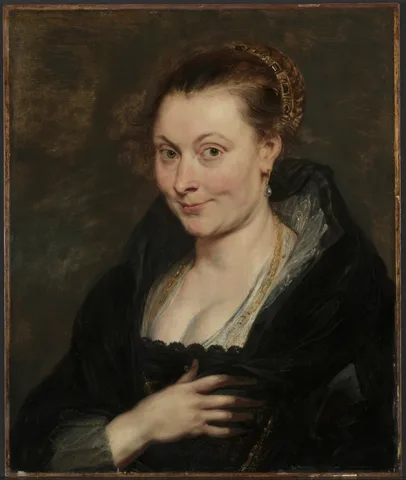
A gesture added in stages
Isabella Brant’s identity and relationship to Rubens are documented. The museum also reports that the hands were added after the face. The portrait’s unity therefore emerged through stages, despite the immediate impression created by its warm expression.
Carry this question: How does the hand provide a second focus below the face?
Open the artwork ↗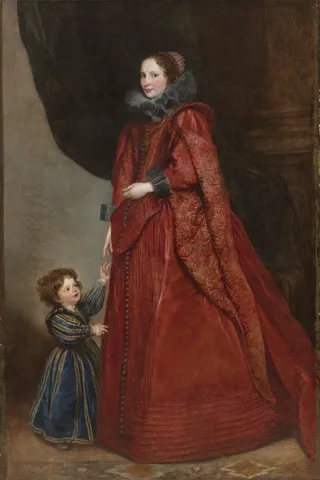
Status without a recovered name
A great expanse of red fabric announces elevated social position, yet the woman remains unidentified. Compare that formal display with the child’s upward reach. Scale and gesture make a convincing encounter without supplying a secure personal biography.
Carry this question: Which features describe status more readily than individual identity?
Open the artwork ↗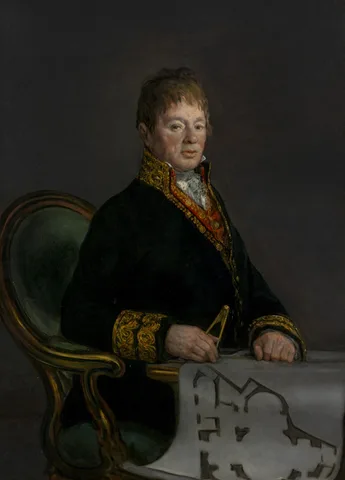
A profession becomes a document
Cuervo’s architectural plan connects the person with a specific professional project identified by the museum. Here an object provides a different kind of evidence from expression or costume. The portrait still presents expertise selectively, rather than recording an entire career.
Carry this question: How does the plan connect the sitter’s hand with his profession?
Open the artwork ↗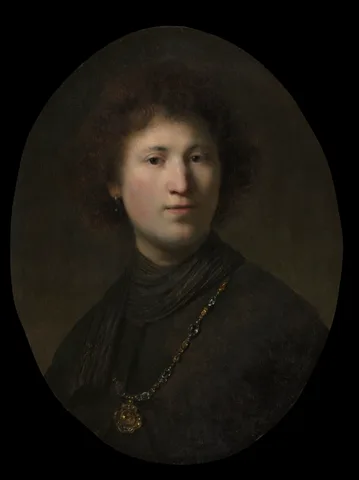
A jewel does not name the sitter
The pendant catches light and makes the anonymous head study distinctive. Its splendour does not recover the man’s identity. Preserve the museum’s Rembrandt and Studio attribution while considering how skin, cloth and metal offer different problems for painting.
Carry this question: Does the pendant explain identity, or chiefly draw your eye?
Open the artwork ↗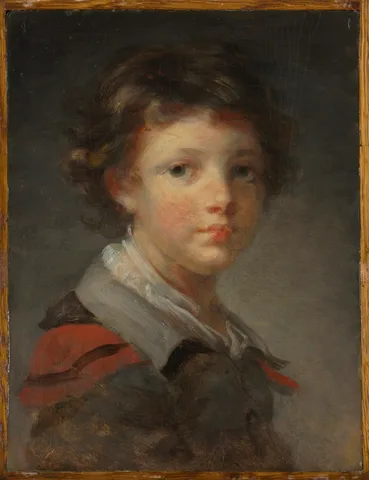
Costume reaches into the past
A bright historical collar contributes to a portrait’s conversation with earlier art. The proposed identification as Fragonard’s son remains uncertain. Clothing can be deliberately retrospective, so it does not automatically date the represented person’s daily life.
Carry this question: What can the costume establish without naming the child?
Open the artwork ↗Look at a pair more closely
- Intimacy inside a formal portrait
Rubens’s Isabella Brant and Van Dyck’s Genoese woman
Read with the sources
Historical context follows the individual museum records linked on each artwork page. These routes make original comparisons of visible form; resemblance alone is not evidence of shared meaning or direct influence.
- Seated Female Nude (Self-Portrait?) — museum collection record
- Portrait of Isabella Brant — museum collection record
- A Genoese Lady with Her Child — museum collection record
- Portrait of Don Juan Antonio Cuervo — museum collection record
- A Young Man with a Chain — museum collection record
- A Boy in a Red-Lined Cloak — museum collection record