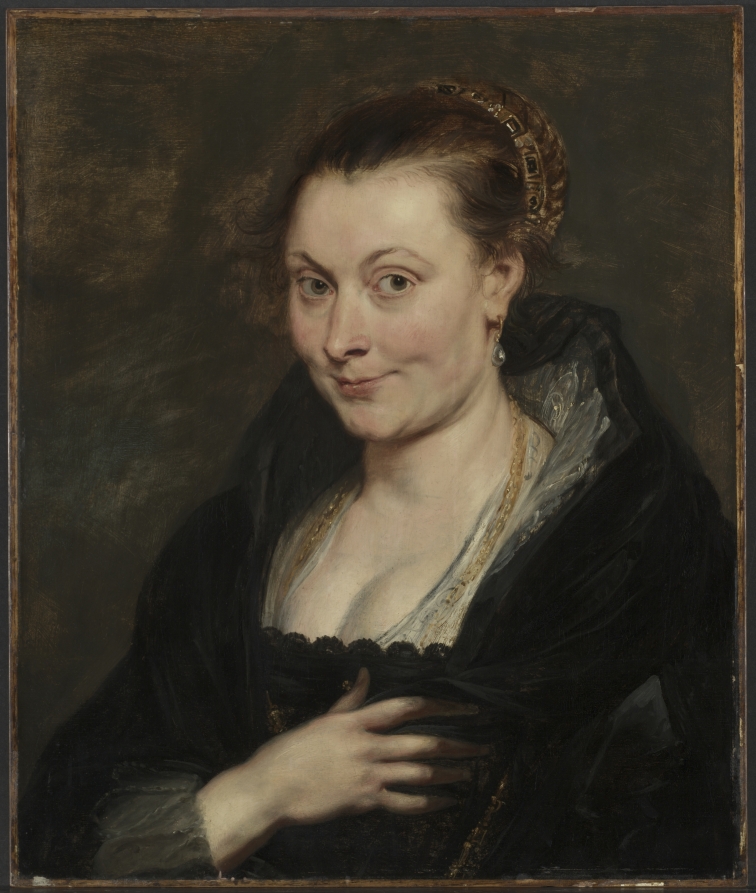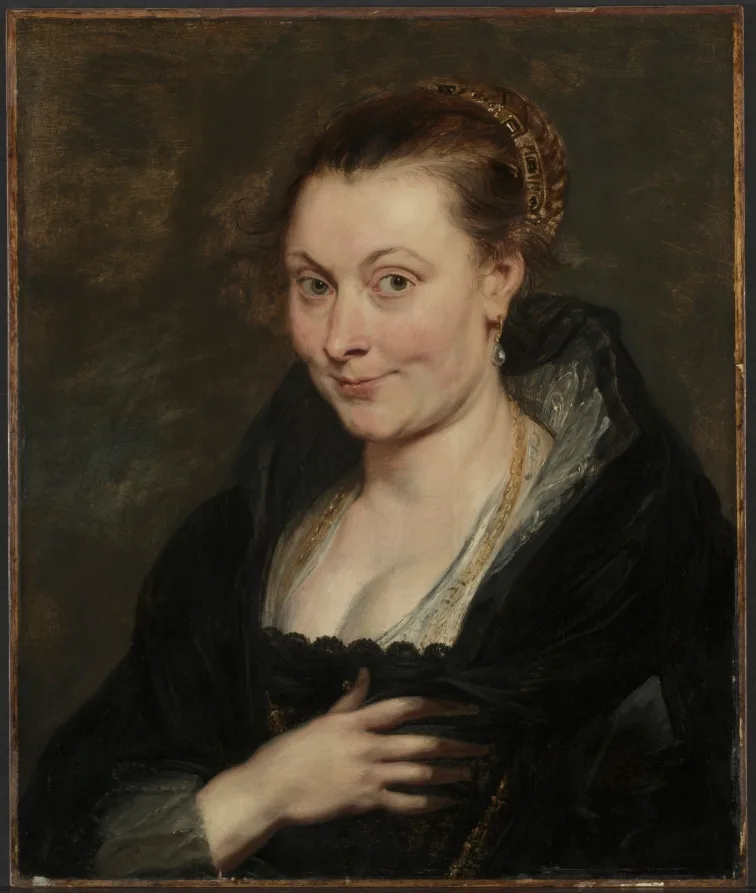
The face establishes contact; the hand adds another kind of presence—and the museum records that it was added later.
The slight turn and alert eyes make the encounter feel immediate. Rubens concentrates warm color in the face, while the black garment merges with the darker background. A pale hand crosses the chest and gathers fabric, extending the portrait’s animation below the head. Jewelry remains visible, but it does not overwhelm the person wearing it.
The museum identifies Isabella Brant as Rubens’s first wife and interprets the painting’s lively expression and rich handling as signs of an intimate relationship. It also reports a sequence of making: the face was painted before the hands were added. That detail complicates the impression of a single spontaneous encounter. Look from the face to the hand, then to the thin gray collar between them. The portrait’s warmth comes from a carefully developed arrangement of light, color, gesture, and degrees of finish, rather than from personal history being transparently available on the surface.
Their relationship is documented, but the sitter’s precise feelings are not readable as facts. The later addition of the hands comes from museum research; a viewer cannot establish that chronology solely by enlarging the finished photograph.