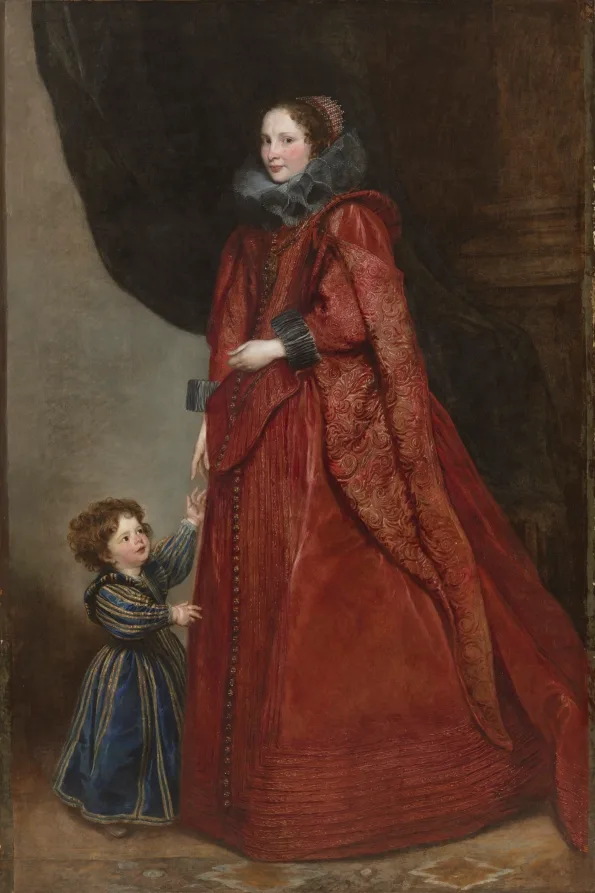
The enormous red gown declares status, but the child’s upward reach makes the formal portrait feel like an unfolding encounter.
Scale makes the first impression. The woman’s tall figure and wide red skirt dominate the canvas, while the small child reaches up beside her. A column and sweeping drapery enlarge the formal setting. Yet the child’s face and hands interrupt that display with a recognizable act of seeking contact. Van Dyck makes status and relationship visible within the same composition.
The museum identifies the sitter as an unnamed Genoese woman and explains the painting’s place in a changing tradition of elite portraiture. Elaborate costume still announces wealth, but animated faces and gestures give the figures a more responsive presence. Her identity has not been recovered in the supplied record, so the costly gown cannot substitute for a name. Compare the upright adult with the child’s diagonal reach: the contrast creates energy while preserving hierarchy. The image’s warmth is therefore produced within a conspicuously unequal arrangement of size, position, and social display.
The woman remains unidentified. The museum’s reading of warmth concerns the portrait’s effect; neither a child’s gesture nor expensive clothing establishes the complete private relationship or character of the people represented.