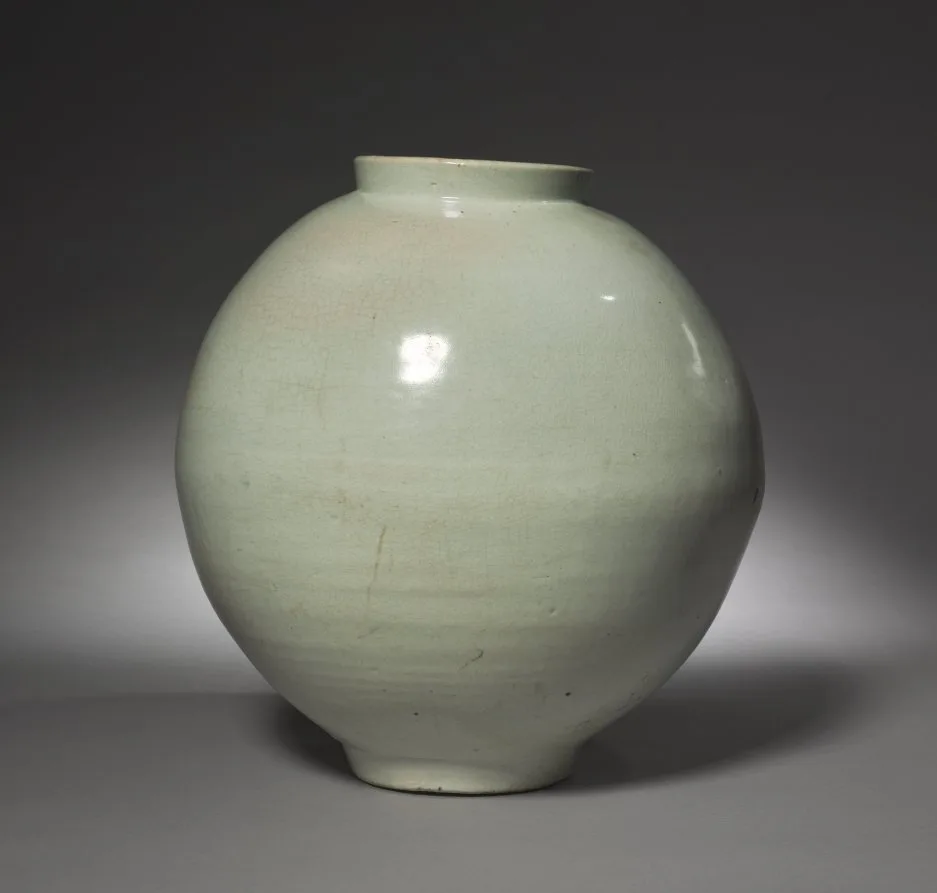
 Korea, Joseon dynasty (1392–1910) · 1700s
Jar
Maker unrecorded
glazed porcelain
One jar directs attention toward an unfigured pale body; the other carries a coiling blue dragon. Compare their proportions and surfaces while keeping the museum’s qualified political context separate from visible form.
Korea, Joseon dynasty (1392–1910) · 1700sMaker unrecorded
glazed porcelain
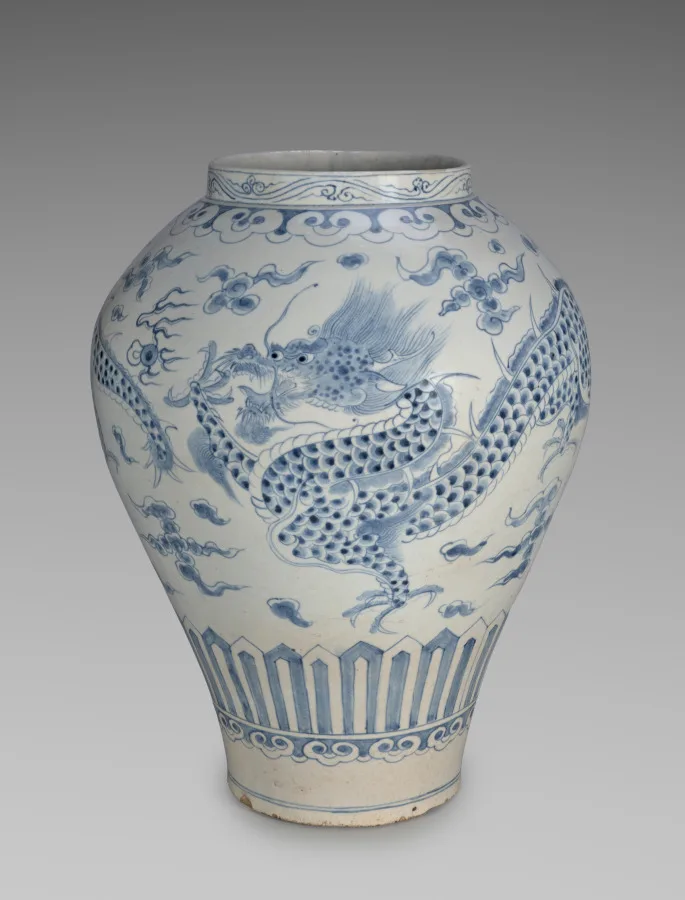 Korea, Joseon dynasty (1392–1910) · 1700s
Maker unrecorded
porcelain with underglaze blue
Both have mouths smaller than their broad bodies, but the taller dragon jar belongs to a documented flower-vessel type. Shape contributes information about use even before its imagery is interpreted.
Subtle glaze variation and uneven curves animate the white jar. The dragon’s scaled body travels around the other vessel. Absence of a painted scene does not mean absence of designed visual effect.
The white jar’s plainness may relate to ideals and restrictions discussed by the museum. The dragon has documented royal associations. These are different historical claims, not a simple ranking of plain versus luxurious objects.
The comparison does not identify individual owners or exact contents. The suggested link between plain porcelain and luxury restrictions remains a possibility, not a proven commission history.
The comparison of visible choices is our own reading. Follow either artwork page for its full context, uncertainty note and image-rights record.
Incision, glaze, inlay, painting, and useful form.