Read the
Picture
An open collection
Korea, Joseon dynasty (1392–1910) · Ceramic

Jar

Maker unrecorded · 1700s

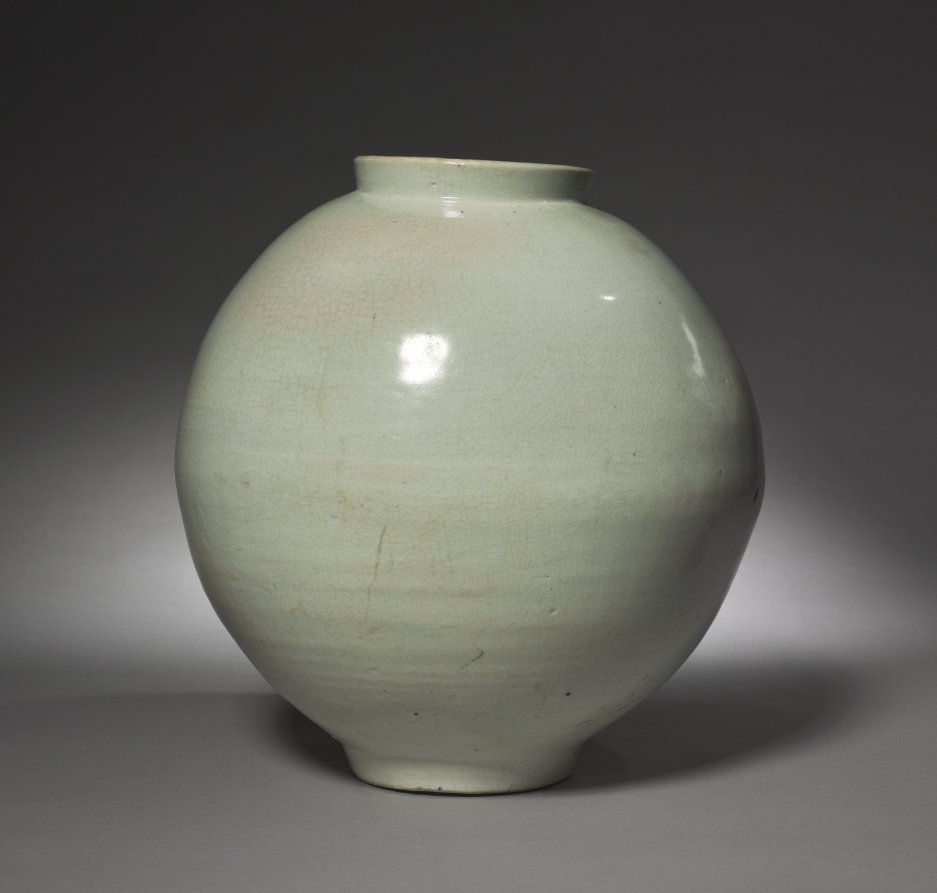
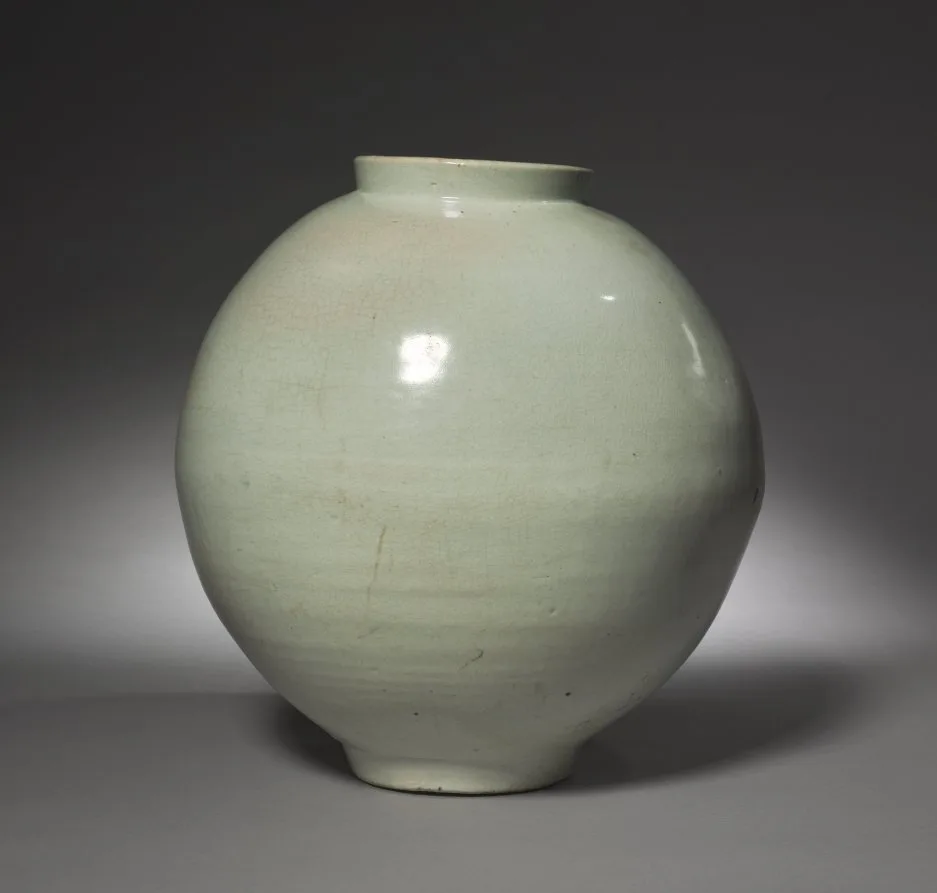
A large pale porcelain jar stands against a dark background. Its rounded body swells broadly below a short neck, then narrows to a small foot. The surface has slight tonal changes and fine lines rather than painted blue decoration. Light catches the left shoulder, while the silhouette is subtly uneven from side to side.
100%

Drag to move · Pinch or +/− to zoom · Arrow keys to pan · 0 to reset

The Cleveland Museum of Art · 1983.28 · Image: CC0Museum image ↗
A little context

Without a painted scene, the jar’s uneven curve, narrow mouth, and quiet glaze become the main things to read.

The absence of a painted picture does not make the jar visually empty. Follow the curve from its short neck over the broad shoulder and down to the small foot. The two sides are not perfectly identical, and changes in light reveal a glazed surface that remains active even without a contrasting design. The museum relates the conventional name “moon jar” to this rounded form and pale colour.

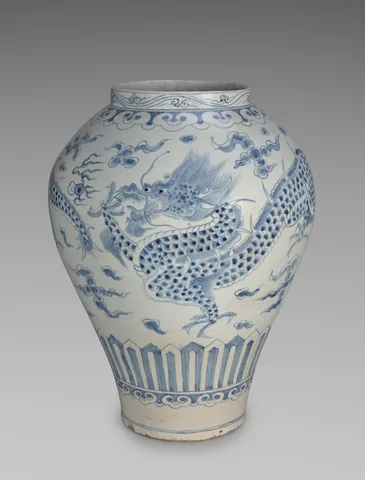
Its historical context also complicates an easy modern claim of minimalism. The museum connects white porcelain with ideals of frugality and practical government in Joseon Korea. It suggests that restrictions on costly cobalt decoration following economic hardship may help explain the undecorated surface, while leaving that connection qualified. We should not claim to know the maker’s exact intention from whiteness alone. Compare the Korean Dragon Jar to see how two porcelain vessels can create very different kinds of presence through shape, surface, and the degree of imagery they carry.

A careful reading

The museum presents the connection with luxury restrictions as a possibility, not a documented instruction to this maker. The pale surface does not establish an exact original use or a modern minimalist philosophy.
Try your eye

Which claim remains a qualified historical interpretation rather than a directly visible fact?

Where this reading begins

  • Jar — collection record — The Cleveland Museum of Art. Supports identification, dating, materials, authorship qualifications and contextual interpretation; close-looking observations describe the individually inspected museum photograph. Museum record updated 2026-11-12; accessed 2026-11-13.

Our observations describe the supplied museum photograph. Historical identifications and context follow the cited collection record; interpretive limits are stated above. This is an independent guide, not a museum endorsement.

Image rights & attribution

Jar (백자호 [白磁壺]), 1700s. Korea, Joseon dynasty (1392–1910). Glazed porcelain; overall: 34.3 cm (13 1/2 in.); outer diameter: 31.6 cm (12 7/16 in.). The Cleveland Museum of Art, Purchase from the J. H. Wade Fund, 1983.28

Individual API record marked CC0; checked 2026-11-13. CC0 1.0 dedication. Record date: 2026-11-12 14:47:36.487000. Web JPEG downloaded unchanged; responsive WebP and zoom derivatives resized and recompressed; numbered annotation overlay separate from image.