Six ceramic surfaces
Ceramics reward more than naming a colour. These six objects ask you to compare shallow lines, flowing glaze, plain porcelain, cobalt painting, slip inlay, and a collaborative serving design. Keep the vessel or figure’s shape in view as you zoom: a technique works on a particular surface made for a particular kind of encounter.
Begin the journey ↓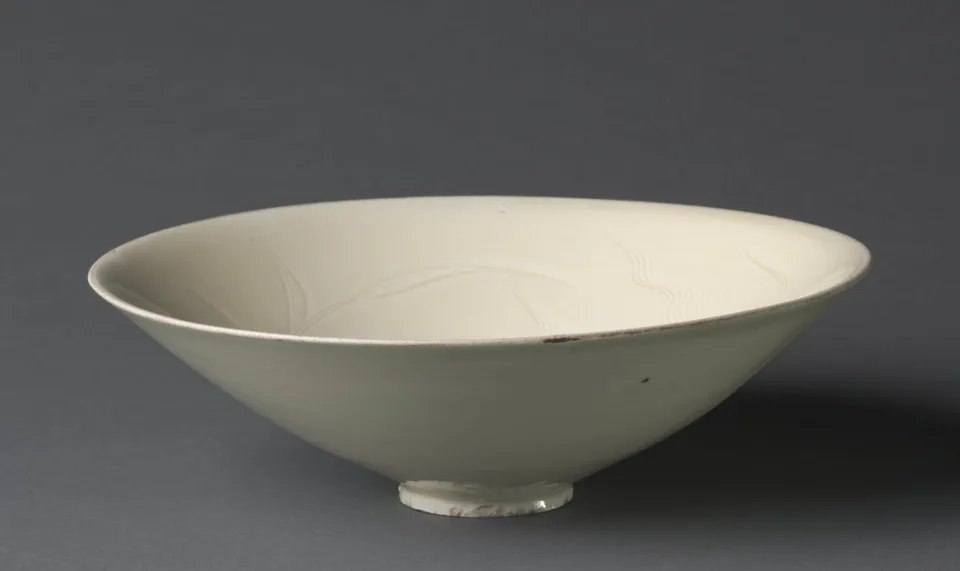
Find lines before colour
The pale bowl’s incisions are subtle, and the low camera angle hides part of the interior. The museum’s subject identification supplies context without making every duck directly visible in this view.
Carry this question: What can this angle show, and what does it conceal?
Open the artwork ↗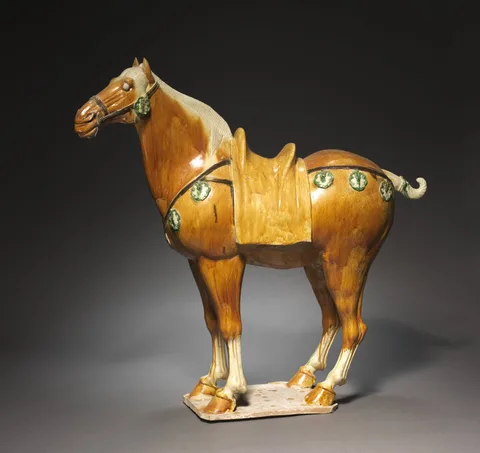
Modelled equipment, flowing glaze
Follow the harness ornaments across the amber body. Their shaped forms differ from the glaze’s surface movement, and both belong to a figure placed within a high-status tomb procession.
Carry this question: Which features are modelled, and which depend on coloured glaze?
Open the artwork ↗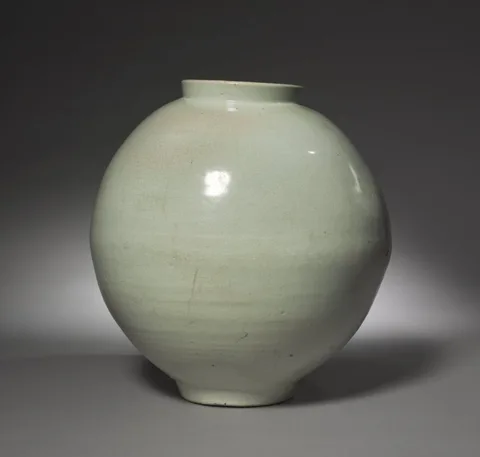
An unfigured surface still has form
Trace the swelling body and small foot. The absence of blue painting draws attention to proportion and glaze, while the museum’s proposed political context remains distinct from those direct observations.
Carry this question: What keeps the surface interesting without a painted narrative?
Open the artwork ↗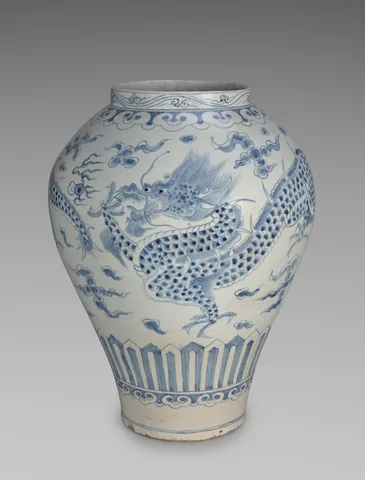
A creature around a curve
The dragon winds around a body that the photograph only partly reveals. Its royal associations matter, but the tall vessel type also supplies evidence about its intended flower-holding use.
Carry this question: How does the jar’s shape contribute information beyond its painted dragon?
Open the artwork ↗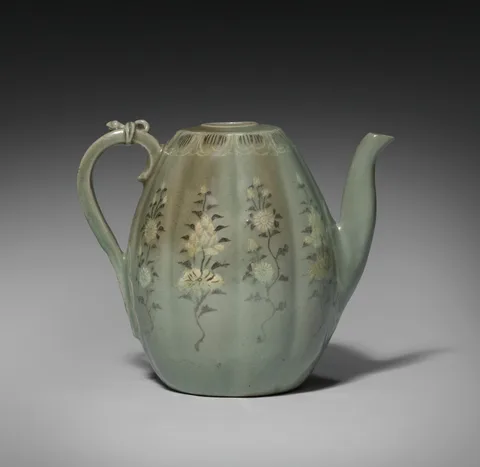
Inlay and pouring
The upward spout makes function immediately apparent. Look back to the flowers and distinguish the white and dark slip inlay from an assumption that every floral design was simply painted on.
Carry this question: How do spout, handle, and floral surface work together?
Open the artwork ↗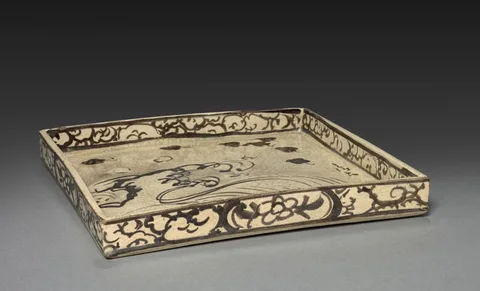
Two makers, one dish
The signature beside the birds records only part of the collaboration. The museum names another maker who shaped, glazed, and fired the serving dish, with his signature on the back.
Carry this question: What work remains invisible if you credit only the visible signature?
Open the artwork ↗Look at a pair more closely
- When a jar has no picture
Two Joseon porcelain surfaces
- A dish organises a design
Japanese plovers and Ottoman artichoke-like forms
Read with the sources
Historical context follows the individual museum records linked on each artwork page. These routes make original comparisons of visible form; resemblance alone is not evidence of shared meaning or direct influence.