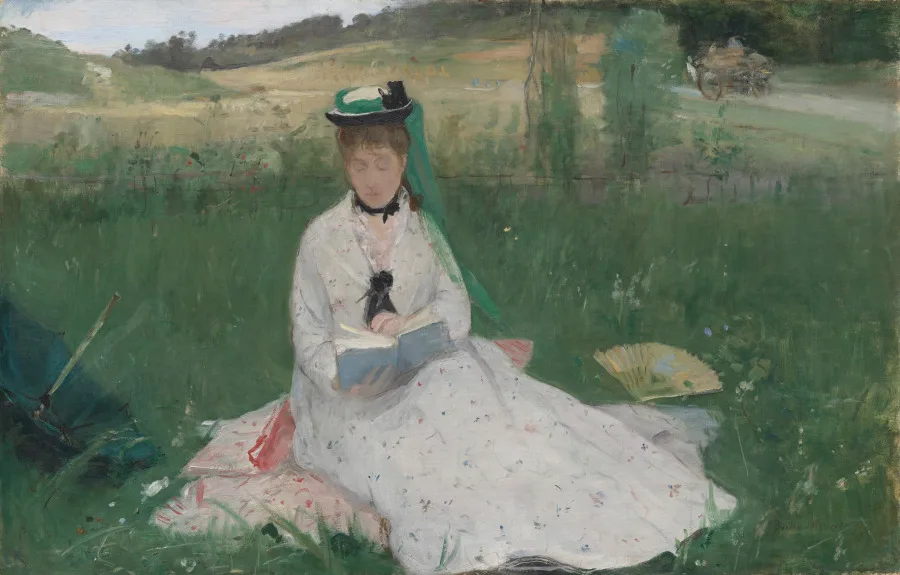
 France · 1873
Reading
Berthe Morisot (French, 1841–1895)
oil on canvas
One figure looks down into a book, while another looks outward from a drawing activity. These different directions determine whether the viewer seems to observe private absorption or become a possible participant in making an image.
France · 1873Berthe Morisot (French, 1841–1895)
oil on canvas
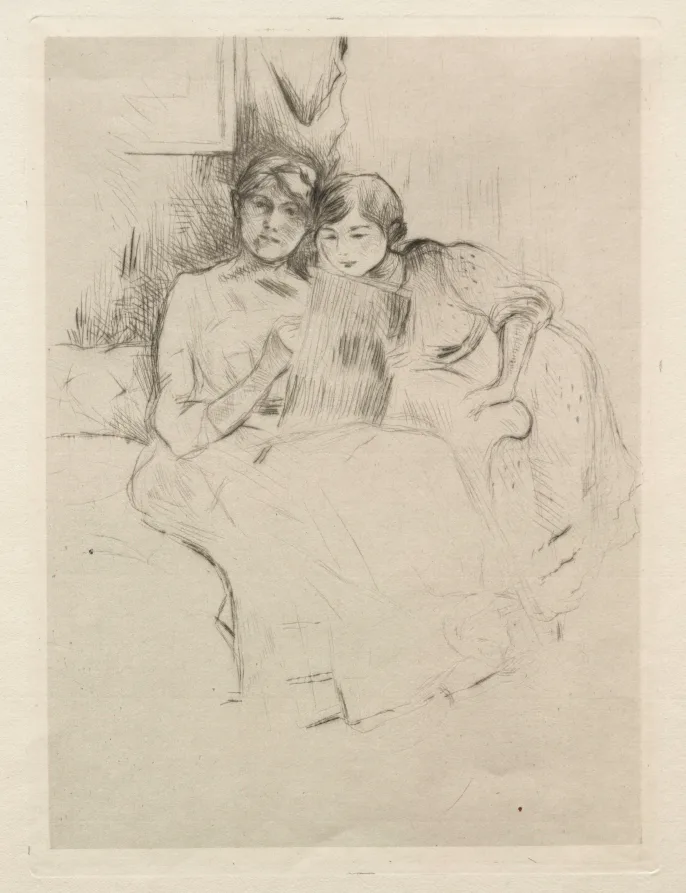 France · 1889
Berthe Morisot (French, 1841–1895)
drypoint
Edma’s downward gaze gives the book her attention. In the drypoint, Morisot looks outward, prompting the museum’s suggestion that she might be drawing the viewer. The contrast concerns visible direction first; the more specific relationship to us remains an interpretation.
The reader’s pale dress spreads into a flowered field, making repeated color touches connect figure and setting. In the drypoint, lightly traced clothes leave much of the paper open. Both concentrate attention selectively, though paint and scratched printing lines achieve that selection differently.
The fan beside Edma is put down, leaving reading as the active task. In the lesson, the drawing support draws Julie’s attention inward toward her mother’s work. Objects help distinguish temporary disengagement from shared observation, giving the surrounding scene a practical structure.
The reader’s earlier outward gaze is known through X-ray evidence, while the drypoint’s apparent address to the viewer is an interpretation. Similar-looking gazes do not have identical evidential status.
The comparison of visible choices is our own reading. Follow either artwork page for its full context, uncertainty note and image-rights record.
Five encounters organised by looking, making and care.