Following attention
A face looking outward can make us feel addressed, while a lowered gaze can leave us observing an activity already underway. Follow these changes of attention through painting, watercolor, print and pastel. The route asks what a pose makes visible, and where the names, relationships or history still require a source beyond the image.
Begin the journey ↓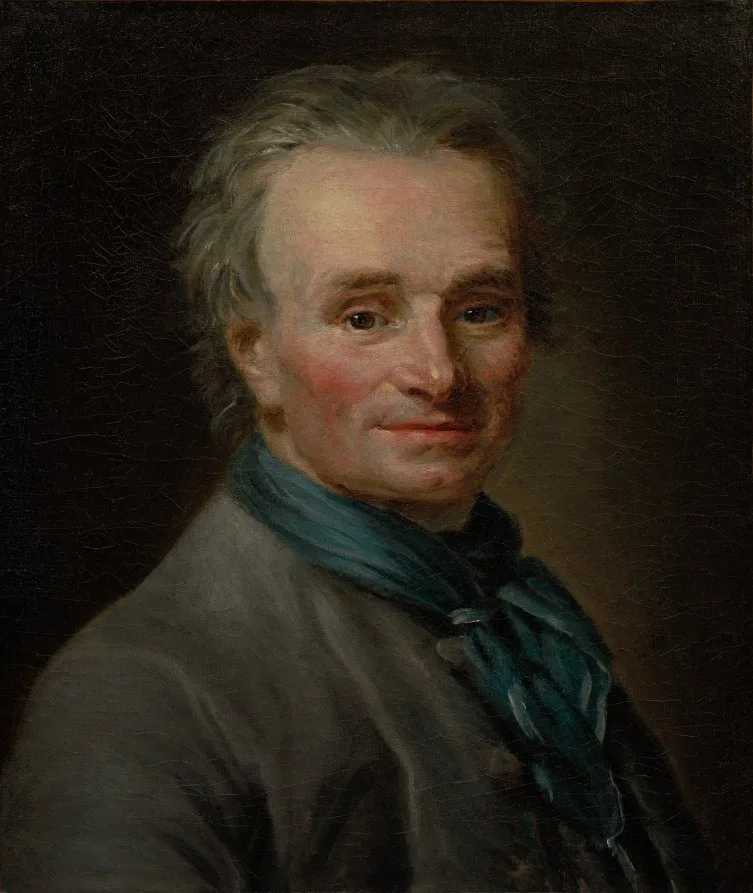
A face answers the viewer
The sculptor turns toward us while his body remains angled away. Begin with that difference of direction. It gives the portrait a responsive quality, while the museum’s account of an earlier pastel complicates the impression of a wholly immediate encounter.
Carry this question: Which parts turn toward you, and which remain angled away?
Open the artwork ↗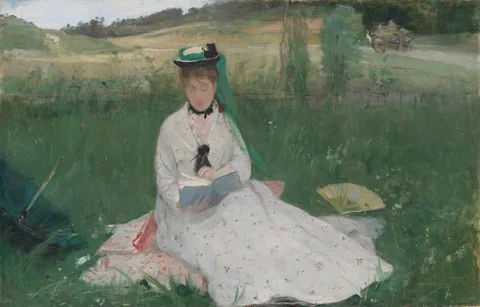
Attention moves into the book
The reader’s lowered eyes redirect attention toward her pages. Compare this with Lemoyne’s outward address. The museum reports an earlier outward gaze beneath the paint, but that revision comes from technical examination rather than ordinary enlargement.
Carry this question: What changes when the figure does not return your gaze?
Open the artwork ↗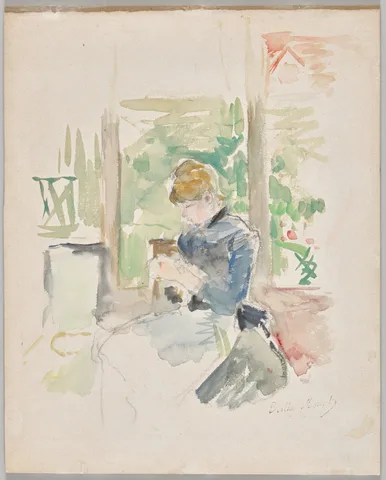
Hands supply a centre
Pasie bends toward hands gathered around sewing. The surrounding room remains loosely indicated, allowing a small practical action to carry the scene. Notice how little detail is needed to establish an activity without telling us the sitter’s thoughts.
Carry this question: How do the face and hands direct attention to one place?
Open the artwork ↗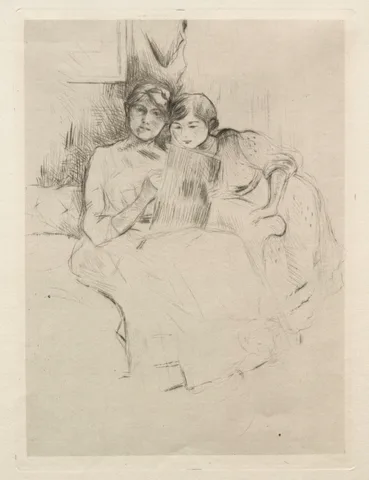
Looking becomes a lesson
Julie leans close as Morisot works. Their proximity gives learning a visible form, while the artist’s outward gaze introduces a possible relationship with us. The museum proposes a sitter’s viewpoint without identifying the image on the drawing support.
Carry this question: How do the two figures attend to different things?
Open the artwork ↗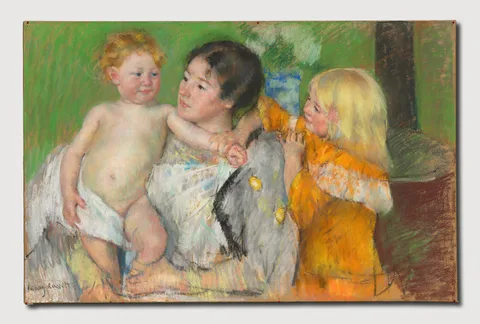
Contact makes care visible
The supported child brings this route from directed looking to bodily contact. Compare carefully described faces with the looser surrounding pastel. A third participant is visible, but the supplied record does not establish that figure’s precise family relationship.
Carry this question: Which points of contact make the child feel supported?
Open the artwork ↗Look at a pair more closely
- Where attention goes
Morisot’s reader and her drawing lesson
- What holding makes visible
Cassatt’s After the Bath and Carew’s Virgin and Child
Read with the sources
Historical context follows the individual museum records linked on each artwork page. These routes make original comparisons of visible form; resemblance alone is not evidence of shared meaning or direct influence.