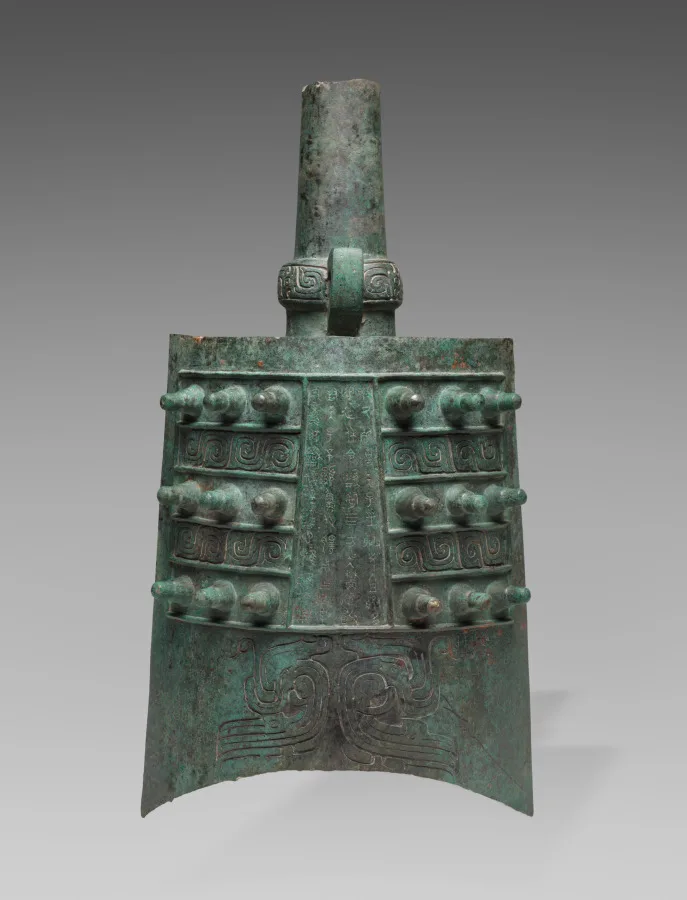
 China, Shaanxi province, Meixian, Western Zhou dynasty (c. 1046–771 BCE) · c. 800–700 BCE
Bell (Lai Zhong)
Maker unrecorded
bronze
Both objects connect ritual with sound, but they perform different possible roles. Compare a bronze designed to ring with a wooden structure interpreted as supporting a suspended drum, keeping the second identification explicitly provisional.
China, Shaanxi province, Meixian, Western Zhou dynasty (c. 1046–771 BCE) · c. 800–700 BCEMaker unrecorded
bronze
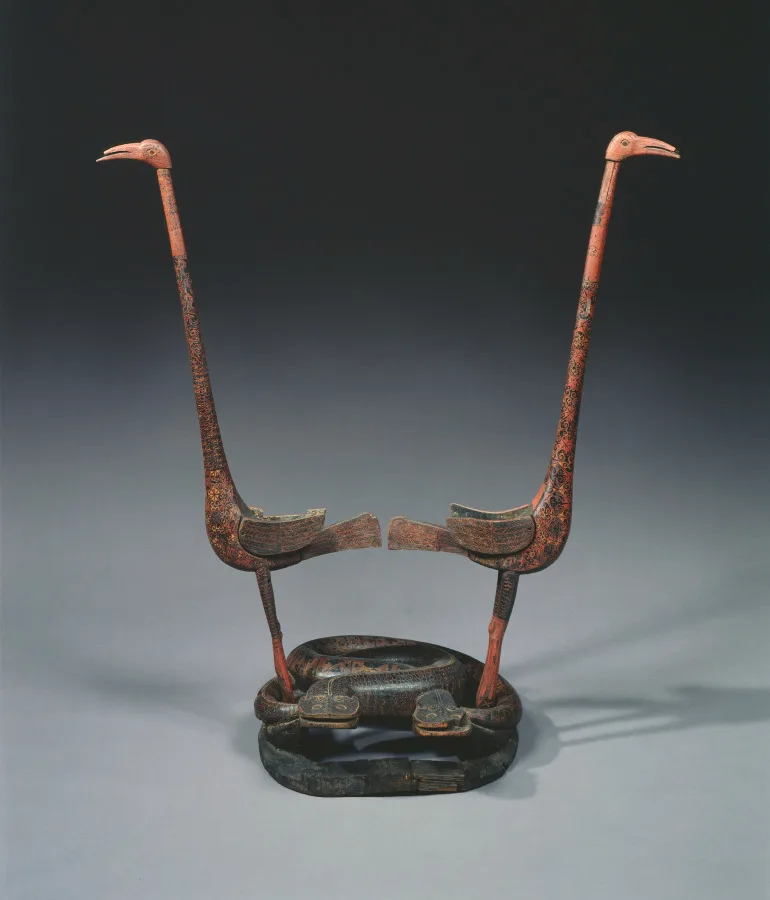 China, reportedly from Hunan province, Changsha, Warring States period (475–221 BCE), State of Chu (c. 1046–223 BCE) · 475–221 BCE
Maker unrecorded
lacquered wood with polychromy
The bell encloses a sound-producing cavity, while the birds create open space above a coiled base. These contrasting forms are a useful starting point before the records supply inscriptions or reconstructed uses.
The bell’s ordered bosses belong to a cast bronze surface. Painted lacquer animates the birds and serpents. Material treatment affects the object’s appearance without proving the exact sound of a lost performance.
The bell’s inscription records a commission and dedication. The wooden stand’s practical use is debated. A documented text and a plausible functional reconstruction do not offer the same degree of certainty.
The comparison concerns different object roles within ritual sound. It does not reconstruct a single ceremony or claim that these works were used together.
The comparison of visible choices is our own reading. Follow either artwork page for its full context, uncertainty note and image-rights record.
Four objects whose outlines connect use, authority, and ceremony.