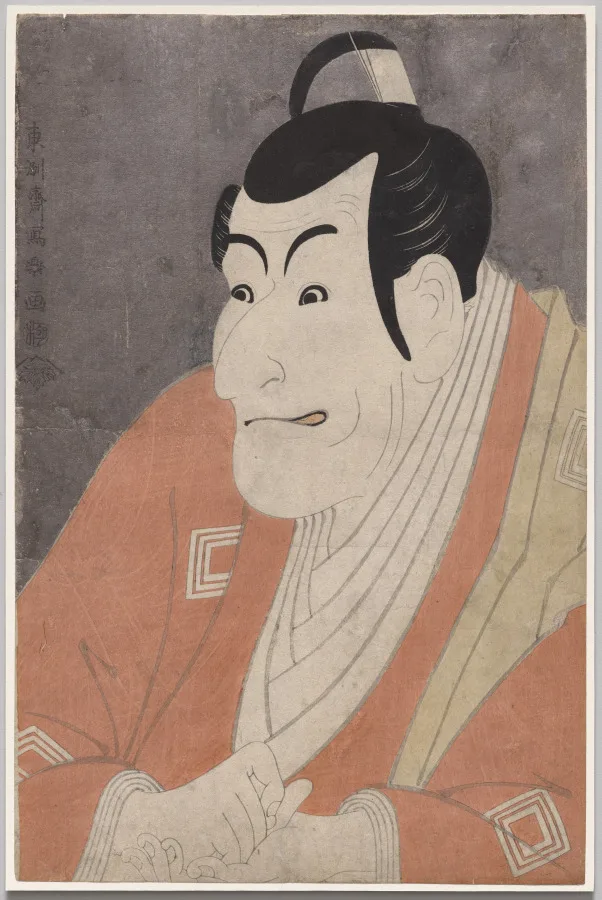
 Japan, Edo period (1615–1868) · 1794
Ichikawa Ebizō IV (Danjurō) as Takemura Sadanoshin in The Loving Wife's Parti-Colored Reins
Tōshūsai Sharaku (Japanese, active 1794–95)
color woodblock print
Both prints encourage close attention to a face and costume, but they offer different kinds of identification. Compare a documented theatrical crest with a series that assigned personality through appearance, keeping that latter premise open to criticism.
Japan, Edo period (1615–1868) · 1794Tōshūsai Sharaku (Japanese, active 1794–95)
color woodblock print
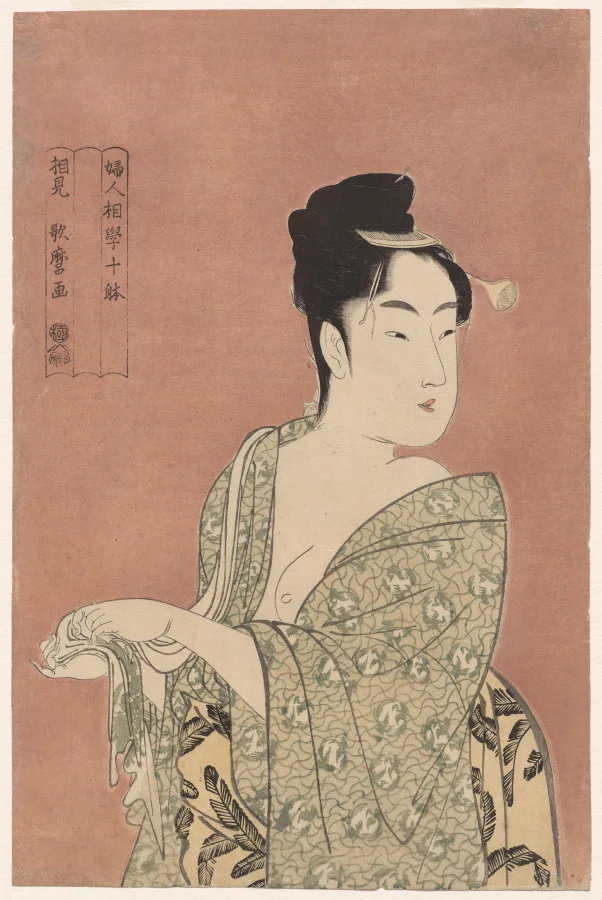 Japan, Edo period (1615–1868) · c. 1793
Kitagawa Utamaro (Japanese, c. 1754–1806)
color woodblock print
Sharaku’s emphatic eyebrows and mouth belong to stylised performance. Utamaro’s turning head helps construct a portrait type. Neither face should be treated as a transparent view into a person’s private psychological state.
The actor’s nested-square crest identifies an acting family in the museum record. The woman’s patterned robe shapes the image’s visual appeal but does not prove her temperament or provide a verified personal biography.
The actor’s gathered hands reinforce a role within a known play. The woman’s title panel advertises a personality category. A recorded performance context differs from a claim that outward appearance determines character.
The historical personality label is described rather than endorsed. This comparison does not diagnose either represented person or equate theatrical expression with private emotion.
The comparison of visible choices is our own reading. Follow either artwork page for its full context, uncertainty note and image-rights record.
Portraits, historical exemplars, roles, and imposed labels.