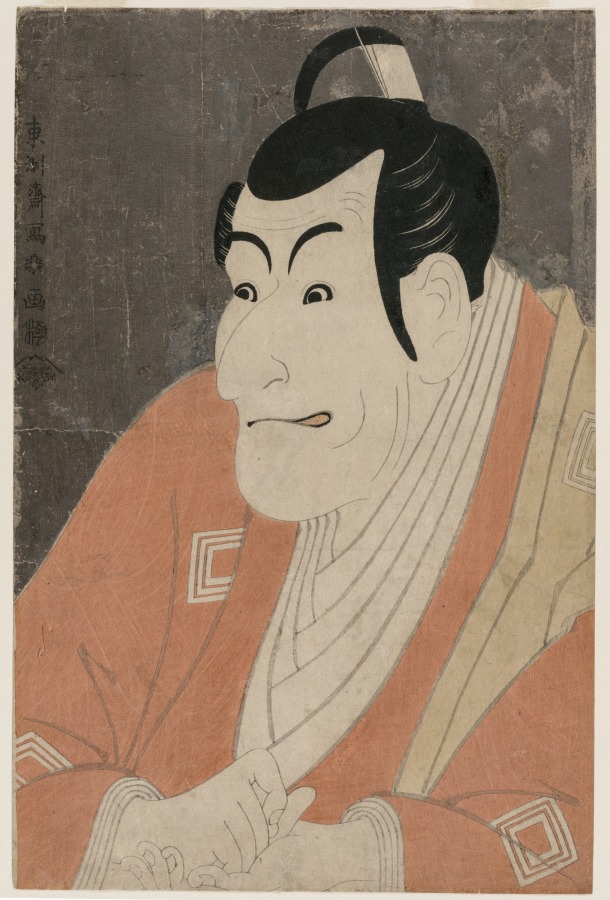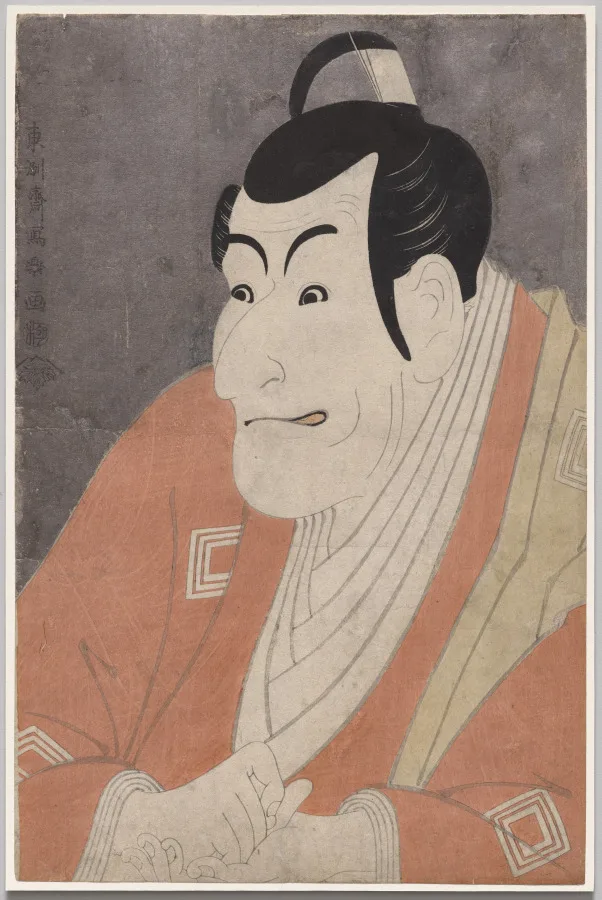
An actor’s face, clenched hands, and repeated costume crest turn a theatrical role into an image made for fans.
The face seems to hold a moment of dramatic tension. Strong eyebrows, wide eyes, and a compressed mouth are reinforced by the hands gathered low in the composition. This is not simply a study of an anonymous man’s mood. The museum identifies the Kabuki actor Ichikawa Ebizō IV in the role of Takemura Sadanoshin, a father allowed a final performance with his daughter before her banishment.
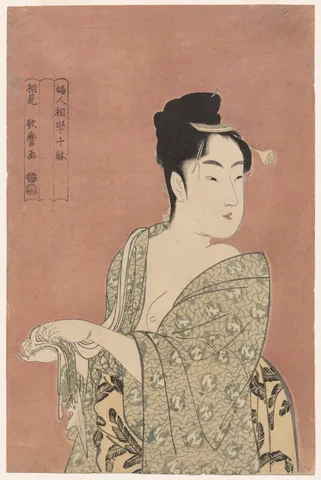
The print belongs to the category of actor images collected by theatre enthusiasts. Costume and facial treatment therefore help a viewer recognise both a performer and a role. The nested-square crest on the robes identifies the Ichikawa acting family, while the close crop makes expression immediately prominent. Kabuki uses highly stylised delivery, costumes, makeup, and poses, so a tense painted face should not be read as a candid psychological diagnosis. Compare this with Utamaro’s portrait types to see two different ways a commercial print could invite viewers to read a person through selected outward signs.
This is an actor performing a named role, not a candid record of his private feelings. The historical play context comes from the museum; facial features alone do not reveal the full plot.