Reading a public face
Faces invite quick judgements, but these images ask us to slow down. A teaching exemplar, an imagined poet, a stage performer, a commercial personality type, and a posthumous ruler each depend on a different relationship between image and person. Look for the evidence that identifies a role before making claims about private character.
Begin the journey ↓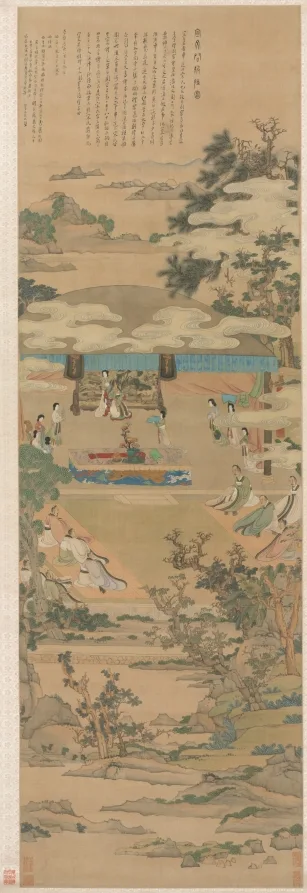
Learning as a birthday tribute
The seated teacher belongs to a historical story, yet the inscription connects her with the artist’s aunt. A figure from the past becomes a way to honour a later woman’s learning.
Carry this question: What does the dedication add that the faces alone cannot tell you?
Open the artwork ↗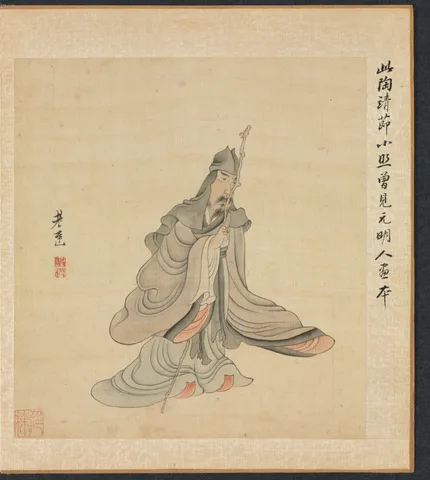
A poet imagined centuries later
Follow the staff beside the flowing robe. It supplies a biographical association within an intentionally old-fashioned image, but it does not make the painting an eyewitness record of the poet.
Carry this question: Which details identify an idea of the poet rather than his measured appearance?
Open the artwork ↗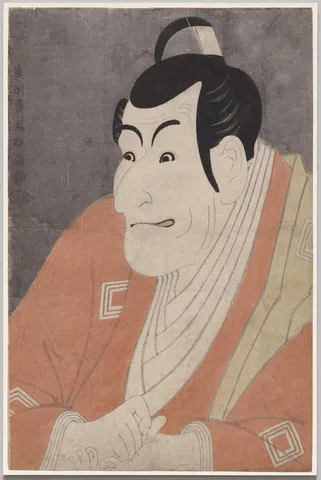
A role with a verifiable crest
Find the nested squares on the costume. The documented family crest offers a specific identity clue, while the emphatic face belongs to stylised theatrical performance rather than a private psychological portrait.
Carry this question: Which clue is more specific: the crest or the tense expression?
Open the artwork ↗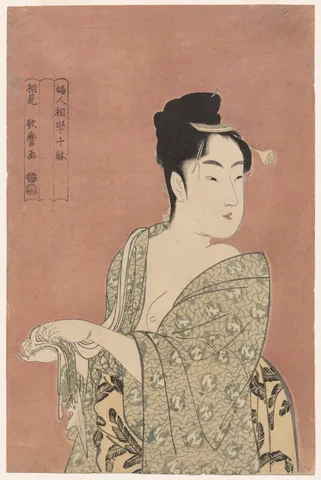
A label to question
The title invites a personality judgement based on appearance. Treat that premise as evidence of a historical print practice, while refusing to mistake pose or hairstyle for proof of actual character.
Carry this question: How can you study the label without accepting its judgement as fact?
Open the artwork ↗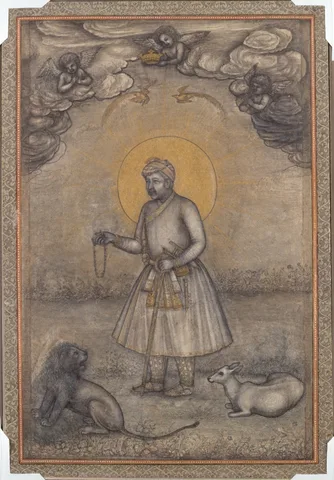
A ruler remembered after death
Study the aged face and surrounding halo before reading the museum’s posthumous context. The image constructs a ruler’s remembered presence; its timing changes the kind of likeness we can claim.
Carry this question: What difference does a posthumous date make to your reading?
Open the artwork ↗Look at a pair more closely
- A role is not a personality
Sharaku’s actor and Utamaro’s classified beauty
Read with the sources
Historical context follows the individual museum records linked on each artwork page. These routes make original comparisons of visible form; resemblance alone is not evidence of shared meaning or direct influence.
- Lady Xuanwen Giving Instruction on the Rites of Zhou — museum collection record
- Paintings after Ancient Masters: Portrait of Tao Yuanming — museum collection record
- Ichikawa Ebizō IV (Danjurō) as Takemura Sadanoshin in The Loving Wife's Parti-Colored Reins — museum collection record
- The Flirtatious Type, from Ten Types in the Physiognomy of Women — museum collection record
- Portrait of the Aged Akbar — museum collection record