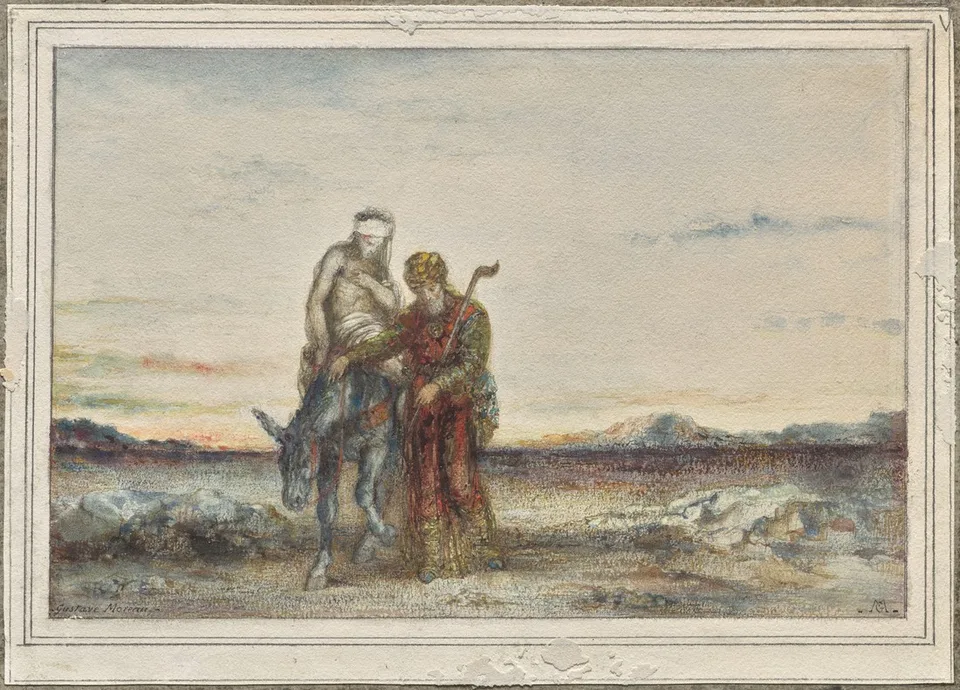
 France · c. 1865–70
The Good Samaritan
Gustave Moreau (French, 1826–1898)
watercolor, gouache, and graphite on paper
Closely arranged bodies and emphatic hands can communicate very different relationships. Compare a specifically identified act of assistance with a family encounter whose exact plot remains uncertain, beginning with visible posture before assigning motives.
France · c. 1865–70Gustave Moreau (French, 1826–1898)
watercolor, gouache, and graphite on paper
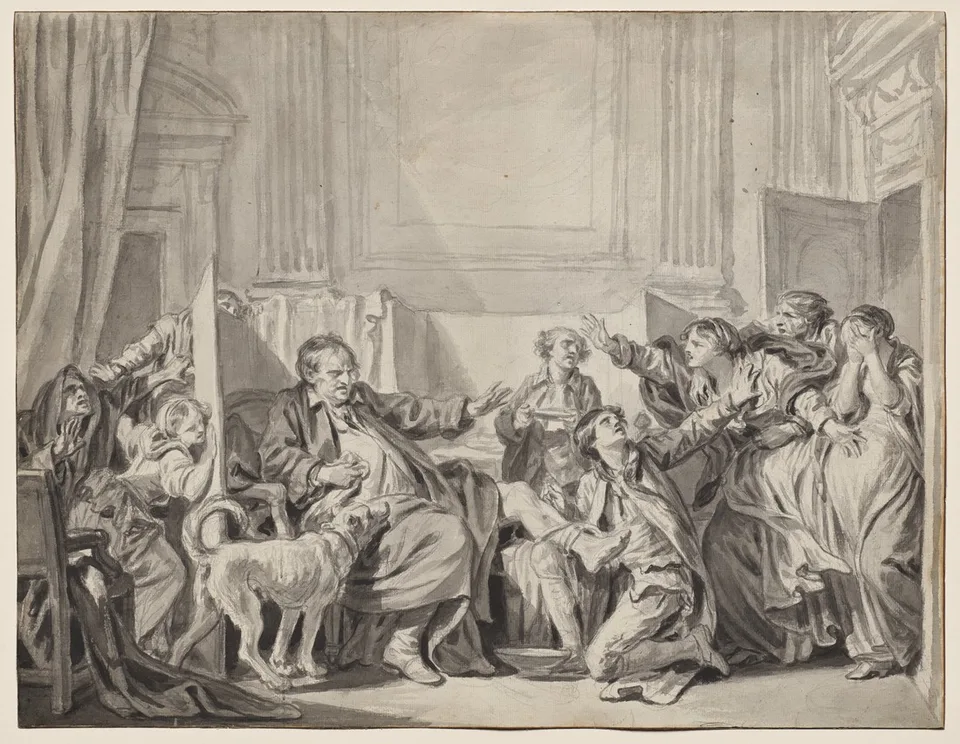 France · early 1770s
Jean-Baptiste Greuze (French, 1725–1805)
brush and black and gray wash over black chalk
Moreau’s injured traveler depends on the horse and helper for support. Greuze’s young man kneels before an older seated figure. Low or dependent positions are visible in both, but they do not carry the same narrative meaning.
The Samaritan’s arm rises toward the wounded man as he relinquishes his mount. Greuze’s older man extends an open hand toward the arriving group. One action has a clear source-supported practical purpose; the other participates in an uncertain confrontation.
The horse is essential to the museum’s identified moment of aid. Greuze’s distressed woman supports the proposed family crisis but does not securely identify its cause. Looking can establish a relationship while leaving the larger explanation at different levels of certainty.
The Good Samaritan is an identified biblical parable; Greuze’s exact subject is unknown. Similar expressive gestures do not justify transferring one story’s clarity to the other.
The comparison of visible choices is our own reading. Follow either artwork page for its full context, uncertainty note and image-rights record.
Household labor, kinship, accusation, and a stranger’s aid.