Side by sideTwo ways to colour a small scene
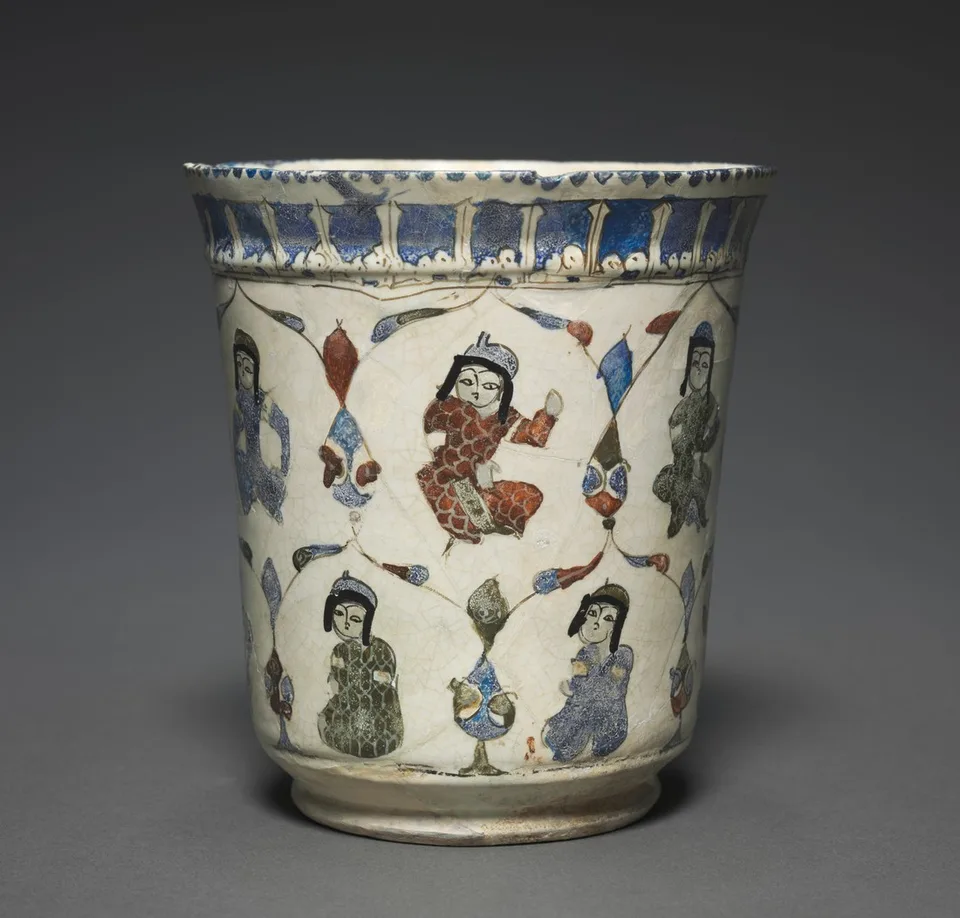
Small human figures animate both ceramic vessels, but the materials and historical settings should remain distinct. Compare how colour separates people and plants on a curved surface, then use the museum records to understand the different sequences of decoration.
Three ways to look together.
01 / Follow the evidenceGive one figure prominence
The Chinese cup’s bright red garment draws attention to one child. A red-clad seated prince provides a similarly accessible entry into the Iranian beaker. The colour comparison concerns visual emphasis, not a shared identity or social role.
02 / Follow the evidenceLet technique explain the palette
The cup combines cobalt outlines made before glazing with enamels applied later. The mina’i beaker uses a varied enamel palette above the glaze. Related attention to firing and colour does not make the two ceramic traditions technically interchangeable.
03 / Follow the evidenceWork with the vessel’s shape
The Chinese cup’s foot and widening wall organise a compact object below the scene. On the Iranian beaker, looping forms connect the figures across the curve. Each design makes a small surface readable without constructing a deep landscape.
Where the comparison stopsThis is a comparison of colour, process and curved surfaces. It does not claim direct copying, a common workshop or identical social uses for the two vessels.
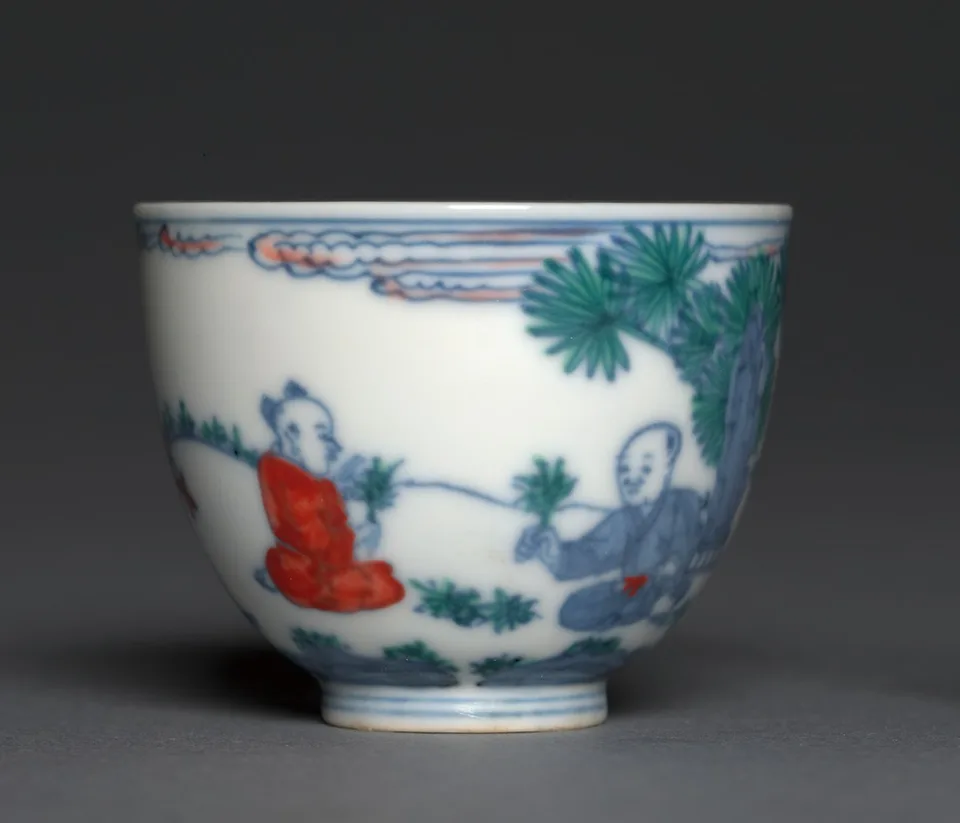 China, Jiangxi province, Jingdezhen, Ming dynasty (1368-1644), Chenghua mark and period (1465-1487) · 1465–87