A container can become a world
Begin with the opening, lid or handle before reading the decoration. These vessels and containers turn familiar practical structures into literary voyages, floral shapes, miniature scenes or concentrated studies of glaze. Their uses are not identical, but each rewards attention to the relation between what an object holds and how it looks.
Begin the journey ↓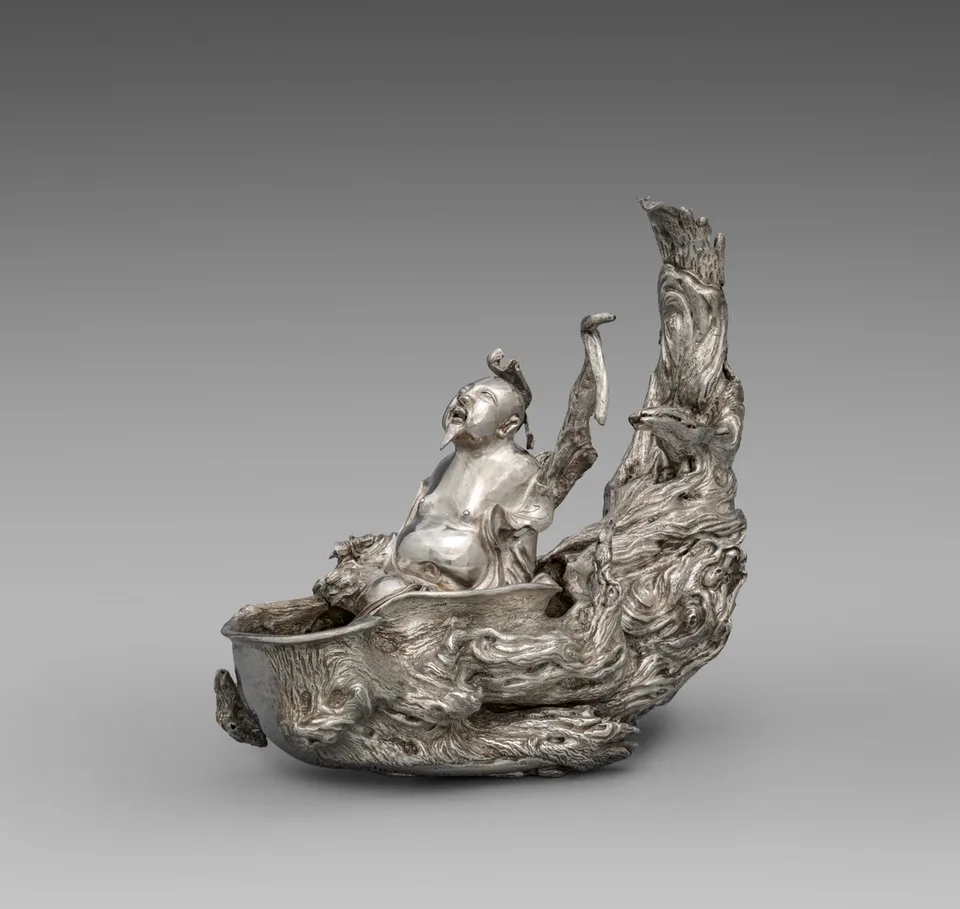
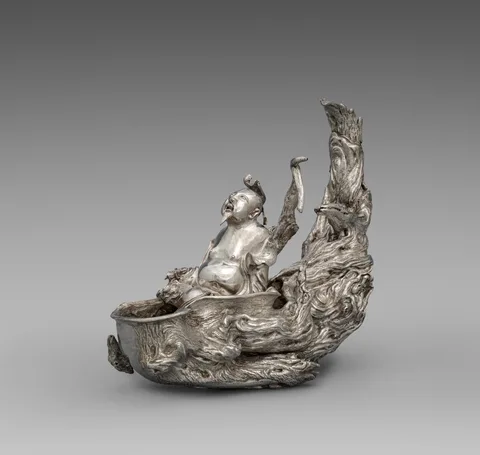
Drink from a legendary raft
The hollow trunk can contain wine while its passenger suggests a voyage. Notice how a practical opening and a literary identification coexist, with the traveller and maker both remaining qualified in the museum’s account.
Carry this question: Where does the useful cavity end and the imagined journey begin?
Open the artwork ↗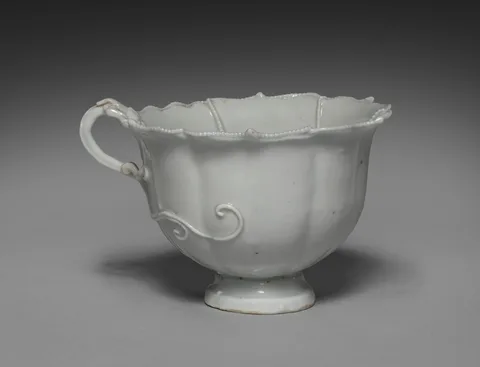
Grasp an older image
The dragon is both an archaic reference and a handle. Its shared pale glaze keeps it continuous with the flower-shaped cup even while the form recalls different kinds of earlier metalwork.
Carry this question: How does the handle change your reading of the flower-like body?
Open the artwork ↗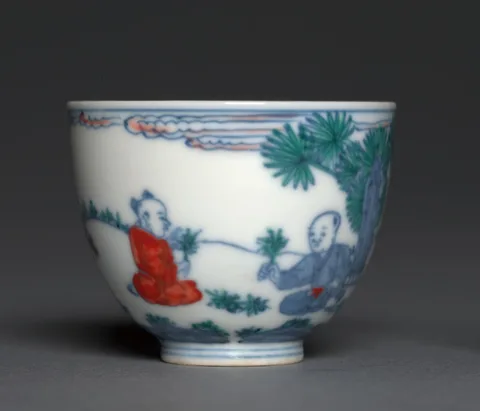
Read a scene on a curve
A bright red garment gives a tiny figure prominence on the curved wall. The scene depends on successive firings, reminding us that visual delicacy can require a carefully divided technical process.
Carry this question: Which colour first draws your attention to the small scene?
Open the artwork ↗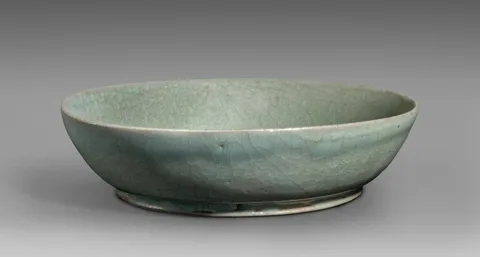
Look without a painted story
Fine crackle, glaze variation and the shallow curve provide the activity here. A celebrated historical category adds context, but the quiet surface still asks for direct looking rather than admiration based only on rarity.
Carry this question: What becomes noticeable when there is no figure to identify?
Open the artwork ↗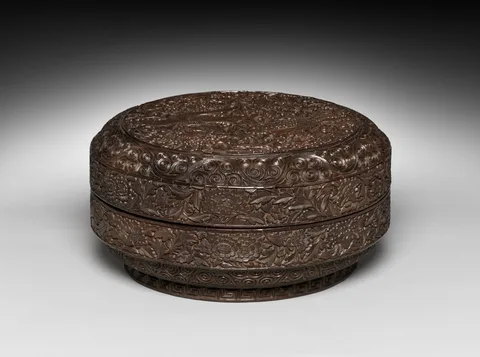
Find the opening beneath ornament
The narrow seam distinguishes lid from container under continuous-looking carving. Birds and flowers can connect designs across materials, while the actual joint reminds us that this is a box made to open.
Carry this question: Does the decoration emphasise or disguise the lid’s join?
Open the artwork ↗Look at a pair more closely
- Two ways to colour a small scene
Blue outlines and enamel scenes in China and Iran
Read with the sources
Historical context follows the individual museum records linked on each artwork page. These routes make original comparisons of visible form; resemblance alone is not evidence of shared meaning or direct influence.