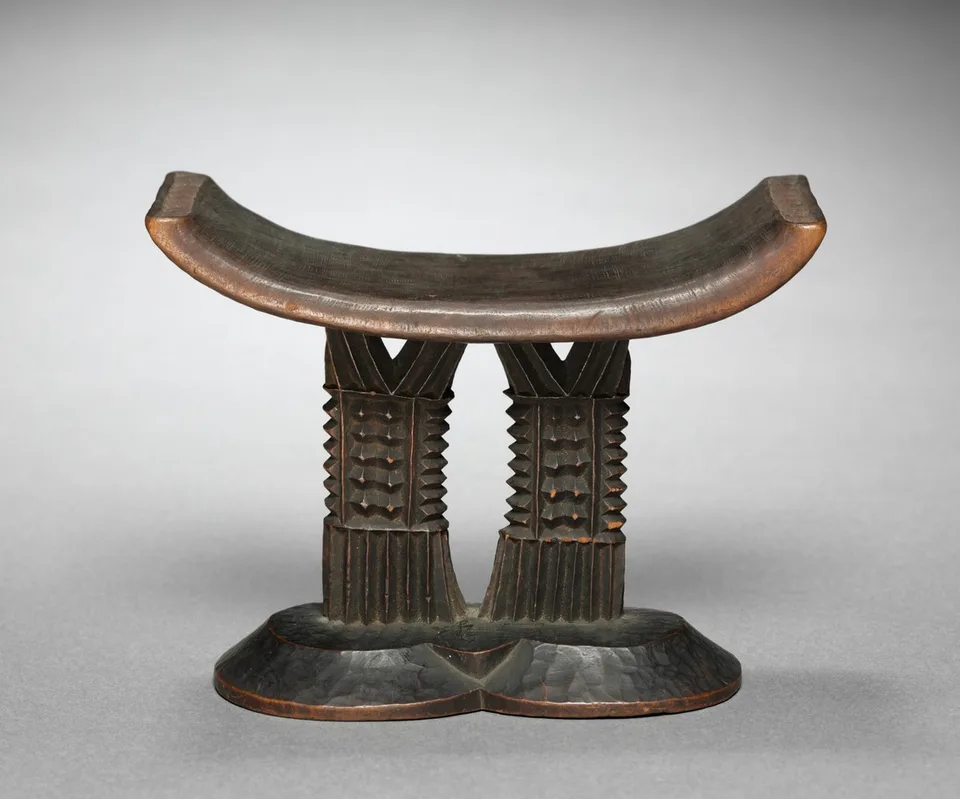
 Southern Africa, Zimbabwe or Mozambique, Shona-style blacksmith-carver · c. 1910
Headrest
Maker unrecorded
wood
Both wooden headrests distinguish a smooth upper contact surface from decorated supports. Their different silhouettes invite comparison, while the museum assigns them different cultural associations and interpretations. Begin with how each object holds a resting head before considering what its form might signify.
Southern Africa, Zimbabwe or Mozambique, Shona-style blacksmith-carver · c. 1910Maker unrecorded
wood
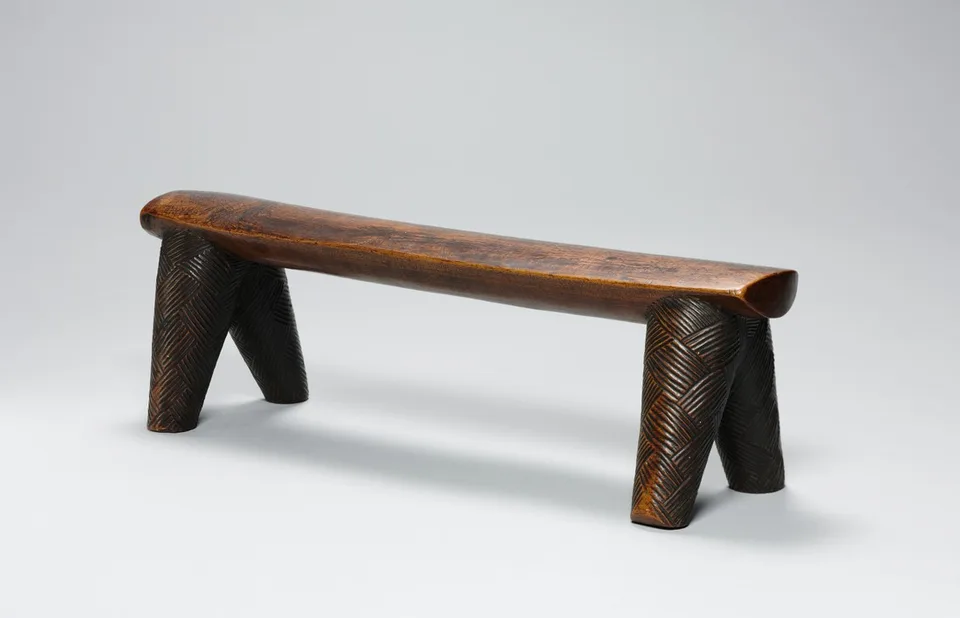 Africa, Southern Africa, South Africa, Zulu-style carver; Africa, Southern Africa, South Africa, Kingdom of Eswatini, Swazi-style carver · 1800s–1900s
Maker unrecorded
Wood
The Shona headrest’s concave top has a deeply polished forward edge; the four-legged example spreads a long smooth cradle between widely separated supports. Both keep the contact area relatively quiet while concentrating sharper texture below.
Rows of pointed projections articulate the Shona pillars, while crossed diagonal cuts cover the other headrest’s legs. The museum proposes scarification references for the former; the latter’s visible chevrons can be described without assigning them the same meaning.
The Shona base expands beneath two uprights, joining them through a broad double-lobed foot. The other headrest stands on four separated legs, supporting the museum’s qualified cattle comparison. Similar practical use does not require identical bodily metaphors.
The Shona interpretation and the Zulu-style or Swazi-style attribution remain distinct. Shared use as headrests does not establish one symbolism or direct influence.
The comparison of visible choices is our own reading. Follow either artwork page for its full context, uncertainty note and image-rights record.
Five objects shaped by bodily presence, contact and commemoration.