Bodies held and remembered
A hairstyle can identify a remembered person, while a polished curve records contact with a living body. This route moves between memorial sculpture, headrests, a wearable sitting pad and a beaded figure. Their purposes differ, but each asks us to notice how an object anticipates, supports or evokes a person who is not present in the photograph.
Begin the journey ↓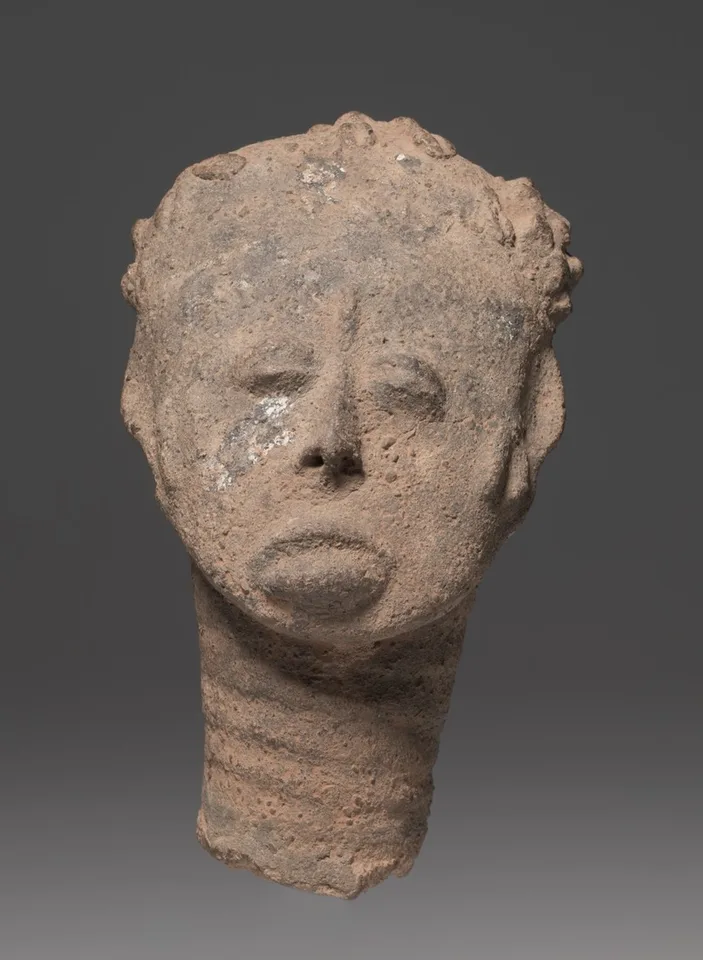
A hairstyle in clay
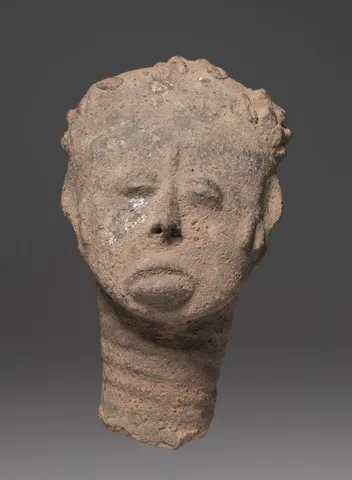
Begin with the uneven projections around the head. The museum identifies coiffure as one feature Asante potters could select when commemorating a deceased person. The memorial need not reproduce a complete naturalistic likeness to evoke an individual.
Carry this question: Which parts of the outline distinguish this head?
Open the artwork ↗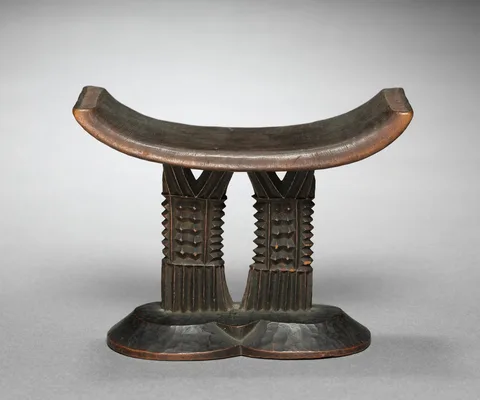
A surface touched repeatedly
Move from the represented head to a surface that supported a resting body. The smooth upper curve contrasts with the sharply carved supports. The museum connects its darkening with hair and hairdressing substances.
Carry this question: Where is the strongest contrast between smooth and sharp?
Open the artwork ↗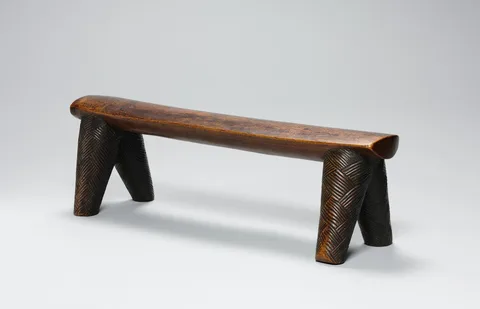
Texture below, smoothness above
Compare this headrest’s patterned leg with its polished upper cradle. Decoration and bodily contact occupy different areas. The museum relates the four-legged form to cattle, while recording both Zulu-style and Swazi-style attributions; neither the resemblance nor the wear identifies a particular animal or owner.
Carry this question: How does the leg differ from the contact surface?
Open the artwork ↗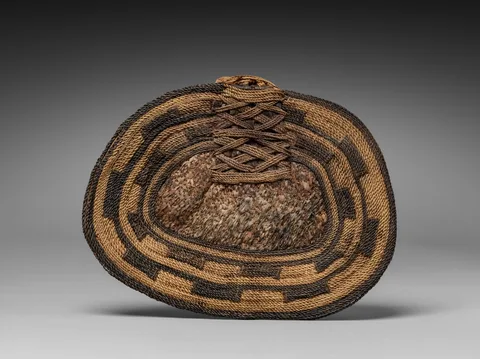
A garment that becomes a seat
The crossed fibre strips join flexible portions of the pad. Unlike a headrest displayed as a rigid structure, this object was designed to move with a wearer and provide a surface for sitting.
Carry this question: Which visible joins suggest flexibility rather than rigidity?
Open the artwork ↗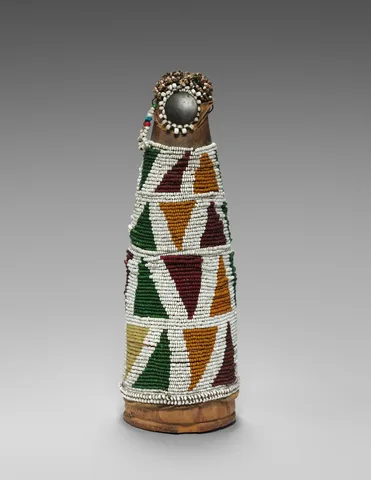
A face assembled from materials
The small metal disc becomes a face within a surrounding ring of beads. Imported components enter a locally made figure, but its appearance does not securely identify a particular child, bride or ceremony.
Carry this question: What makes the metal disc read as a face?
Open the artwork ↗Look at a pair more closely
- Two ways to support rest
Two southern African headrests organize contact, ornament and support differently.
Read with the sources
Historical context follows the individual museum records linked on each artwork page. These routes make original comparisons of visible form; resemblance alone is not evidence of shared meaning or direct influence.