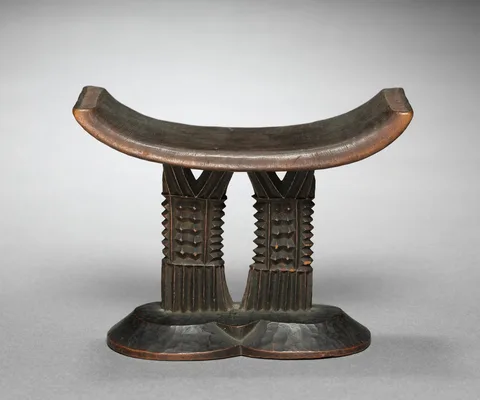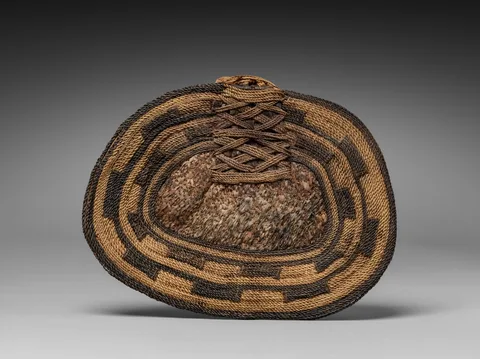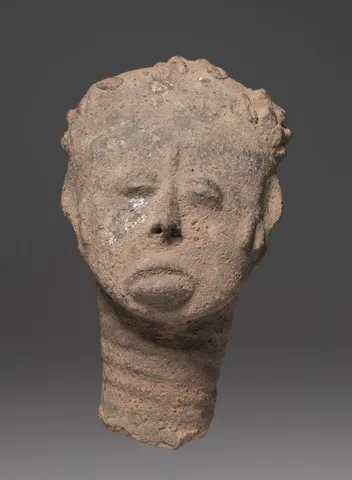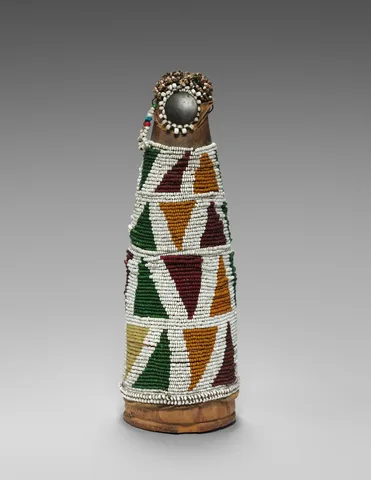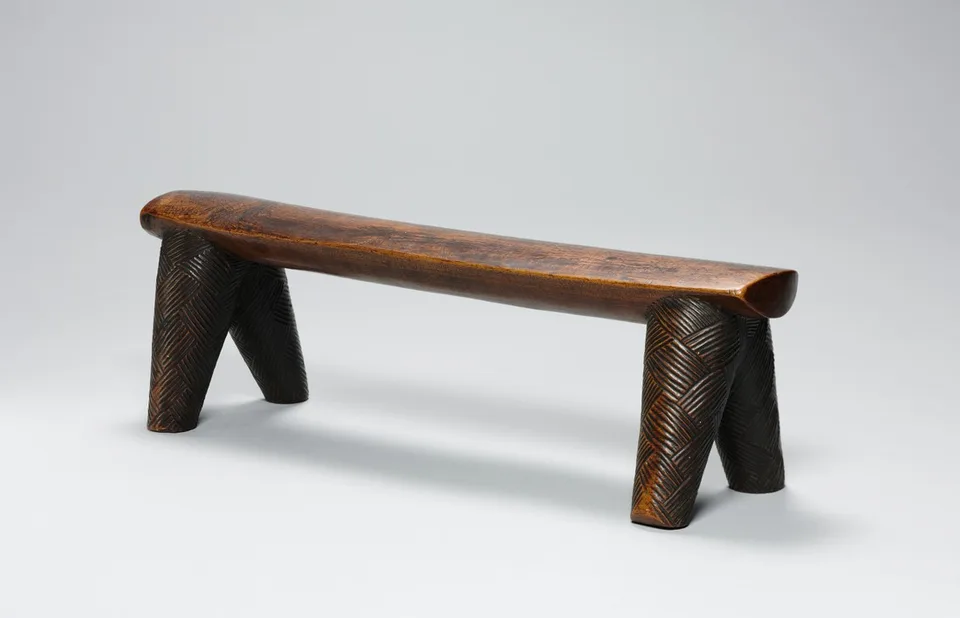
Four patterned legs carry a long smooth cradle, making a small headrest resemble a body without carving a literal animal.
The museum records both Zulu-style and Swazi-style cultural associations for this southern African headrest. Its four-legged form alludes to cattle, although it has no carved animal head. The connection depends on the broad structural resemblance of a long body above four supports. In the museum’s account, cattle were sources of wealth and mediators between the living and the dead; both cattle and headrests could also feature in marriage exchanges.
The object remains practical even as it invites an animal comparison. Its polished upper cradle presents a smooth contact surface, while diagonal cuts enliven the four supporting legs. The empty space below makes the distance between the paired supports especially clear. Notice how little is needed to suggest a body: the silhouette does most of the work, without horns, eyes or tail. That restraint makes the museum’s cultural explanation valuable, but also reminds us not to turn every four-legged object into the same kind of symbol.
The museum gives more than one cultural attribution and does not name an owner. The cattle association concerns the form, not an identifiable portrait of a particular animal.