Read the
Picture
An open collection
Egypt, Greco-Roman period (332 BCE–395 CE), Ptolemaic dynasty (305–30 BCE) · Sculpture

Apis Bull

Maker unrecorded · 400–100 BCE

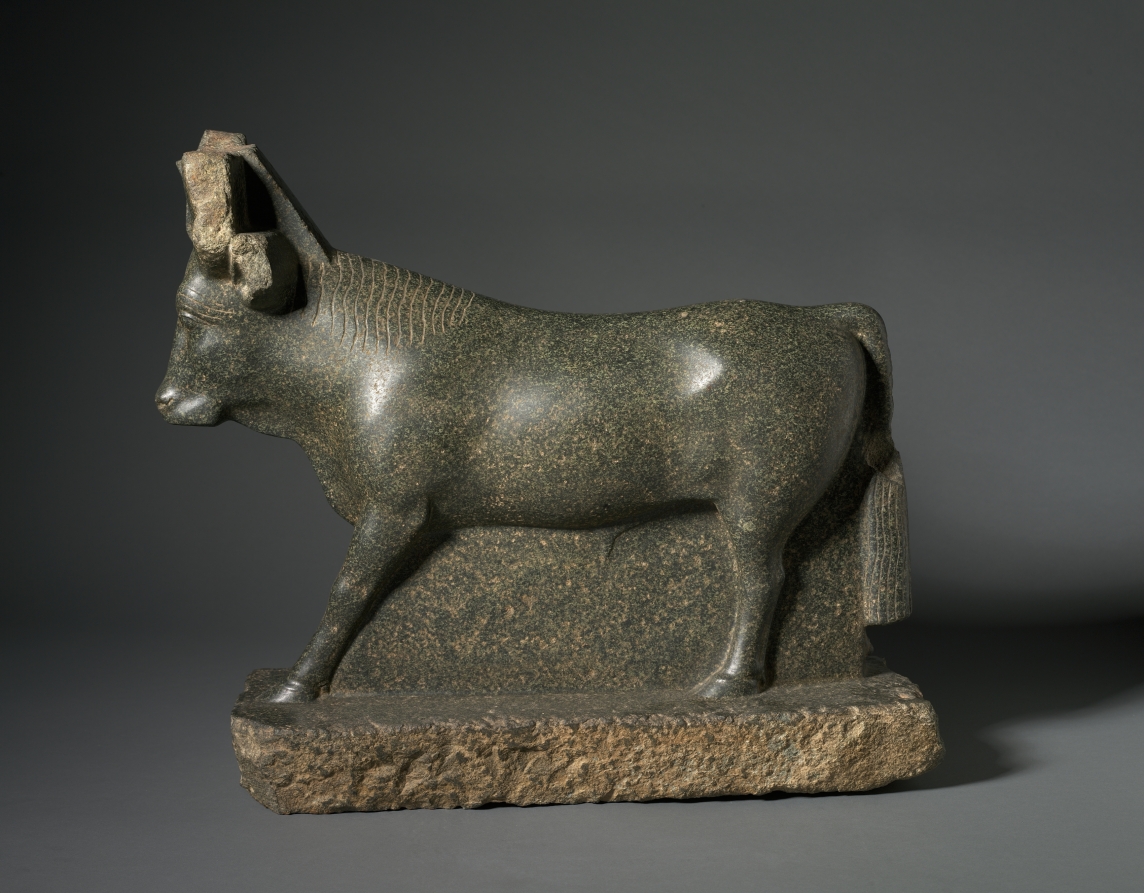
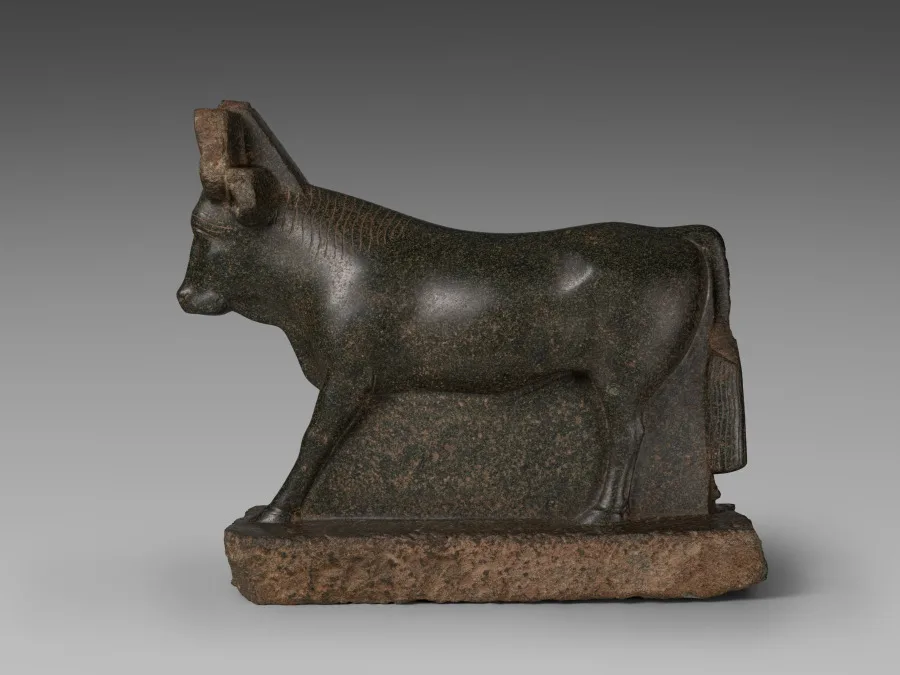
A dark stone bull stands in profile facing left on a rectangular base. A tall worn crown-like form rises above its head, while incised lines define the neck and forehead. The sturdy legs merge with a supporting stone mass beneath the belly. A long tail descends beside the rear leg; the lower base is rougher and lighter.
100%

Drag to move · Pinch or +/− to zoom · Arrow keys to pan · 0 to reset

The Cleveland Museum of Art · 1969.118 · Image: CC0Museum image ↗
A little context

A bull's compact body becomes a divine image through the crown above its head and the context of the Apis cult.

The bull's outline is compact and firm. A long back joins the short head and tail, while a stone support under the belly keeps the legs from becoming completely separate. The most distinctive feature rises above the head: the surviving crown marks this as more than a study of livestock. The rougher lower edge also records a difference between finished and concealed surfaces.

The museum identifies Apis, the sacred bull of Memphis, associated with Ptah and with Osiris in forms that changed over time. Apis images carried a sun disk and cobra, attributes that gave a specific divine identity to an animal form. The museum suggests a larger base may originally have hidden the rough lower edges. That proposal helps explain the present appearance without claiming a missing inscription can be read. The sculpture's religious identity comes from documented attributes and context, not from a rule that every Egyptian bull represents the same deity.

A careful reading

The larger original base and any inscription upon it are hypothetical. The worn crown is not fully legible in this photograph, so its interpretation depends partly on the museum's identification.
Try your eye

Which detail most directly separates this image from a generic bull?

Where this reading begins

  • Apis Bull: collection record — The Cleveland Museum of Art. Object identification, attribution, materials, historical context and stated uncertainties; observations independently checked against the museum photograph. Museum record updated 2026-11-12; accessed 2026-11-13.

Our observations describe the supplied museum photograph. Historical identifications and context follow the cited collection record; interpretive limits are stated above. This is an independent guide, not a museum endorsement.

Image rights & attribution

Apis Bull, 400–100 BCE. Egypt, Greco-Roman period (332 BCE–395 CE), Ptolemaic dynasty (305–30 BCE). Serpentinite; overall: 53 x 19 x 59 cm (20 7/8 x 7 1/2 x 23 1/4 in.). The Cleveland Museum of Art, Leonard C. Hanna Jr. Fund, 1969.118

Individual API record marked CC0; checked 2026-11-13. CC0 1.0 dedication. Record date: 2026-11-12 14:53:28.363000. Web JPEG downloaded unchanged; responsive WebP and zoom derivatives resized and recompressed; numbered annotation overlay separate from image.