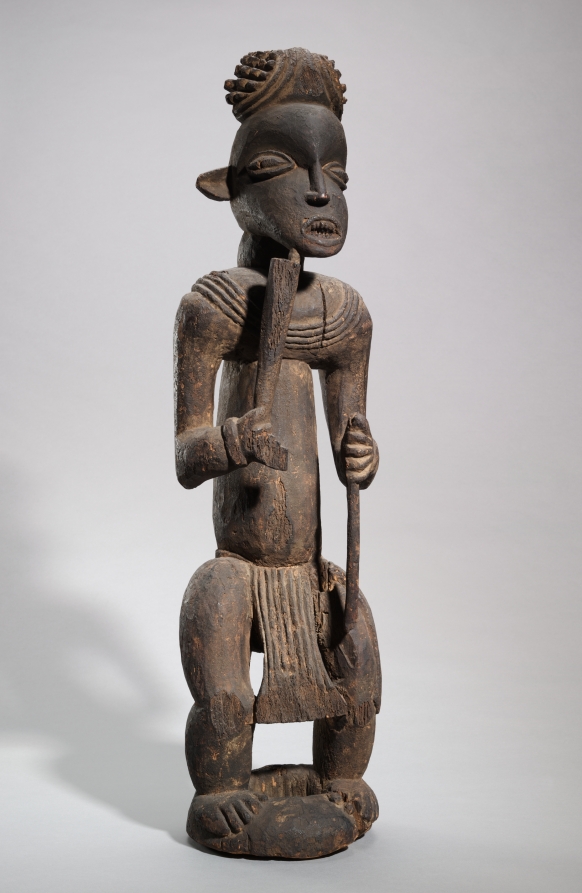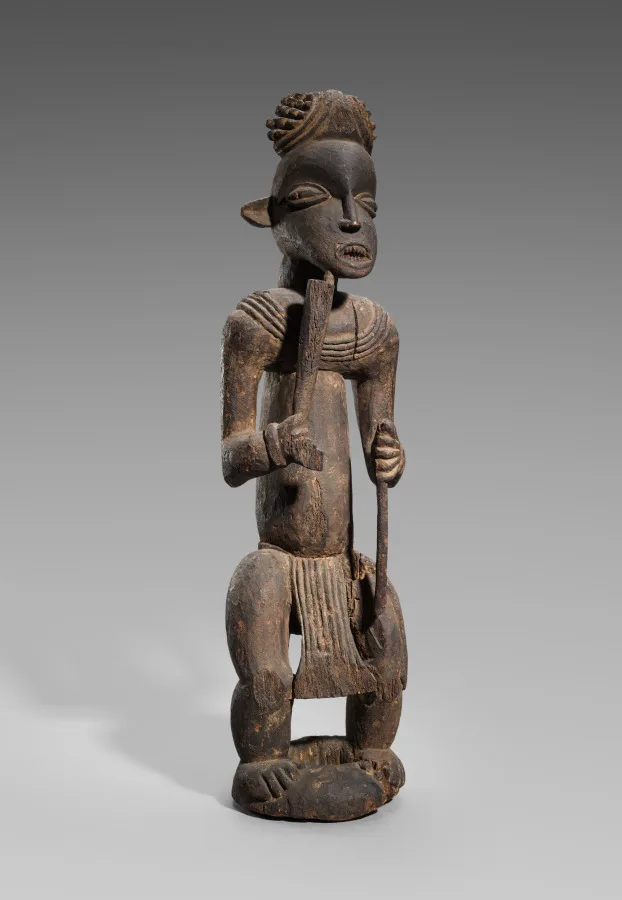
A drinking horn, pleated garment and elaborate cap turn a wooden body into the presence of a ruler.
Begin with the things the figure carries. A drinking horn and the remains of a pipe join the cap, necklace and pleated garment to establish an important public person. The long torso and bent knees give the standing body a slightly compressed energy. Individual features coexist with the careful ordering of regalia: this is an image made to perform the presence of a ruler or high dignitary.
The museum describes lefem portraits as works carved during their subjects' lives and kept by an association concerned with the kingdom's welfare. This example stood in a royal shrine and could also appear at funerals and ceremonies. Its commemorative role therefore extended beyond simply preserving a face. Read the carved objects and posture together, while remembering that this isolated photograph cannot reproduce the shrine, actions or audiences through which the sculpture acquired meaning.
The precise historical sitter is not securely named in the cited description. The museum's broader account of lefem use should not be mistaken for a complete record of every ceremony involving this figure.