Rank in the details
A cap, a disk, a staff, a collar and a hat can all direct attention toward a person’s standing. Their meanings depend on particular institutions and histories. Follow five objects from different African contexts, looking first at how materials and proportions make an emblem conspicuous, then at the evidence that connects it with a role.
Begin the journey ↓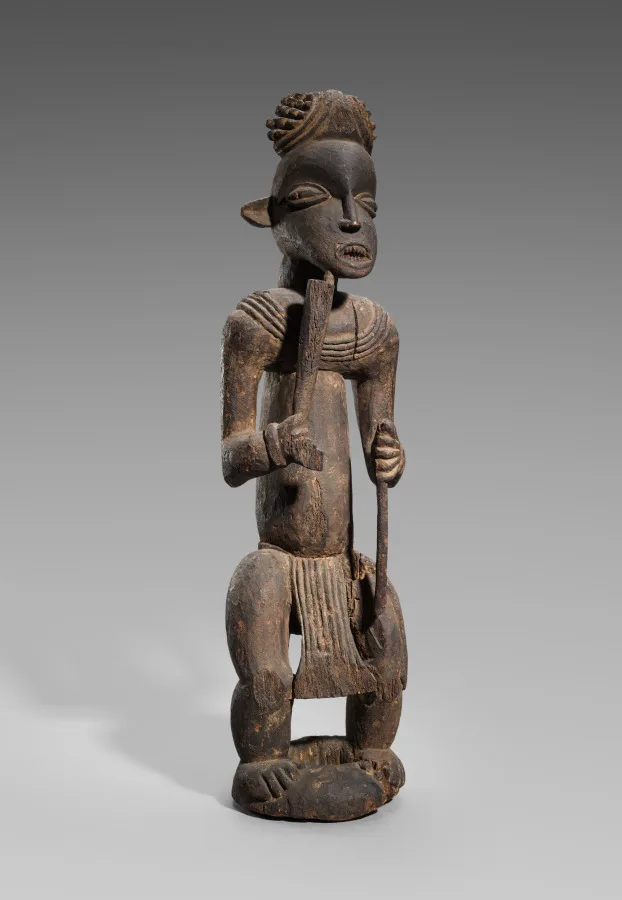
A cap above a complete figure
The clustered cap crowns a figure whose horn, necklace and pleated cloth add further signs of status. The museum connects this commemorative sculpture with a king or high dignitary and the Lefem association. The objects work together; no single ornament supplies the figure’s entire identity.
Carry this question: How does the small cap extend the figure’s already prominent head?
Open the artwork ↗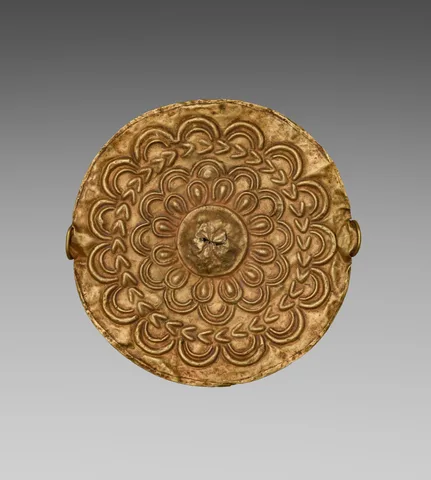
A bright centre with a difficult history
Raised patterns radiate from the gold disk’s central boss. Its association with Prempeh I is reported rather than certain. Read that qualification alongside the museum’s account of the British removal of Asante treasury objects in 1896; visual splendour does not erase a collection history.
Carry this question: Which repeated shapes make the centre seem especially important?
Open the artwork ↗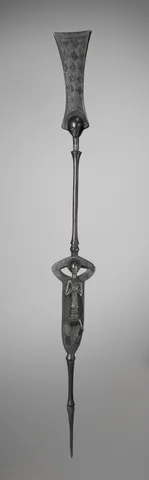
Authority along a vertical line
A small carved figure interrupts the long staff below its broad upper section. The museum records its passage from the Yeke chief Msidi to Frederick Arnot, but how Msidi obtained this Luba emblem remains unresolved. A documented transfer is only one portion of the object’s history.
Carry this question: What changes when you follow the staff downward instead of looking only at its top?
Open the artwork ↗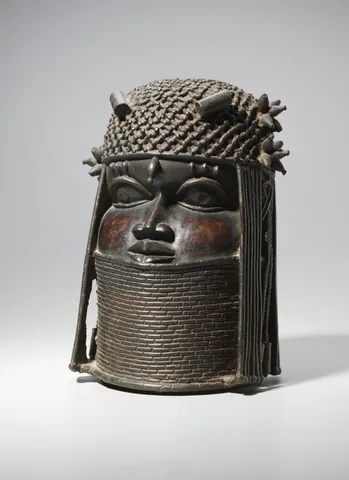
Regalia becomes a sculpted surface
Closely stacked bands turn the coral-bead collar into a substantial metal cylinder. This ideal royal ancestral head once supported a tusk as part of an altar arrangement. The museum’s provenance records its removal to Europe following the 1897 Siege of Benin, adding a history of displacement to the visible signs of office.
Carry this question: How much of the head’s height is occupied by the collar?
Open the artwork ↗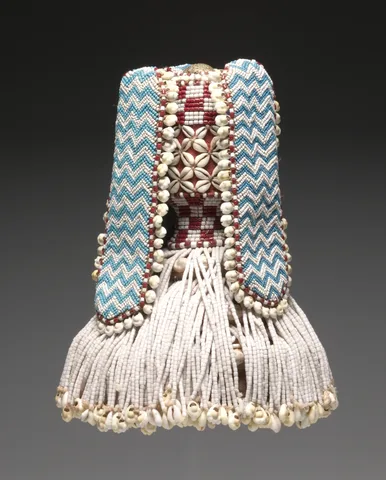
A rank worn in moving materials
Blue and white bead patterns sit beside cowrie borders, while the long fringe expands the hat below. The museum associates this form with senior Kuba officials. Flexible components would respond to a wearer, adding a changing presence that the still photograph can only suggest.
Carry this question: Which parts would keep their outline, and which could move?
Open the artwork ↗Look at a pair more closely
- Faces, office and person
A Benin ancestral head and an unnamed Roman portrait make different claims.
- Beads frame a wearer
A Kuba official’s hat and a Yoruba diviner’s necklace organize flexible materials.
Read with the sources
Historical context follows the individual museum records linked on each artwork page. These routes make original comparisons of visible form; resemblance alone is not evidence of shared meaning or direct influence.