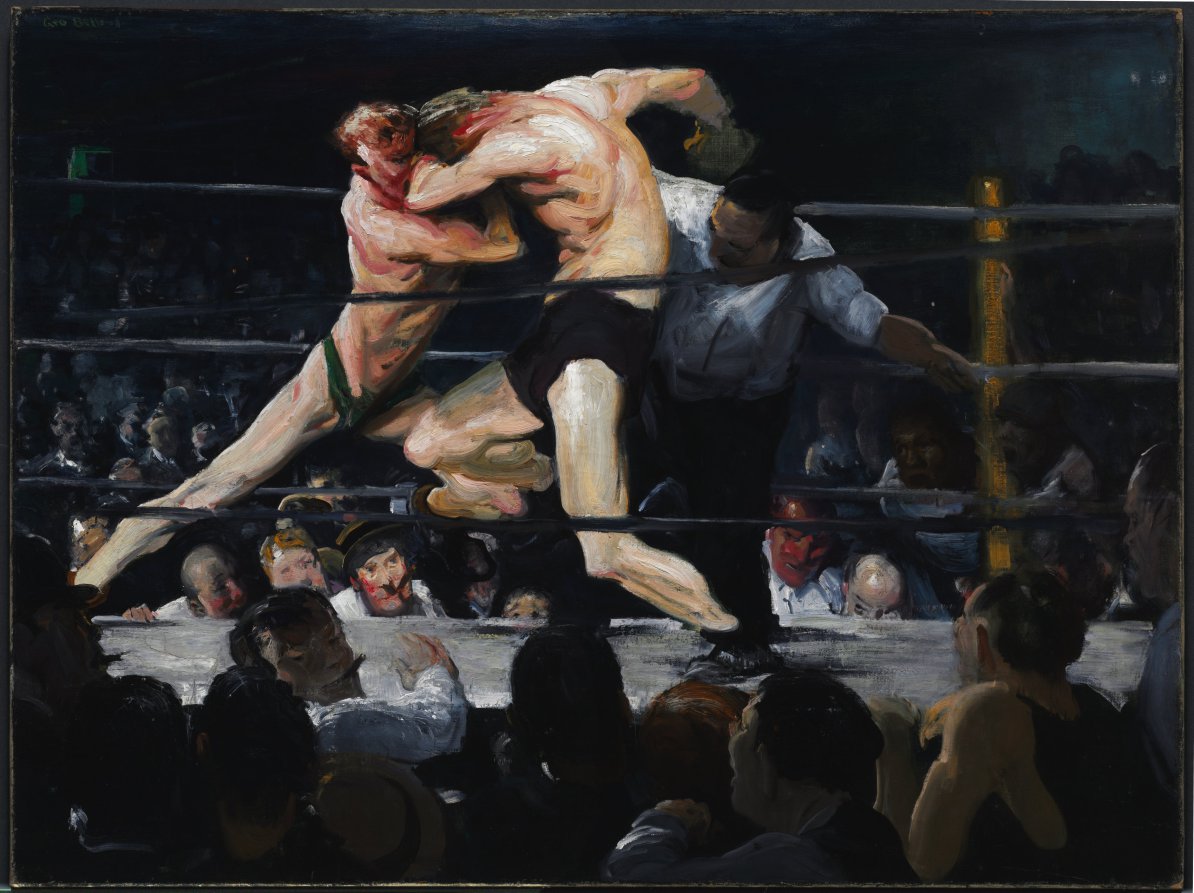
The fighters’ collision dominates the ring, but the close spectators and the title reveal an entire social setting around the bout.
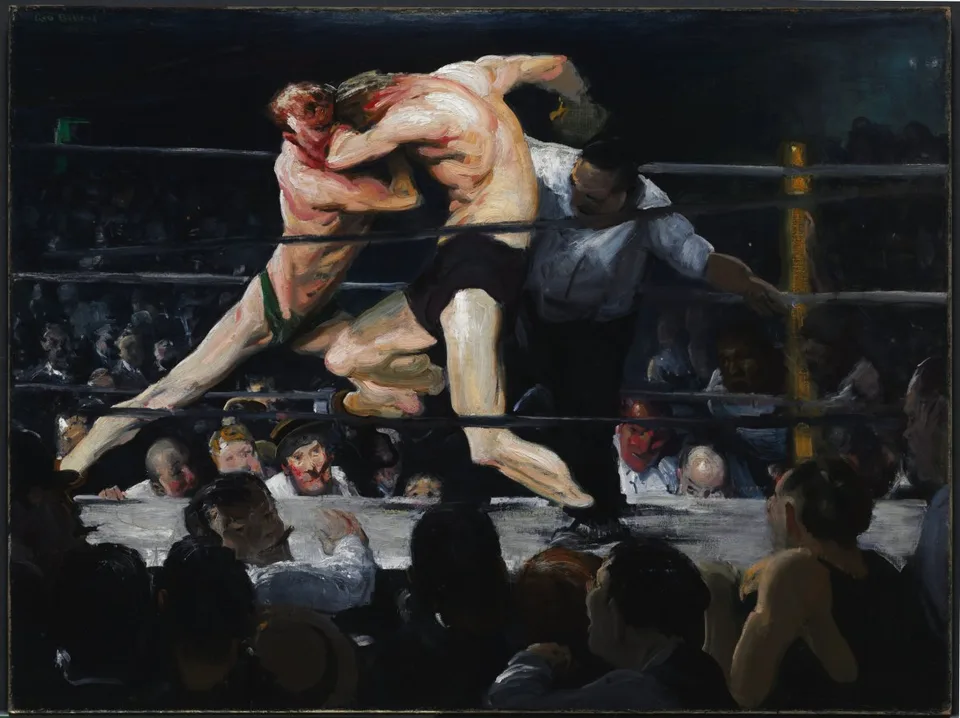
The two bodies seem to meet before the eye has time to separate them. Arms, shoulders, and bent legs form a dense central knot, made brighter by the surrounding darkness. The ring ropes cut across the action, and spectators press close below. Bellows gives the contest a physical immediacy while keeping the crowd’s appetite for the event visibly present.
The museum identifies Sharkey’s as a saloon with a backroom boxing ring near the artist’s studio. Because public boxing was illegal in New York at the time, clubs arranged private bouts. An outsider could receive temporary membership and was called a stag, explaining the title without identifying a deer or a private party. The museum also describes contemporary disagreement over boxing’s value. Compare the fighters with the faces at the ring’s edge: the work presents both strenuous bodies and a watching social world, rather than illustrating a universally accepted ideal of sport.
The painting does not identify a securely documented instant or named fighters in the supplied record. Contemporary claims about boxing and masculinity are historical attitudes, not facts about who is strongest, most worthy, or suited to succeed in society.