A comfortable seat is also a coordinated display of carving, inlay, color, and curved lines designed for an artistic interior.
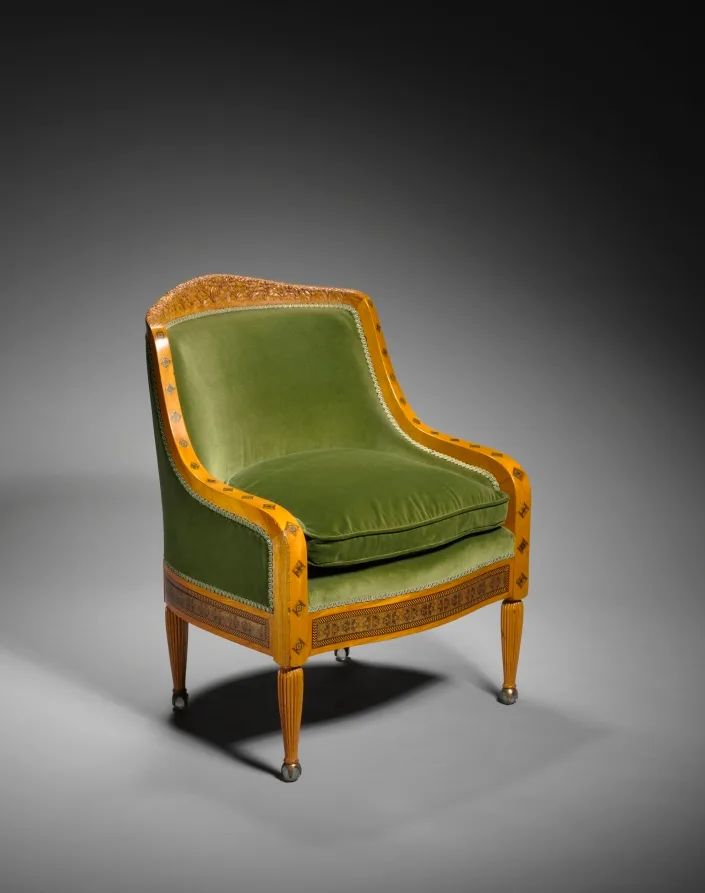
The chair’s green upholstery is enclosed by a warm golden frame, making a strong contrast before the small ornament becomes visible. Curved arms link back and seat, while tapered legs and tiny casters keep the lower structure comparatively light. Carved flowers and inlaid patterns give the frame more than a supporting function: it becomes a decorated surface in its own right.
The museum places this chair within Tiffany’s work in interior furnishings, which developed alongside his better-known glass production. It credits him as designer and the Tiffany Glass & Decorating Company as maker. The chair is believed to have been among the furniture shown at the 1893 Chicago world’s fair, but that exhibition connection remains qualified. Compare the broad upholstery with the narrow ornamental bands: the object coordinates comfort, construction, and visual detail. Its place in a designed interior matters as much as the isolated silhouette we see against the museum photograph’s neutral background.
The world’s-fair connection is believed rather than certain. Preserve the separate designer and maker credits, and do not assume the present upholstery records every material choice or later treatment without additional documentation.