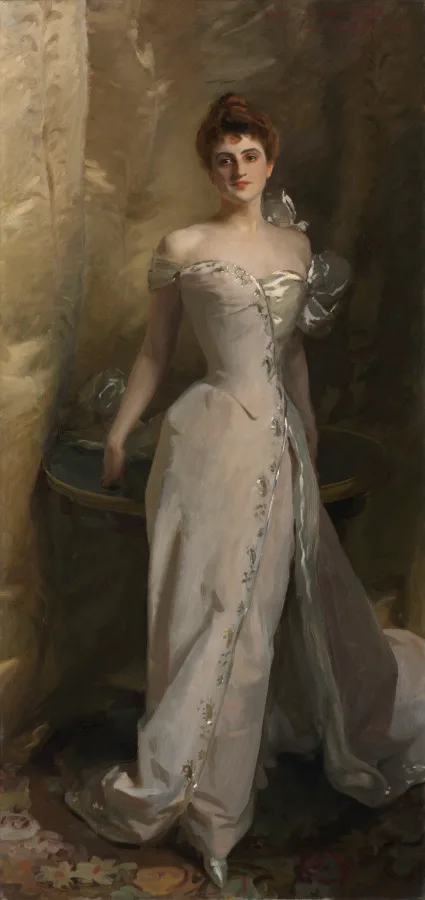
A luminous dress and welcoming pose turn a private wedding connection into the visual language of grand society portraiture.
The dress catches more light than almost anything around it. Its pale satin changes from bright highlights to gray and warm shadows as it crosses the body and falls toward the floor. The face remains small within the full-length format, yet the outward gaze keeps the figure from becoming merely a display of fabric. Architecture and furniture provide an imposing but subdued setting.
The museum identifies Lisa Colt Curtis as an acquaintance of Sargent who had recently married his distant cousin Ralph. It suggests that the painting was a wedding gift, supported by the dedication to the couple. Her pose evokes welcoming visitors to their Venetian home rather than recording a securely documented arrival. Compare the luminous garment with the shadowed surroundings and the resting hand: the portrait combines social position, fashionable material, and a personal connection to its maker. Its apparent ease depends on a carefully organized distribution of brightness and space.
The museum presents the wedding-gift purpose as apparent rather than certain. The welcoming pose is an interpretation, not evidence of an actual guest arriving, and the sitter’s elegant appearance does not provide a complete account of her private character.