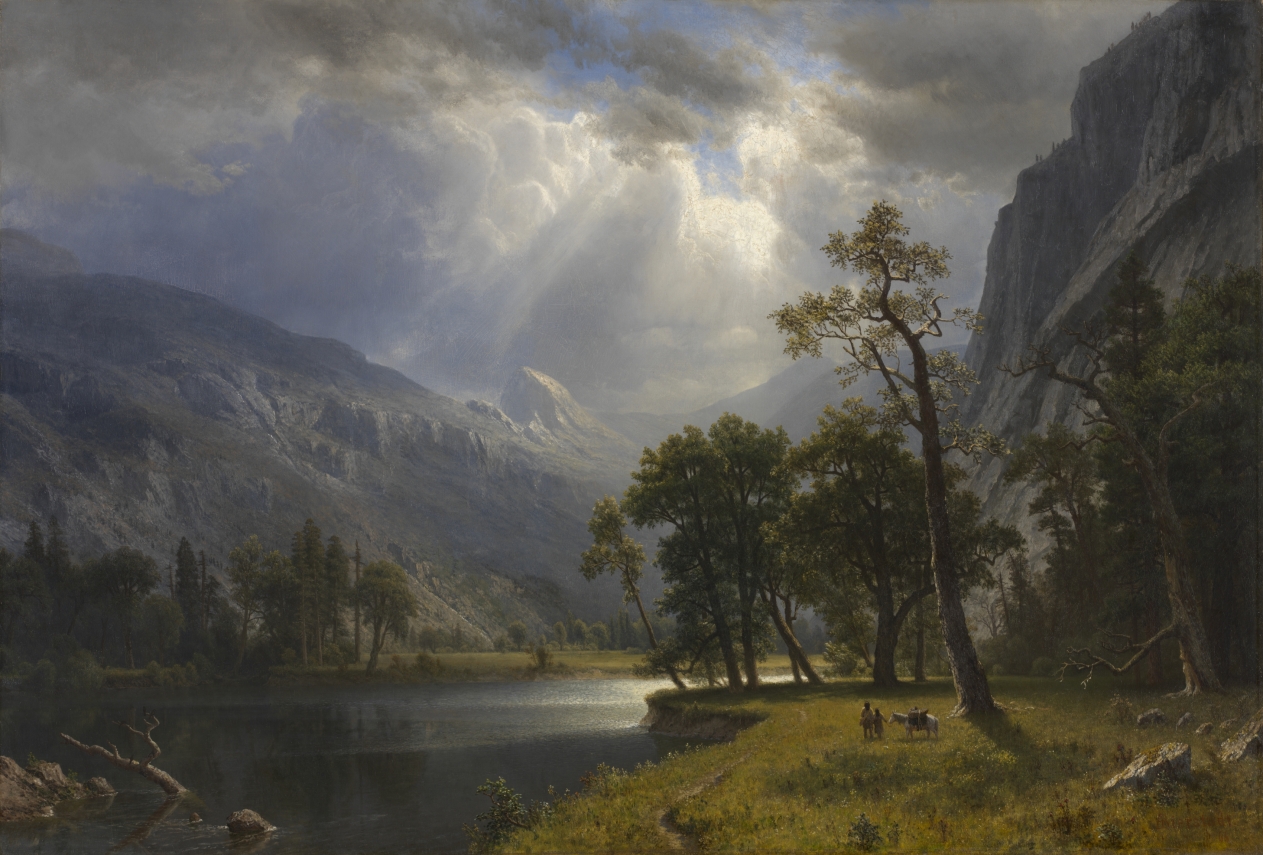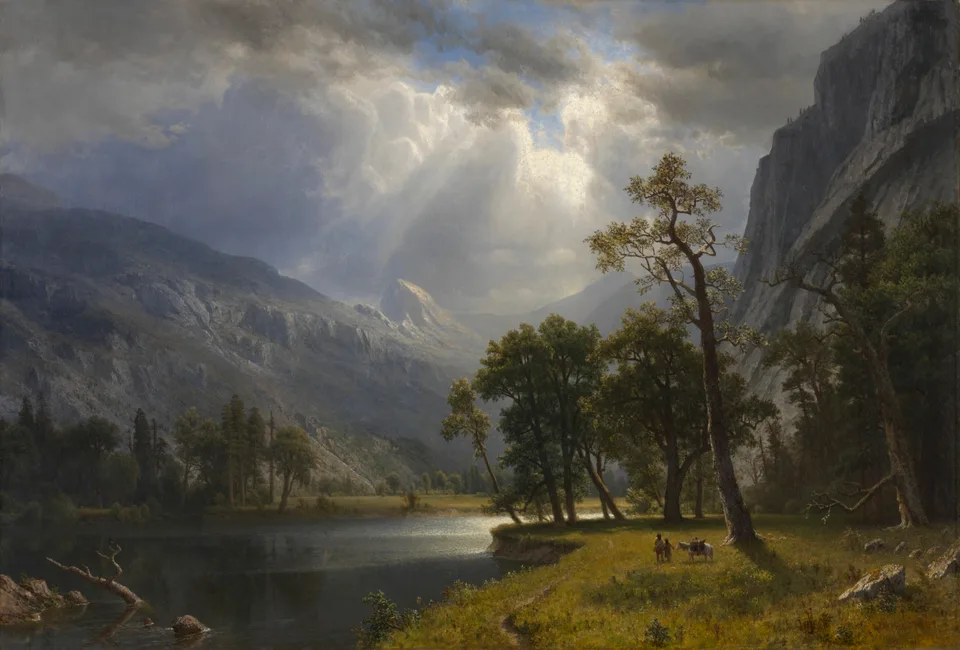
The immense landscape includes tiny human figures whose presence complicates any idea of Yosemite as empty wilderness.
The light seems to open the valley from above. Clouds part over distant slopes, while the near lake and right-hand cliff remain comparatively dark. A tall tree gives the foreground a strong vertical measure. Two small people and a packhorse stand on the grassy bank, easy to miss if attention stays only on the spectacular sky.
Bierstadt visited Yosemite in 1863 and later developed large paintings in his New York studio from sketches. The museum identifies the distant peak as Mount Starr King and the figures as Native Americans. It also places the landscape within histories of preservation and Indigenous dispossession. Those contexts belong together: a scene admired as natural grandeur was already part of inhabited and visited ancestral lands. Compare the figures’ small scale with their clear placement in the foreground. They contribute to the painting’s sense of immensity while also preventing a careful viewer from describing the valley as simply unpeopled.
The museum does not identify the two figures by name or nation. The image is a studio composition developed from sketches, and its celebration of scenery should not erase the Indigenous presence and dispossession discussed in the museum’s account.