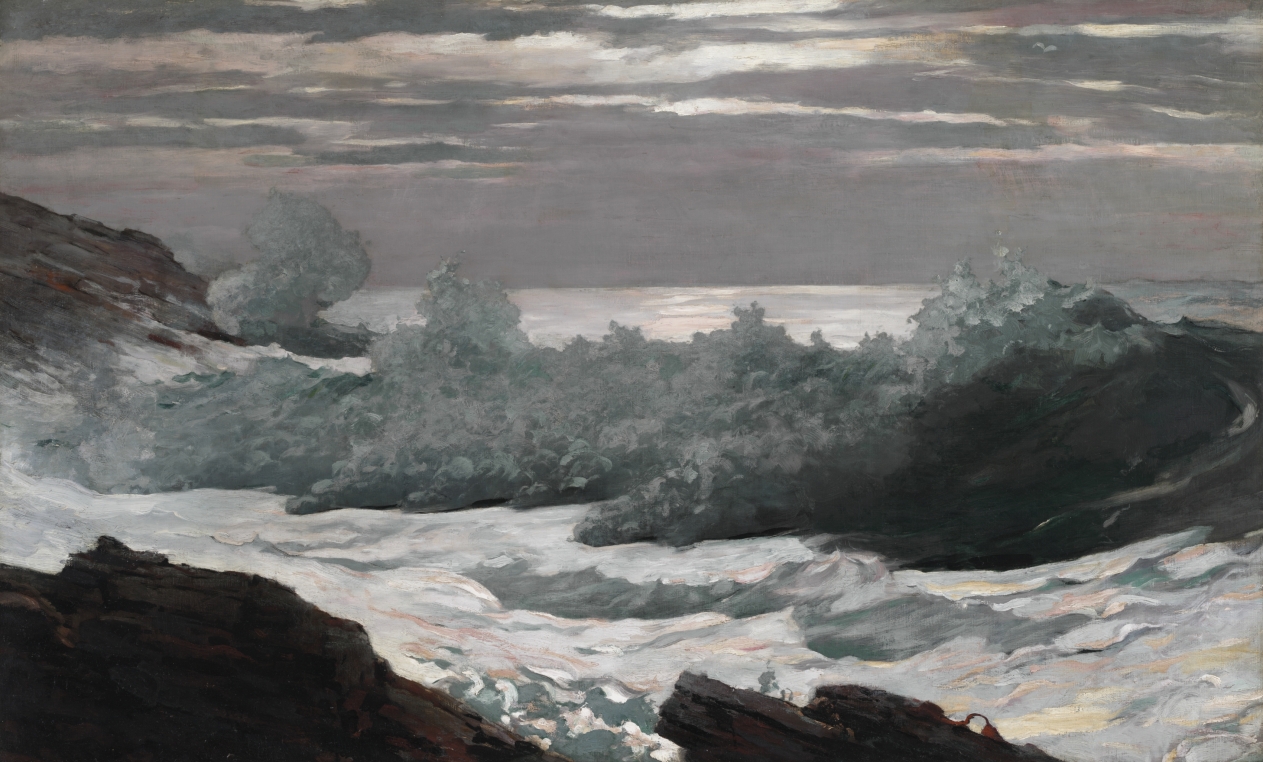
The wave seems instantaneous, but Homer returned over two years to build this particular encounter of sea, rock, and light.
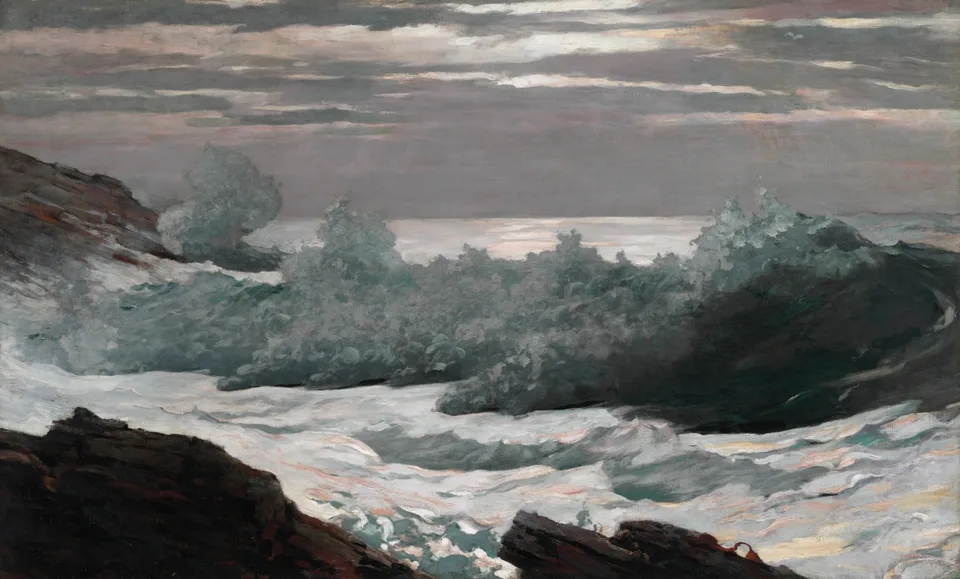
The foreground offers no secure resting place. Jagged rocks cut into white foam, and a dark wave rises across the middle before breaking into spray. Beyond that activity, a pale strip of water lies under layered clouds. The contrast between turbulent near water and quiet distance gives the sea both force and extent without needing a ship or human figure.
Homer drew the subject from the coast at Prouts Neck, Maine, where Atlantic surf became central to his later work. The museum records an unusually patient process: after first conceiving the composition as a watercolor, he returned to it in oil much later, working in four sessions across two years while waiting for suitable conditions. The apparent instant is therefore the product of repeated observation and adjustment. Compare the bright broken foam with the dark continuous wave: the painting makes different states of water intelligible while leaving the long process of construction largely invisible.
The museum documents multiple sessions over two years. The forceful brushwork and breaking wave should not be taken as evidence of a single rapid sitting, and the title’s aftermath does not mean the sea has become calm.