Coasts, gardens, and valleys
A landscape is never only a list of things in a place. Scale, light, framing, and selected detail determine whether we first notice force, habitation, a flower, or a human presence. These four American works move from the Maine coast to imagined or composed views informed by travel. Follow how each artist establishes a near point of contact before opening a larger world beyond it.
Begin the journey ↓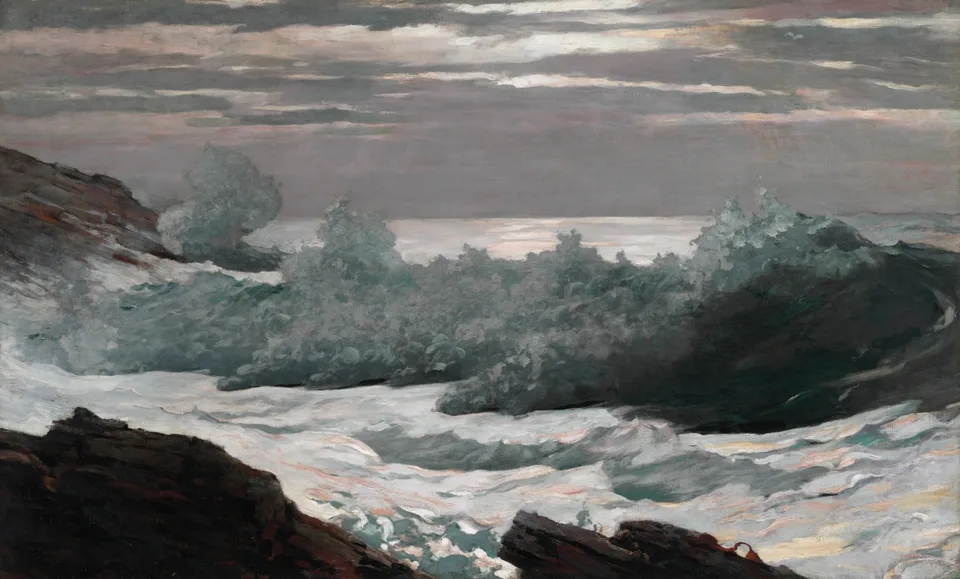
Find a firm edge
Begin with the meeting of rock and foam. The dark angular surface gives the moving water a resistant counterpart, while the pale distance opens beyond it. The image feels immediate, but the museum records several working sessions across two years: represented movement and time spent painting are different things.
Carry this question: How does the rock make the water’s movement easier to see?
Open the artwork ↗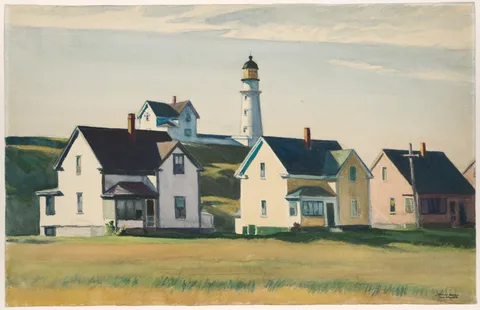
Read small differences
Move from unstable surf to a cluster of clearly shaped buildings. Related roofs make the different wall colors especially noticeable. The museum identifies housing for lighthouse keepers and coast guard families, so the scene’s quiet appearance belongs to a landscape of work and domestic life.
Carry this question: Which differences distinguish buildings that share similar shapes?
Open the artwork ↗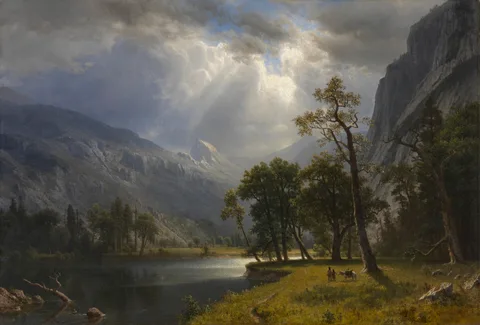
Notice who is already there
The tiny figures and packhorse are easily lost beneath the spectacular light and cliffs. The museum identifies Native Americans and discusses Yosemite’s histories of Indigenous habitation and dispossession. Their scale helps create grandeur, but it should not lead us to describe the landscape as empty.
Carry this question: How does noticing the figures change your first account of the valley?
Open the artwork ↗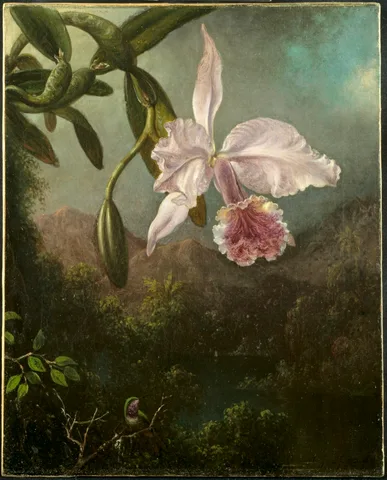
Let the foreground take over
End with a flower that dominates a much deeper view. The orchid’s pale petals and rose center receive an attention usually given to a large figure, while a bird and forest remain secondary. Heade’s travels inform the subject, but the museum does not establish an exact site.
Carry this question: What changes when the flower becomes your principal measure of scale?
Open the artwork ↗Look at a pair more closely
- Water with and without boats
Manet at Berck and Homer at Prouts Neck
Read with the sources
Historical context follows the individual museum records linked on each artwork page. These routes make original comparisons of visible form; resemblance alone is not evidence of shared meaning or direct influence.